Posted in Embrace the uncertainties

Embracing the Unseen: Trusting in God’s Grand Plan

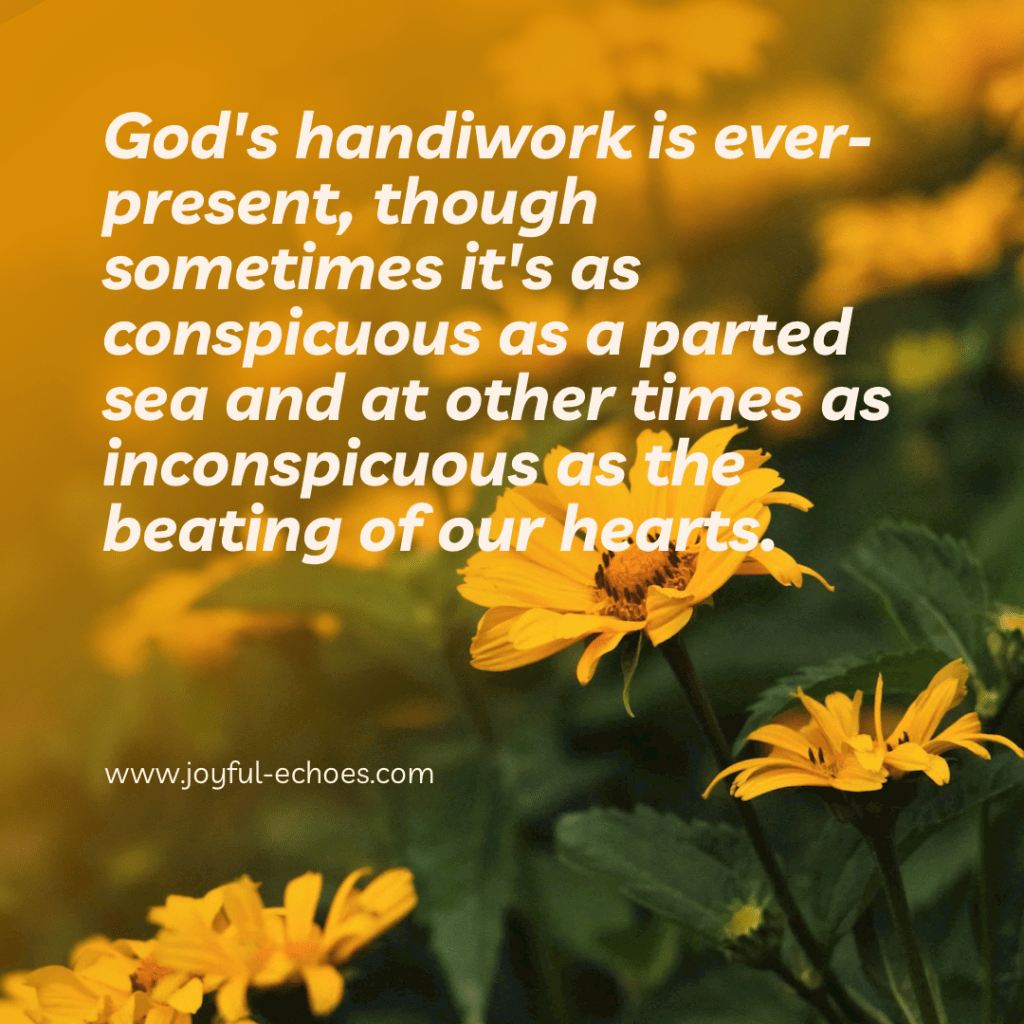
In the tapestry of life, our perspective is often confined to the present moment, leaving the grand design hidden from our sight. Isaiah 55:8-9 reminds us that God’s ways are higher than our ways, and His thoughts surpass our understanding. The mystery of life’s unfolding is a testament to the divine orchestrations beyond our comprehension.

Though we may not perceive the entirety of God’s plan, we find solace in the certainty that He is working towards something extraordinary at the finish line. The journey is a testament to our trust in Him, a trust that extends beyond what our eyes can behold. It is an assurance that, despite life’s uncertainties, God is in control.

Another guiding light in our journey is found in Jeremiah 29:11, which reassures us that God has plans for our welfare and not for evil, plans to give us a future and a hope. This verse is a beacon of optimism, affirming that every twist and turn in our lives is a part of His overarching purpose.

In the midst of life’s challenges, we draw strength from the conviction that God’s great plan for us is filled with hope and purpose. As we navigate the unknown, let us remember Proverbs 3:5-6: “Trust in the Lord with all your heart, and do not lean on your understanding. In all your ways acknowledge him, and he will make straight your paths.”

Embrace the uncertainties, for in trusting God, we discover the unfolding of a divine masterpiece. Let us walk with confidence, knowing that God’s plan for our lives is a tapestry of love, purpose, and boundless grace.

Posted in gods-love, Grateful, joyful-echoes, Ministry, Nobody

Just A Nobody

I listen to Z88.3 Orlando it’s a Christian radio station and I just love all the talks, music etc….

I listened to KLOVE when I lived in Ohio.

One of my favorite songs is by Casting Crowns called Nobody.

It’s basically saying what I have thought for the past few years, why me? Why was I selected and lead to take ministry classes? To be ordained when I am so flawed? We all have flaws but I wonder why God lead me to take classes the ultimately led me to become ordained.

Was it to teach me how to become better, wiser?

I’m just an ordinary person spreading the word about Jesus. In ways of stories I create , thoughts I have . And teachings I have studied as well as my own Life experiences etc..

The mystery of why You chose me Lord has persisted throughout my life. I’ve often been told that I belong at the end of the line with the Not-Quites and the Never-Get-It-Rights and How can you be a minister you used to swear smoke, etc….

As the song goes

I’m just a nobody, sharing the story of Somebody who saved my soul. Since You rescued me, my heart now sings a song,

In moments of doubt, when the devil questions my worth, I confidently respond that I’m just a nobody proclaiming Somebody great.

The stories of Moses’ stage fright and David facing a sword with a rock remind me that outsiders like the twelve You picked can change the world. Everyone has a purpose, and when the devil questions my identity, I assert that I’m just a nobody proclaiming Somebody who saved my soul.

Thank you Lord for saving me and allowing me to spread your word

And in the spirit of the message, let’s reflect on Psalm 27:1 – “The Lord is my light and my salvation; whom shall I fear? The Lord is the stronghold of my life; of whom shall I be afraid?”

Here is the song by the casting crowns enjoy. Called Nobody

Posted in Blessed, Blogging, Faith, Uncategorized

New Beginnings

In 2 Corinthians 5:14-21, the message is clear: “If anyone is in Christ, he is a new creation.” As we enter the end of the first week of the New Year, people often make resolutions to change, but true new beginnings come only from God. Unlike human efforts, God can fundamentally transform us through the work of Jesus Christ on the cross.

To experience a genuine new beginning, we must recognize three areas where God might be calling us to change: Personally, Communally, and Missionally.

  1. Personally: Our vision for our lives should align with God’s plan – conformity to the image of Christ. This involves growing in maturity, experiencing God’s grace, and putting on the character of Christ. Let’s reflect and pray, asking God to reveal how we can conform to Jesus in the coming year.
  2. Communally: As a church community, we’re challenged to manifest God’s presence by growing in unity, love, and service. This includes intentional hospitality, encouraging conversations, discipleship, and addressing the needs within our community. Let’s seek God’s guidance on how we can mature spiritually and practically as a church.
  3. Missionally: God calls us to reach out to those outside His kingdom with love, grace, and truth. We need to see people as Jesus does – sheep without a shepherd. Our hope in the Gospel should renew our perspective on our city, state, and world. Let’s pray for God to touch our hearts and show us how to engage our city with the transformative power of the Gospel.

Remember all things are possible with God. By continually beholding the Lord in His word, we can be transformed into His likeness. As we commit ourselves to this, we’ll discern God’s calling for our lives personally, communally, and missionally.

Posted in Faith, Grateful, Storytelling

Letting Go: A Parable of Faith and Divine Peace

In the stillness of a night, a man found himself suspended between life and potential doom. As he clung to a concrete ledge, desperately crying for help amidst the clamor of construction, his pleas went unheard. Exhausted and fearing the worst, he finally relinquished his grip, only to discover a ledge mere inches below—a place of unexpected peace.

This parable mirrors the struggles many face, holding onto life’s uncertainties with fearful tenacity. How often do we live on the edge, gripped by anxiety and reluctance to let go? The tale invites introspection, urging us to release our fears and embrace the peace that lies just a step away.

Embedded within this narrative is a profound truth—one that transcends the story itself. The Bible teaches us in Philippians 4:6-7 (NIV): “Do not be anxious about anything, but in every situation, by prayer and petition, with thanksgiving, present your requests to God. And the peace of God, which transcends all understanding, will guard your hearts and your minds in Christ Jesus.”

As we consider the man’s struggle and the six-inch fall to unexpected tranquility, the parallel with the scripture becomes clear. The invitation to let go aligns with the biblical wisdom of entrusting our anxieties to God through prayer. The promise of divine peace, beyond human comprehension, serves as a beacon of hope in times of uncertainty.

The narrative then transitions into a spiritual reflection, addressing the reader’s potential skepticism or distress. The author acknowledges not knowing the individual struggles but reaffirms the unwavering presence of God with believers. The encouragement to keep moving forward, rather than standing still, becomes a call to faith and action.

This narrative crescendos with a declaration of victory in the coming New Year. The call to come to God echoes the scriptural invitation to find peace through trust and prayer. The story serves not only as an engaging parable but as a reminder that in letting go and turning to God, we discover a peace that surpasses understanding—a peace available to all who choose to release their fears and come to Him.

Posted in Blessed, Embrase Grace, Faith

A Victorious New Year: Embracing God’s Presence, Purpose, and Peace

As we now can say we rang in the New Year for many uncertainty looms in the world around us. Pictures of wars still going on, and personal trials can create a backdrop of anxiety. However, as a Christian, I find solace in the timeless truth that, no matter what the New Year holds, God will be with us.

Psalm 23:1 resonates deeply in my heart, reminding me that the Lord is my Shepherd, and I shall not want. This truth alone gives me cause for rejoicing and the ability to face the future without fear. The comforting presence of my Lord blesses me with a sense of security that transcends worldly uncertainties.

God’s will for us in the coming year is clear – to live victoriously. This victory is not about the absence of challenges but about our response to them. We can live without hopelessness, fear, and frustration if we commit to Christ and remain confident in His promises. Each day is an opportunity to live in a relationship with the living Savior, finding purpose and strength in Him.

In our quest for a positive New Year, let’s reflect on the unique ways people around the world seek blessings. While some partake in peculiar traditions like consuming black-eyed peas for health and wealth, or pork and sauerkraut for luck, I am reminded that true blessings come from a commitment to Christ and trust in His plans for us.

Amid a perilous world, the Apostle Paul’s experiences, as shared in 2 Corinthians 1:1-11, offer profound insights. He faced crisis after crisis but found inner strength and peace to rejoice in every situation through his unique relationship with the Lord. As we delve into Paul’s words, we uncover essential elements for a victorious New Year.

1. Salvation:
Our assurance of salvation provides a firm foundation for facing the uncertainties of the future. Paul’s unwavering confidence amidst suffering stemmed from the knowledge that salvation is not dependent on external conditions. Romans 8:28-39 reinforces this truth, assuring us that nothing can separate us from the love of God in Christ Jesus.

2. Determination:
To live well in the New Year, we must remain determined to fulfill our God-given responsibilities. By concentrating on God’s will and bringing Him glory, we shift our focus from personal trials to the needs of others. Paul’s commitment to encouraging others amidst his own troubles exemplifies the determination needed for victorious living.

3. Appreciation:
An appreciation for God’s comforting presence in our lives leads to adoration, worship, and praise. Even in the valleys of life, David’s affirmation, “The Lord is my Shepherd,” echoes the divine peace that accompanies us through every trial. As we appreciate God’s goodness, we can face the New Year with a heart full of gratitude.

4. Dedication:
Rather than fleeting resolutions, a dedication to live in total dependence and commitment to Jesus is the key to a successful New Year. Placing all we are and have at His feet, we cast our cares upon Him, trusting in His promise to never leave nor forsake us (1 Peter 5:7).

In closing, let us approach the New Year with a sense of purpose, knowing that our victorious living is rooted in God’s presence, determination, appreciation, and dedication. As we navigate the uncertainties of the future, let’s do so with unwavering faith, embracing the promise that, no matter what lies ahead, God is with us, and in His presence, we find true victory.

Posted in Forgiveness, Grateful, Peace, Uncategorized

Embracing Forgiveness: A Journey to a Lighter Heart

As I stand on the threshold of a new year, I reflect on the transformative power of forgiveness. This year, let’s embark on a journey to lighten our hearts by extending forgiveness to ourselves, to those who have hurt us, and by seeking forgiveness from those we’ve wronged.

Forgiving oneself is a profound act of self-love. Accept that mistakes are inevitable, and through each one, we gain wisdom and strength. Try your best, learn from each misstep, and remember, there’s always tomorrow. As I look back on my tumultuous relationship with my late mother, I grappled with guilt but found solace in making amends in my 30s. Despite the moments of regret, I now carry the lessons forward, honoring her memory by striving to be a better person every day. I wasn’t a terrible daughter but there were times I disrespected her that hurt her feelings and that bothers me. Because I was a mouthy teen and abused wife I sometimes yelled at her when I had no right and when she died I would dwell in my negative vs all the happy times and laughs we had.

When forgiving others, discern if the hurt was personal or a reflection of their struggles. Often, it’s the latter—borne out of insecurities or past traumas. Gift them forgiveness, even if they don’t apologize. Partial forgiveness is a start, and with time and commitment, complete forgiveness may follow. I’ve experienced the liberation of forgiving those who once caused me pain—it’s a gift to both parties.

Seeking forgiveness is a humbling process. Be honest, respect their decision, and commit to making amends. Facing rejection was once my greatest challenge, but with age comes the wisdom to admit mistakes promptly. Forgiving those who wronged me was equally liberating—I did it for myself. While some things may seem unforgivable, our capacity for forgiveness is immense if we earnestly try.

I encourage you to forgive everyone who has hurt you, one person at a time, at your own pace. Extend forgiveness to yourself—it’s a gift of peace you deserve. Have the courage to seek forgiveness from others; the effort alone brings a sense of closure. As we step into the new year, may we shed the weight of resentment and embrace the lightness that forgiveness brings—a lighter you, ready to face the world with a heart unburdened.

“Bear with each other and forgive one another if any of you has a grievance against someone. Forgive as the Lord forgave you.” – Colossians 3:13

“But I say to you who hear, Love your enemies, do good to those who hate you.” – Luke 6:27

Posted in Debt Free Tips

Navigating Financial Stress: A Blueprint for a Secure Future

The festive season has come to a close, leaving many in reflection about their financial situations and the stress that comes with it. As we transition into a new year, it’s crucial to consider ways to alleviate financial burdens, reduce anxiety, and plan for a more secure future. You don’t wanna be paying for this Christmas next Christmas still so we need to plan ahead

1. Create a Budget with Purpose:

Start the new year by crafting a comprehensive budget. Identify your essential expenses, allocate funds for savings, and create a dedicated category for future celebrations and religious events. By giving each dollar a purpose, you gain control over your finances and pave the way for stress-free planning.

2. Establish an Emergency Fund:

Financial security begins with a safety net. Set aside a portion of your income for an emergency fund. This fund acts as a buffer, providing peace of mind during unexpected expenses and ensuring you won’t have to dip into savings meant for other goals.

3. Automate Savings for Special Occasions:

Plan for future celebrations, like Christmas, by setting up automated transfers to a separate savings account. This proactive approach ensures that when the holiday season arrives, you have a designated fund, sparing you the stress of last-minute financial strain.

4. Connect Your Finances to Your Faith:

Align your financial goals with your religious beliefs by incorporating your church into your budget. Consider setting aside a percentage of your income for tithing or donations. This not only supports your spiritual community but also reinforces the principle of giving back, fostering a sense of purpose and community.

5. Visualize Your Retirement:

Look beyond the immediate future and visualize your retirement. Explore retirement savings options like 401(k)s or IRAs. By planning for retirement early, you not only secure your financial future but also gain peace of mind, knowing that you are actively working towards a comfortable and stress-free retirement.

In summary, the key to financial freedom lies in proactive planning and purposeful budgeting. By creating a budget, establishing an emergency fund, automating savings for special occasions, connecting your finances to your faith, and visualizing your retirement, you can navigate the challenges of today while building a foundation for a secure and stress-free future. As the new year unfolds, let these financial resolutions guide you towards a path of financial well-being and freedom.

Practice the Snowball Effect

The Snowball Effect: Your Roadmap to Debt Freedom and Financial Resilience

Embarking on a journey towards financial freedom requires strategic planning and a commitment to prioritize debt repayment. Here’s a concise guide on how to tackle your debts and build a solid financial foundation.

Start by addressing your highest interest rate debt, typically credit cards. By focusing on these high-cost balances first, you minimize the interest that accrues, allowing you to pay off the principal amount more efficiently.

Once the highest interest debt is eliminated, redirect that monthly payment towards the next debt on your list. This cascading approach creates a snowball effect, gaining momentum as each debt is paid off. Tackle your debts one by one, celebrating each victory along the way.

This strategy extends beyond credit cards and can be applied to various financial obligations such as car payments, student loans, and even your mortgage. By channeling the funds previously allocated to the paid-off debts towards the remaining ones, you accelerate your journey to becoming debt-free.

As you approach financial liberation, consider diverting a portion of your income towards an emergency fund. Aim for a safety net equivalent to six to twelve months’ worth of living expenses. This financial cushion acts as a shield against unexpected expenses, ensuring that you won’t be forced to rely on credit in times of crisis.

Even as you focus on debt repayment, make a conscious effort to allocate a portion of your income towards savings. Once debt-free, redirect the funds that were once tied to monthly payments into savings and investments. This proactive approach ensures that you continue to build wealth and secure your financial future.

The journey to financial freedom involves a systematic approach to debt repayment, starting with high-interest debts and utilizing the snowball effect to gain momentum. As debts are eliminated, redirect those funds towards an emergency fund and future savings. By following this roadmap, you’ll not only achieve debt freedom but also build a resilient financial foundation for whatever life throws your way.

Posted in Family

“Forgiveness: Bridging the Chasm of Family Estrangement”

In the tapestry of family, love is often the thread that binds generations together. Yet, the painful reality exists where adult children choose to ghost their parents, leaving a void that echoes with untold stories of hurt and estrangement. As followers of Christ, our journey is one of compassion, understanding, and, above all, forgiveness.

The Complexity of Parent-Child Relationships

In the vast spectrum of parental roles, we encounter a diverse range of individuals – from great parents to those who stumble along the way. The desire for connection and love between parents and children is universal, but sometimes, the path becomes marred by unresolved conflicts and unspoken pain.

Forgiveness as a Christian Imperative

Christ’s teachings emphasize the transformative power of forgiveness. As we navigate the complex landscape of strained family relationships, we are called to embody Christ’s love by extending forgiveness, even when the wounds run deep. It’s a challenging path, but through Christ’s example, we find the strength to release the burden of resentment.

Understanding the Silent Struggle

Sharon’s story mirrors the silent struggles many parents face when their adult children choose estrangement. The emotional pain of abandonment is akin to a crucible, testing faith, resilience, and the capacity to forgive. As Christians, we are reminded that Christ’s love is boundless, transcending even the most profound hurts.

Healing the Heartbreak through Compassion

When faced with the choice to be ghosts in our parents’ lives or grown-ups fostering relationships, the teachings of Christ guide us toward compassion. Remembering Christ’s compassion for us in our imperfections encourages us to extend the same grace to our parents, irrespective of their flaws.

The Power of Forgiveness in Rebuilding Bridges

Forgiveness isn’t a condoning of wrongs; rather, it’s a liberation from the shackles of resentment. It’s a journey toward rebuilding fractured relationships, inspired by the hope that echoes from the Cross. As Christ forgave us, we are called to forgive, fostering reconciliation and healing.

Overcoming Guilt and Shame

Parents grappling with abandonment often bear the weight of guilt and shame. As believers, we must approach them with empathy, recognizing that forgiveness extends not only to adult children but also to parents who may have made mistakes. The redemptive power of Christ’s love is vast, covering even the most broken relationships.

Embodying Christ’s Love through Reconciliation

In the face of verbal abuse and intentional harm, the Christian response is rooted in love. Seeking support and understanding becomes a testament to our commitment to Christ’s teachings. By embodying Christ’s love through reconciliation, we can be beacons of hope in a world where familial wounds run deep.

The Unspoken Pain of Unforgiveness

As Sharon’s story and others like hers illuminate the unspoken pain of parental abandonment, we are called to reflect on the consequences of unforgiveness. Christ’s parable of the unmerciful servant reminds us of the reciprocal nature of forgiveness – we receive it as we extend it to others.

A Call to Christian Compassion

As Christians, we are urged to break the chains of estrangement through the transformative power of forgiveness. The essence of our faith lies in the profound truth that we are all recipients of God’s grace. In embodying Christ’s teachings, let us be instruments of reconciliation, healing the wounds of parental abandonment and fostering a love that reflects the boundless mercy of our Savior.

Posted in Kwanzaa

Happy Kwanzaa

Kwanzaa is a week-long celebration starting on December 26th and ending on January 1st. It honors African heritage and cultural values. The holiday was created in 1966 by Dr. Maulana Karenga and is observed mainly in the United States.

Each day of Kwanzaa focuses on a specific principle, known as the Nguzo Saba, which are seven guiding values: Umoja (unity), Kujichagulia (self-determination), Ujima (collective work and responsibility), Ujamaa (cooperative economics), Nia (purpose), Kuumba (creativity), and Imani (faith). These principles are represented by lighting seven candles in a kinara, a traditional candleholder.

Celebrants also decorate their homes with African art, wear traditional clothing, and exchange educational and cultural gifts. Kwanzaa encourages reflection on the past, present, and future, fostering unity and community building.

Kwanzaa is a meaningful celebration that promotes unity, cultural pride, and the application of positive values in daily life. It lasts for seven days, offering a unique opportunity to reflect on one’s heritage and contribute to the well-being of the community.

“Creator of all, on this day of Kwanzaa, we gather in unity to honor our heritage and celebrate the principles that guide us. Grant us the strength to uphold Umoja, fostering unity among our people. May Kujichagulia empower us to determine our destiny with purpose and pride. Let Ujima inspire collective responsibility, working together for the greater good.

Bless our efforts in Ujamaa, promoting cooperative economics and shared prosperity. Guide us in pursuing Nia, fulfilling our purpose with dedication. Infuse our endeavors with Kuumba, sparking creativity that enriches our lives and community. Finally, instill in us Imani, a steadfast faith that propels us toward a brighter future.

As we light the candles of the kinara, may their glow symbolize the illumination of these principles in our hearts and homes. Amen.”