Back in time in the ancient land of Canaan, there lived a man named Abraham. He was a righteous and honorable man, known for his deep faith in the one true God. Abraham was blessed with two sons, Ishmael and Isaac.
Ishmael, the elder son, was born to Abraham and his wife Sarah’s maidservant, Hagar. As Ishmael grew older, he became skilled in hunting and survival in the desert. His father loved him dearly and saw great potential in him.
Isaac, on the other hand, was born to Abraham and his wife Sarah in their old age. Isaac was a gentle and wise young man who possessed great compassion and empathy towards others. His birth was seen as a miracle by his parents.
As the brothers grew older, differences started to arise between them. Ishmael, being strong and independent, often enjoyed exploring the vast desert and its mysteries. He found peace and solitude in the wilderness, developing a deep bond with nature.
Isaac, on the other hand, felt a powerful connection to his father’s teachings and the spiritual world. He dedicated his time to studying and understanding the ways of God, seeking guidance and wisdom.
One fateful day, when Isaac was a young man, a test of faith was placed upon Abraham by God. He was instructed to offer his beloved son as a sacrifice on Mount Moriah. Abraham, though devastated by this command, trusted in God’s plan and prepared to carry out the sacrifice.
As Abraham and Isaac journeyed together up the mountain, Ishmael learned of their mission. Filled with concern for his brother, he followed them quietly from a distance. Deep in his heart, Ishmael hoped that there would be a way to prevent the sacrifice and protect his beloved sibling.
When Abraham and Isaac reached the mountaintop, Isaac willingly submitted himself to his father’s hands, placing his trust in God’s will. Just as Abraham prepared to fulfill the divine command, a voice from heaven called out, guiding him to stop.
God had seen their devotion and faith and provided a ram caught in a nearby thicket as a substitute for Isaac. In that moment, Abraham witnessed God’s mercy and grace, and he praised Him for His endless love.
Ishmael, who had been silently watching from afar, emerged from the shadows and rushed towards his brother, relieved to see him unharmed. The brothers embraced, their bond strengthened by the shared experience and the knowledge that they were indeed loved and protected.
From that day forward, Ishmael and Isaac cherished their relationship, understanding the value of family and the importance of faith. Each brother took a different path in life, but their connection remained strong, as they learned from one another and celebrated their differences.
The book of Genesis is the first book of the Bible and it contains various accounts of the origins of the world, mankind, and the Israelite nation. Within this book, Abraham and Sarah play a crucial role in the narrative.
Abraham, originally known as Abram, is introduced in Genesis as a righteous man who God chooses to be the father of a great nation. God promises to bless him and make his descendants numerous. However, there is initially a problem as Abraham and Sarah are childless and beyond the age of bearing children.
In Genesis 16, Sarah comes up with a plan to fulfill God’s promise by offering her Egyptian handmaid Hagar to Abraham as a surrogate. Abraham agrees, and Hagar becomes pregnant and gives birth to a son named Ishmael. This decision was influenced by their desire to have an heir and fulfill God’s promise, but it was not part of God’s original plan.
Later on, in Genesis 17, God reaffirms His covenant with Abraham and changes his name from Abram to Abraham, which means “father of many nations.” God also promises that Sarah will conceive and bear a son, despite her old age. In Genesis 18, three visitors, who some interpret as angels or manifestations of God, come to Abraham and Sarah to deliver this message.
As promised, Sarah does conceive and gives birth to Isaac, which means “laughter.” This miraculous birth is significant because it fulfills God’s promise to Abraham and Sarah, emphasizing their faithfulness and God’s faithfulness in fulfilling His promises.
The birth of Isaac creates tensions within the family. When Isaac is weaned, Sarah becomes concerned about Ishmael’s behavior towards him and insists that Abraham cast out Hagar and Ishmael. Abraham is initially reluctant but receives reassurance from God that He will make a great nation out of Ishmael as well.
Abraham follows God’s instruction and sends Hagar and Ishmael away. God provides for them in the wilderness, and Ishmael grows up and becomes the father of twelve princes, ultimately fulfilling God’s promise to make him into a great nation.
Abraham and Sarah play an essential role in the book of Genesis. They are initially childless but are promised descendants by God. Seeking to fulfill this promise, Sarah offers her handmaid Hagar to Abraham, resulting in the birth of Ishmael. However, God’s original plan comes to fruition as Sarah miraculously conceives and gives birth to Isaac. Ishmael and Isaac both have significance in biblical history, with Ishmael becoming the father of a great nation and Isaac being chosen as the line through which God’s covenant and promises continue.
Noah, one of the most well-known figures in the Bible, was a righteous man who found favor in the eyes of the Lord. According to Genesis 6:9, “Noah was a righteous man, blameless among the people of his time, and he walked faithfully with God.”
When God saw how wicked humanity had become, He decided to send a flood to destroy everything on earth. However, He instructed Noah to build an ark so that he and his family could be saved along with a pair of every kind of animal.
Noah’s wife is not named in the Bible, but she is described as the mother of his three sons – Shem, Ham, and Japheth. Together, they worked tirelessly to build the massive ark according to God’s instructions.
After the floodwaters receded, the ark came to rest on the mountains of Ararat (Genesis 8:4). The exact location of these mountains is uncertain, but it is believed to be somewhere in the region of modern-day Turkey.
Noah is an important figure in the Bible because he obeyed God even when it seemed impossible. He trusted in God’s promises and acted on faith, which ultimately saved him and his family from the destruction of the flood.
Through Noah’s story, we can learn valuable lessons about the importance of obedience, faith, and trust in God’s plan. We can also find comfort in knowing that even in the darkest of times, God is always with us and will never abandon us.
Noah did as God commanded, and when he was 600 years old, in Biblical years , he completed the ark. He took his family into it, as well as pairs of all the different animals, two by two. Seven days later, the flood came upon the earth and the rain poured from the skies for forty days and forty nights. The waters rose higher and higher on the face of the earth, until even the tops of the highest mountains were covered and every breathing creature perished (7:22).
After 150 days, the Lord brought a great wind over the earth, causing the waters to subside, and the ark came to rest on top of Mt. Ararat. Noah released a dove:
Then he released a dove, to see if the waters had lessened on the earth. But the dove could find no place to perch, and it returned to him in the ark, for there was water over all the earth. Putting out his hand, he caught the dove and drew it back to him inside the ark. He waited yet seven days more and again released the dove from the ark. In the evening the dove came back to him, and there in its bill was a plucked-off olive leaf! So Noah knew that the waters had diminished on the earth. He waited yet another seven days and then released the dove; but this time it did not come back. (Genesis 8:7-12)
When the dove did not return, Noah opened the covering of the ark and saw that the waters had dried up from the ground. God instructed him to bring his family and all the creatures out of the ark.
What was the first thing Noah did upon exiting the ark? He built an altar to God and presented him with an offering, giving thanks to him for his provision. And God made a promise never to flood the earth again, setting a rainbow in the sky as a sign of this covenant with mankind.
What We Can Learn from Noah
The story of Noah and the Flood is one of judgement and salvation; of obedience and disobedience. In an era of overwhelming wickedness, Noah set himself apart by living righteously. Noah was likely mocked for building a giant boat when no flood was yet seen upon the earth – but he did not worry about what other people thought. He simply responded to God’s commands with a willing heart and hands. God rewarded him for his righteousness and obedience, saving both him and his family from destruction.
The story of the Flood also demonstrates both the gravity of God’s justice and the promise of His salvation. Every sin we commit grieves God, and His justice demands judgement for that sin. Just as God provided salvation for Noah and his family when His judgement was brought upon the world, so also does God provide salvation for each of His followers through Christ.
My thoughts.
In today’s fast-paced and often chaotic world, there is much we can learn from the story of Noah. This ancient tale holds valuable lessons that can guide us in our own lives, helping us navigate through challenges and make wise decisions. The story of Noah teaches us the importance of living with integrity, following our convictions, and trusting in a higher power.
Noah’s unwavering righteousness sets him apart from the rest of society. In a time where wickedness prevailed, he remained steadfast in his commitment to live a righteous life. This teaches us the significance of upholding our moral values, even when it may seem unpopular or go against the prevailing norms. Noah’s example reminds us that staying true to ourselves and our beliefs is crucial, regardless of the opinions of others.
Another vital lesson we can draw from Noah’s story is the importance of obedience. When Noah received the command from God to build an ark, he did not question or doubt. Instead, he immediately set to work, wholeheartedly obeying God’s instructions. This displays his unwavering faith and trust in a higher power. It reminds us of the significance of listening to our inner voice, following our intuition, and having faith in something greater than ourselves. By doing so, we can navigate the challenges and uncertainties of life with confidence and resilience.
Noah’s story also emphasizes the power of perseverance and resilience. As he constructed the massive ark, Noah faced ridicule and disbelief from those around him. Yet, he remained undeterred, focused on the task at hand. This serves as a reminder to stay committed to our goals, even when faced with skepticism or adversity. Noah’s unwavering determination paid off in the end when he and his loved ones were saved from the catastrophic flood. It teaches us the importance of staying persistent and dedicated, even in the face of daunting obstacles.
Furthermore, Noah’s story highlights the necessity of taking action. Noah did not merely pray for salvation; he actively took part in building the ark, playing his role in the grand scheme of things. This teaches us that faith without action is incomplete. We must take concrete steps towards our goals and aspirations, putting in the necessary effort and commitment. By doing so, we can bring about positive change in our lives and the world around us.
Lord, we come before you today seeking the same unwavering faith and determination that Noah displayed. Help us to stay committed to our goals and aspirations, even when faced with skepticism or adversity. Give us the strength to persevere through the challenges that life throws at us, knowing that with you by our side, we can overcome anything. Teach us to take action and not just rely on prayer alone, but to put in the necessary effort and commitment to bring about positive change in our lives and the world around us. May we live with integrity, staying true to our convictions, and may our actions reflect our unwavering faith in you. In your precious name, we pray. Amen.
Seth, the third son of Adam and Eve, played a significant role in biblical history. After the tragic death of Abel at the hands of his brother Cain, Seth was born to Adam and Eve as their third son. According to the book of Genesis, he became the father of Enosh at the age of 105 years and lived for a total of 912 years.
Seth’s descendants included many notable figures in biblical history, including Enoch, who famously “walked with God and was taken up by Him” (Genesis 5:24), and Noah, who built an ark to save his family and the animals from the Great Flood. From Noah’s lineage would eventually come Abraham, the patriarch of the Israelite nation.
While there is little information about Seth’s contributions to mankind in the Bible, he is often seen as a symbol of hope and continuity. After the tragic events of Cain and Abel, Seth’s birth was a sign that life would go on and that God had not given up on humanity. His descendants would later play a crucial role in God’s plan for salvation.
In addition to his symbolic significance, Seth also represents the importance of faithfulness and obedience to God. The book of Genesis describes him as a man who “walked with God” and lived a life that pleased Him. This emphasis on faith and obedience can serve as an important lesson for believers today.
Ultimately, while Seth may not have made any specific contributions to mankind that are recorded in the Bible, his role as a faithful follower of God and the progenitor of a line of important biblical figures ensures that his legacy lives on. As Christians, we can look to his example and strive to follow in his footsteps, remaining faithful to God and trusting in His plan for our lives.
The story of Cain and Abel is one of the oldest and most tragic tales in the Bible. It tells how the first two sons of Adam and Eve, Cain and Abel, both offered sacrifices to God, but God was pleased only with Abel’s offering of the firstlings of his flock . Cain, who was a farmer, became angry and jealous of his brother, and killed him in the field . God confronted Cain and asked him where Abel was. Cain lied and said he did not know, adding, \”Am I my brother’s keeper?
God knew what Cain had done and cursed him to wander the earth as a fugitive and a vagabond . God also put a mark on Cain to protect him from anyone who might try to kill him. Cain left the presence of God and settled in the land of Nod, east of Eden . There he had a son named Enoch and built a city.
It’s often said that our actions speak louder than words. For the first two sons of Adam and Eve, their actions spoke of their level of faith in God. One son demonstrated his faith and was received from God. The other son, Cain, demonstrated his faith in works leading to his sinful demise. Bible Story Summary
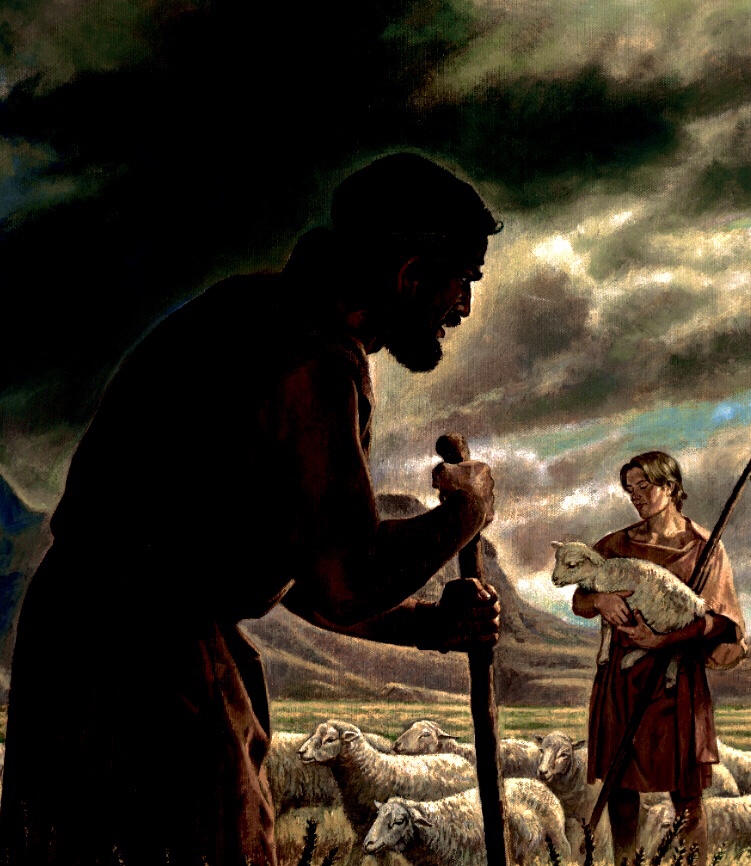
Sometime after Adam and Eve sinned against God and were forced out of the Garden of Eden, they began to have children. The first son was Cain and he was a farmer. The next son was Abel who was a shepherd. When it was time to offer sacrifices to God, Cain brought fruit from the ground and Abel brought the fat portions from some of the firstborn. God favored Abel’s sacrifice, but He didn’t extend that same grace to Cain. This rejection made Cain angry and God admonished Cain to do the right thing and his sacrifice would be accepted. Cain was also warned that if he refused to do the right thing—sin was ready to consume him.
Cain disregarded God’s admonition and warning. Instead he took out his anger on his righteous brother, Abel. In a premeditated manner, Cain invited Abel out to the fields where he murdered him! Later God approached Cain about the whereabouts of Abel just as He did with Adam and Eve with their sin. Cain (being a child of sin and the devil) lied and countered the all-knowing God with the infamous question, “Am I my brother’s keeper?” Cain’s response lacked remorse for his dead brother, but rather that his punishment was too severe and that he would be killed in revenge.
Cain’s response lacked remorse for his dead brother, but rather that his punishment was too severe and that he would be killed in revenge.
God responded quickly with the pronouncement of his punishment: Cain would be driven from his people, no longer able to farm the land and he would be a wanderer. Cain’s response lacked remorse for his dead brother, but rather that his punishment was too severe and that he would be killed in revenge. The Lord God, being full of mercy and grace, put a mark on Cain to keep people from killing him. As a result Cain left the presence of God, started a family, and built a city. His descendants were prosperous, worldly, and without God.
The legacy of Cain led to the destruction of the entire world with the flood. (You can read the Biblical account of Cain and Abel in Genesis 4) What can we learn from this Bible story for our lives today? Question #1) Are we better than Cain?
“Anyone who hates a brother or sister is a murderer, and you know that no murderer has eternal life residing in him” (1 John 3:15).
It’s easy for us to judge Cain without taking a look at our own sinful hearts. Cain was jealous of Abel because of God’s favor on him. Do we harbor jealousy and envy towards our brothers and sisters in Christ who are honored for their righteous service and gifts to the Lord? The sin of jealousy can wind itself around our hearts and minds with such deception that we may not even recognize it right away.
When the Holy Spirit sends us that gentle nudge about envy or jealousy in our hearts, we have the same opportunity that was afforded to Cain…repent! By admitting our weakness in the flesh we can be forgiven and restored to right relationship with God. Otherwise, we allow the bitter root to grow into sin and become murderers in our hearts. Question #2) Are we offering the right sacrifices?
“You also, like living stones, are being built into a spiritual house to be a holy priesthood, offering spiritual sacrifices acceptable to God through Jesus Christ” (1 Peter 2:5).
Cain gave back to God what he deemed adequate. Abel brought a better offering in faith and was honored by God. Do we offer sacrifices out of duty, compulsion, or seeking the admiration of other people? While our spiritual sacrifice may seem great on the surface, God knows our hearts. He knows our true motives in giving towards the kingdom of God in our time, energy, finances, and efforts. There is nothing hidden from Him.
By spending time in prayer and Bible study, our hearts are kept sensitive to the leading of the Holy Spirit. We are compelled by our love for God to give the best we have to offer in light of the sacrifice of Jesus Christ. Question #3) Are we mastering sin or being mastered by it?
“For sin shall no longer be your master, because you are not under the law, but under grace” (Romans 6:14).
God warned Cain that sin desired to have him, but that he should master it. Are we entangled in sin as much as those without Christ? It should never be so with believers! We’ve been bought with the precious blood of Jesus so that we no longer live as slaves to sin. Just as Cain, we’re warned through the Holy Spirit to not use grace as an opportunity to sin.
As Christians we have the power of the Holy Spirit to overcome sinful choices. Sin wants to take root in our hearts. But we resist it by keeping our hearts fertile with the desire to please God more than pleasing ourselves. Cain or Abel? Your choice…
Cain’s actions were evil and Abel’s were righteous. Both men demonstrated in action the passions of their hearts. What is your passion concerning the Lord? If you’re spiritually passive and stale—it may be time for a heart check. The Lord wants the best from you and the best for you. Don’t ignore the knocks on your heart from the Holy Spirit, repent and be made whole in the way of righteous Abel rather than the error of Cain.
There is no doubt that in today’s fast-paced world, technology has become an integral part of our lives. Our cell phones have become a constant companion that we cannot imagine living without, but what about the Bible? The Bible, which contains the word of God and provides guidance on how to live a fulfilling and meaningful life, often takes a backseat to our devices. However, if we treated our Bible with the same level of importance as our cell phone, the world would undoubtedly be a better place.
In Psalm 119:105, it is written, “Your word is a lamp to my feet and a light to my path.” This verse highlights the importance of the Bible in providing us with guidance and direction in our lives. By reading and studying the Bible, we can gain insight into how to navigate the complexities of life and make wise choices. Similarly, in Joshua 1:8, it is stated that we should meditate on God’s word day and night so that we may observe and do all that is written in it. This suggests that by immersing ourselves in scripture, we can become better equipped to apply its teachings in our daily lives.
Moreover, the Bible teaches us about the importance of developing a relationship with God. In John 15:5, it is written, “I am the vine; you are the branches. Whoever abides in me and I in him, he it is that bears much fruit, for apart from me you can do nothing.” This verse reminds us that we need to stay connected to God through prayer, worship, and study of His word. It is only by remaining close to Him that we can bear fruit in our lives and share God’s love with others.
So download a Bible on your cell phone or start carrying your Bible and give yourself to start 5-10 minutes a day.
Teaching the Bible is an endeavor that requires patience, dedication, and a deep understanding of its messages. While we all have our own interpretations of the Scriptures, it is important to remember that the foundation of our faith lies in believing in Jesus Christ as our Lord and Savior. As John 3:16 states, “For God so loved the world that he gave his one and only Son, that whoever believes in him shall not perish but have eternal life.”
Reading the Bible is not just about acquiring knowledge or checking off a religious obligation; it is about cultivating a relationship with God and understanding His plan for humanity. The Bible teaches us about love, forgiveness, humility, and many other virtues that are essential for leading a fulfilling life. As Proverbs 3:5-6 says, “Trust in the Lord with all your heart and lean not on your own understanding; in all your ways submit to him, and he will make your paths straight.”
One of the most fundamental aspects of faith is recognizing our imperfections and striving to be better individuals. While we may stumble and fall, God’s grace and mercy are always available to us. As Romans 3:23-24 elucidates, “For all have sinned and fall short of the glory of God, and all are justified freely by his grace through the redemption that came by Christ Jesus.”
In addition to recognizing our flaws, the Ten Commandments serve as a guide for leading a righteous life. As Exodus 20:3-17 lays out, we are to have no other gods before God, honor our parents, avoid murder, theft, adultery, bearing false witness, and coveting our neighbor’s possessions. These principles not only reinforce our relationship with God but also promote a harmonious society.
The Bible is a complex and multifaceted book that has been studied, interpreted, and debated by scholars and believers for centuries. At its core, the Bible is a collection of sacred texts that communicate important messages about God, humanity, and the world.
Interpreting the Bible requires a deep understanding of its historical and cultural context, as well as an appreciation for the diverse voices and perspectives that are represented within its pages. Some interpret the Bible as a literal document, while others view it as a collection of symbolic stories and allegories.
Regardless of one’s approach to interpretation, the Bible offers insights into the fundamental truths of life and spirituality. From the creation story in Genesis to the teachings of Jesus in the New Testament, the Bible provides guidance on topics such as morality, forgiveness, compassion, and justice.
Ultimately, the interpretation of the Bible is a deeply personal and subjective process. Each individual must grapple with the text on their own terms and strive to understand its messages in a way that is meaningful to them.
In the book of Genesis, it is written that God created the world in six days and rested on the seventh day. Here is a brief summary of what God did on each day:
Day 1: God created light and separated it from darkness. Day 2: God created the sky and separated it from the waters. Day 3: God created the dry land and plants. Day 4: God created the sun, moon, and stars to rule the day and night. Day 5: God created the sea creatures and birds. Day 6: God created land animals and humans in his own image. Day 7: God rested and blessed the seventh day.
This teaches us about the power and majesty of God, his creativity, and the importance of rest and Sabbath.
The Story of Adam, Eve, the Serpent, and the Tree of Knowledge
One of the most well-known passages of the Bible is the story of the creation found in the book of Genesis. This story relates how God created the world and all living things within it. However, one particular aspect of the creation story that has fascinated scholars and theologians for centuries is the narrative of Adam and Eve, the serpent, and the tree of knowledge. In todays teaching , we will explore the biblical account of the creation of humanity and the events that unfolded in the Garden of Eden.
The story begins with God creating the universe, the earth, and all life on it. On the sixth day of creation, God created humans – male and female – in his image and likeness. These two individuals were named Adam and Eve and were placed in the Garden of Eden, a paradise that God had created for them. The Garden was lush and plentiful, full of trees bearing fruit of every kind, including the forbidden tree of knowledge.
The serpent, who was described as crafty and cunning, approached Eve and encouraged her to eat from the tree of knowledge, promising that her eyes would be opened and she would become like God. Eve, in turn, convinced Adam to join her in consuming the fruit, and they both became aware of their nakedness and felt shame. When God returned to the Garden, he confronted Adam and Eve about their disobedience, and they each tried to place blame on the other. In response to their transgression, God punished them by casting them out of the Garden and condemning them to a life of hardship and toil.
So, where was paradise? The Garden of Eden is often depicted as a literal place, but it is more likely to be a symbolic representation of the state of perfection and harmony that existed before the Fall. Regardless of its physical location, the Garden of Eden represents the ideal world that humans long for, a place of peace, abundance, and bliss.
The story of Adam and Eve has been interpreted in a variety of ways throughout history. Some scholars see the story as an allegory or metaphor for the human condition, representing our inherent struggle between good and evil, while others see it as a literal account of the world’s origins. Regardless of how one interprets the story, it is clear that it reflects the fundamental human experience of temptation, guilt, and shame.
I believe every word in the Bible and the story of Adam and Eve, the serpent, and the tree of knowledge remains one of the most iconic and thought-provoking passages in all of literature. Through this story, we are reminded of humanity’s potential for both greatness and failure, and our need for redemption and forgiveness. As Christians, we must strive to live in accordance with God’s will, resisting the temptations that lead us away from him and towards destruction. May we all find our way back to paradise.
Understanding the Fall of Adam and Eve
The details of the creation of man and woman happen after the Bible says God rested on the seventh day. But their creation clearly takes place on day number six. God’s Command to Adam and Eve
God gave Adam and Eve a beautiful garden named Eden in which to live. They had all the fruit and vegetables they could possibly want to enjoy. They were to tend the garden and have dominion over it and the animals. Some people say that work is part of the curse, but the actual curse is that work would be difficult and laborious.
God gave Adam and Eve many beautiful plants and trees to enjoy for food. But He also gave them one tree from which they were not to eat. This was the Tree of the Knowledge of Good and Evil. God’s command to them was that if they ate from that tree they would die. Adam and Eve Bible StoryThe Fall of Adam and Eve
The Bible says that the Devil entered into a serpent and tempted Eve (Genesis 3:1). He got Eve to doubt God’s Word. Satan told her that God knew that Eve would become enlightened and possess the same knowledge as God had if she ate from the fruit of the tree. This is much like Satan’s temptation to man today—that he does not need God.
The fruit was beautiful and Satan was cunning. Eve fell to the temptation and took the fruit from the forbidden tree. Finding it delicious she took it to Adam. Adam also ate from it. At the time he ate their lives, and that of all future humanity, changed. They immediately knew they had done wrong. They disobeyed God and would be punished. Adam and Eve Hid From God
As was God’s custom, He came to visit Adam and Eve in Eden. They tried to cover their nakedness with fig leaves. Their nakedness was something they had never even noticed before. When they heard God coming they hid from Him. God searched for them. Of course we know that God is all knowing. He was not looking for them because He didn’t know where they were, but to give Adam and Eve a chance to return to Him and acknowledge their sin. God Punished Adam, Eve and the Serpent
God spoke with Adam, Eve and the serpent. Each one had a specific punishment from God. Adam was told that his work would be hard. It would become toilsome (Genesis 3:17-19).
The woman would bear children with great pain (Genesis 3:16). God intended that Adam and Eve would have children because He talked about man and woman leaving father and mother to get married (Genesis 2:24). Adam and Eve had no father or mother. It was a pronouncement for future generations which God fully intended to come with time. Eve’s punishment was that the bearing of children would be painful.
To the serpent he was given the punishment of crawling on the ground and that he would be cursed more than any other creature (Genesis 3:14). This punishment was given to the animal and not just to Satan. We don’t know if snakes had feet before this punishment, but God changed the animal in some way. To Satan God said that he would be punished in the future by the promise God would give. God’s Great Promise
When speaking the extent of Satan’s punishment God said that the seed of the woman would come to destroy him. This seed was the promised Redeemer we read so much about in the Old Testament. He was revealed in the New Testament to be Jesus Christ. Although Satan would bruise the Savior’s heel (a fatal wound) the redeemer would crush Satan’s head (a mortal wound) (Genesis 3:15). To show God’s love and to give a sign of things to come, God sacrificed an animal for Adam and Eve (Genesis 3:21). This slain animal was to represent future sacrifices and forgiveness by God. God made clothes for Adam and Eve from the animal which shows God covering their sins with a substitutionary sacrifice. The Rest of the Curse
God told Adam and Eve in the beginning that they would die on the day they ate from the Tree of the Knowledge of Good and Evil. One death was immediate. They were spiritually separated from God. However, their physical bodies continued to live. But they would not live forever as God apparently intended. They would become old, sick and die.
All three (Adam, Eve and the serpent) were put out of the guard and the curse came not only on them but on the whole world. There were briers in the fields now. They had to provide for themselves with their own hands. They no longer had a personal communion with God. The Future for Adam and Eve
They had a few children (Genesis 4). Sadly their firstborn son killed their second son. Their lives were so different than what God intended. Adam died at 930 years of age (Genesis 5:5). Bible years
The Biblical story of the Creation of the Universe and the Fall of Man
Hey everyone, we are diving into the book of Genesis today! This incredible book is full of fascinating stories about the beginning of the world as we know it. We’ll start with the account of Creation and how God spoke everything into existence.
Then, we’ll talk about Adam and Eve, the first humans on earth, and their sons Cain and Abel. We’ll cover how sin entered the world and how God showed mercy to generations to come through the line of Seth.
Next up, we’ll look at Noah and the flood, and how God saved him and his family from destruction. Then, we’ll get into the story of Abraham and Sarah, and how God made a covenant with them that would bless all nations.
We’ll also talk about Isaac, the son of Abraham, and his wife Rebekah. And let’s not forget Jacob, who wrestled with God and became the father of the twelve tribes of Israel.
There’s so much to unpack in the book of Genesis, and I’m excited to dive in with you all. Stay tuned for more biblical insights and inspiring stories. Don’t forget to follow and share with your friends! #Genesis #BibleStudy #Inspiration
The book of Genesis is a cornerstone of the Christian faith, and its depiction of the creation story sets the stage for the entirety of the Bible. Today we will explore the first few chapters of Genesis and delve into the intricate details of God’s creation of the world and humanity.
The book of Genesis begins with an introduction to the concept of God as the creator of all things. The opening line, “In the beginning God created the heavens and the earth,” sets the stage for what is to come. Over the course of six days, God creates the world and everything in it, culminating in his creation of humanity on the sixth day.
On the first day, God creates light, separating it from the darkness.
On the second day, he separates the waters above from the waters below, creating the sky.
On the third day, he creates dry land and vegetation.
On the fourth day, he creates the sun, moon, and stars.
On the fifth day, he creates fish and birds.
Finally, on the sixth day, he creates land animals and humans.
He rests the seventh day.
Adam and Eve are the first humans, and their story begins in the Garden of Eden. They were given one commandment by God, not to eat from the tree of knowledge of good and evil, which was in the middle of the garden. However, they were tempted by the serpent, who persuaded them to disobey God and eat from the forbidden tree.
As a result of their disobedience, Adam and Eve were expelled from the Garden of Eden. They were cursed, and their descendants were condemned to live in a world of sin and suffering. However, despite their transgressions, God still loved them and promised to send a savior to redeem humanity.
Here is a list of all the books in the Bible, in order: My Goal is to take each book and summarize it, based on my own interpretation.
Even Bible teachers and scholars may have different interpretations of certain passages or themes. It is important for individuals to engage in their own personal study and reflection on the text while also seeking guidance from reputable sources such as religious leaders or scholars.
It is also important to approach the word with an open mind and heart, recognizing its historical and cultural context while also applying its timeless and universal truths to our own lives.
So get your Bible ready we will start reading Genesis in The Old Testament on June 01,2023
I will skip around But here is the order so far. Going to Old Testament Genesis-Exodus-Psalms- Proverbs – New Testament – James and Acts . Then back to Old Testament –
The easiest Bible to understand is the New Living Translation or New American Standard but any version of the written Bible is good. If you cannot buy a Bible you can down load the Bible on your phone or tablet.




 Joyful-Echoes