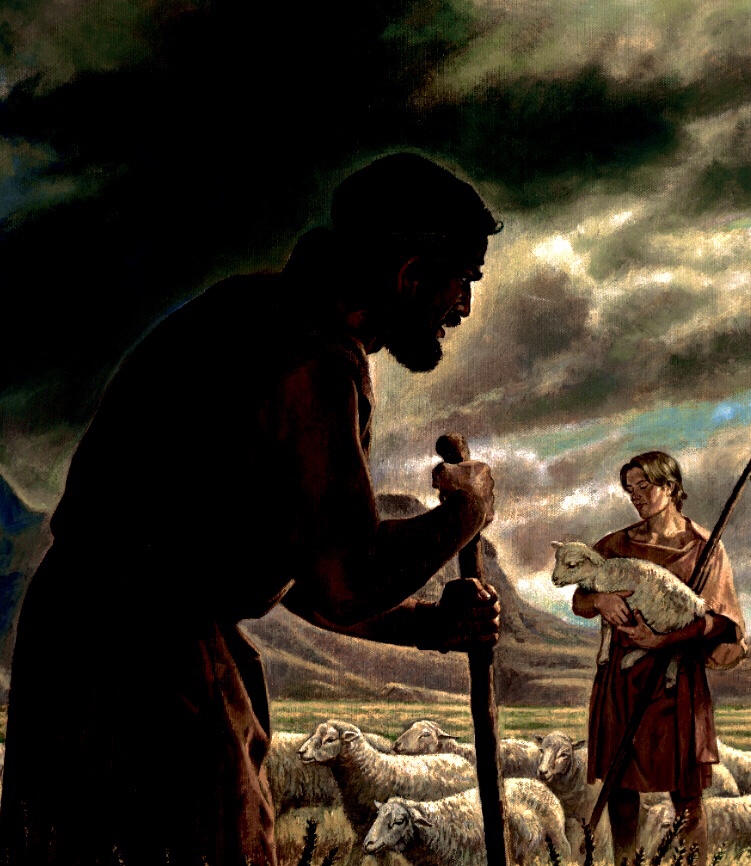
The story of Cain and Abel is one of the oldest and most tragic tales in the Bible. It tells how the first two sons of Adam and Eve, Cain and Abel, both offered sacrifices to God, but God was pleased only with Abel’s offering of the firstlings of his flock . Cain, who was a farmer, became angry and jealous of his brother, and killed him in the field . God confronted Cain and asked him where Abel was. Cain lied and said he did not know, adding, \”Am I my brother’s keeper?
God knew what Cain had done and cursed him to wander the earth as a fugitive and a vagabond . God also put a mark on Cain to protect him from anyone who might try to kill him. Cain left the presence of God and settled in the land of Nod, east of Eden . There he had a son named Enoch and built a city.
It’s often said that our actions speak louder than words. For the first two sons of Adam and Eve, their actions spoke of their level of faith in God. One son demonstrated his faith and was received from God. The other son, Cain, demonstrated his faith in works leading to his sinful demise.
Bible Story Summary
Sometime after Adam and Eve sinned against God and were forced out of the Garden of Eden, they began to have children. The first son was Cain and he was a farmer. The next son was Abel who was a shepherd. When it was time to offer sacrifices to God, Cain brought fruit from the ground and Abel brought the fat portions from some of the firstborn. God favored Abel’s sacrifice, but He didn’t extend that same grace to Cain. This rejection made Cain angry and God admonished Cain to do the right thing and his sacrifice would be accepted. Cain was also warned that if he refused to do the right thing—sin was ready to consume him.
Cain disregarded God’s admonition and warning. Instead he took out his anger on his righteous brother, Abel. In a premeditated manner, Cain invited Abel out to the fields where he murdered him! Later God approached Cain about the whereabouts of Abel just as He did with Adam and Eve with their sin. Cain (being a child of sin and the devil) lied and countered the all-knowing God with the infamous question, “Am I my brother’s keeper?”
Cain’s response lacked remorse for his dead brother, but rather that his punishment was too severe and that he would be killed in revenge.
Cain’s response lacked remorse for his dead brother, but rather that his punishment was too severe and that he would be killed in revenge.
God responded quickly with the pronouncement of his punishment: Cain would be driven from his people, no longer able to farm the land and he would be a wanderer. Cain’s response lacked remorse for his dead brother, but rather that his punishment was too severe and that he would be killed in revenge. The Lord God, being full of mercy and grace, put a mark on Cain to keep people from killing him. As a result Cain left the presence of God, started a family, and built a city. His descendants were prosperous, worldly, and without God.
The legacy of Cain led to the destruction of the entire world with the flood. (You can read the Biblical account of Cain and Abel in Genesis 4)
What can we learn from this Bible story for our lives today?
Question #1) Are we better than Cain?
“Anyone who hates a brother or sister is a murderer, and you know that no murderer has eternal life residing in him” (1 John 3:15).
It’s easy for us to judge Cain without taking a look at our own sinful hearts. Cain was jealous of Abel because of God’s favor on him. Do we harbor jealousy and envy towards our brothers and sisters in Christ who are honored for their righteous service and gifts to the Lord? The sin of jealousy can wind itself around our hearts and minds with such deception that we may not even recognize it right away.
When the Holy Spirit sends us that gentle nudge about envy or jealousy in our hearts, we have the same opportunity that was afforded to Cain…repent! By admitting our weakness in the flesh we can be forgiven and restored to right relationship with God. Otherwise, we allow the bitter root to grow into sin and become murderers in our hearts.
Question #2) Are we offering the right sacrifices?
“You also, like living stones, are being built into a spiritual house to be a holy priesthood, offering spiritual sacrifices acceptable to God through Jesus Christ” (1 Peter 2:5).
Cain gave back to God what he deemed adequate. Abel brought a better offering in faith and was honored by God. Do we offer sacrifices out of duty, compulsion, or seeking the admiration of other people? While our spiritual sacrifice may seem great on the surface, God knows our hearts. He knows our true motives in giving towards the kingdom of God in our time, energy, finances, and efforts. There is nothing hidden from Him.
By spending time in prayer and Bible study, our hearts are kept sensitive to the leading of the Holy Spirit. We are compelled by our love for God to give the best we have to offer in light of the sacrifice of Jesus Christ.
Question #3) Are we mastering sin or being mastered by it?
“For sin shall no longer be your master, because you are not under the law, but under grace” (Romans 6:14).
God warned Cain that sin desired to have him, but that he should master it. Are we entangled in sin as much as those without Christ? It should never be so with believers! We’ve been bought with the precious blood of Jesus so that we no longer live as slaves to sin. Just as Cain, we’re warned through the Holy Spirit to not use grace as an opportunity to sin.
As Christians we have the power of the Holy Spirit to overcome sinful choices. Sin wants to take root in our hearts. But we resist it by keeping our hearts fertile with the desire to please God more than pleasing ourselves.
Cain or Abel? Your choice…
Cain’s actions were evil and Abel’s were righteous. Both men demonstrated in action the passions of their hearts. What is your passion concerning the Lord? If you’re spiritually passive and stale—it may be time for a heart check. The Lord wants the best from you and the best for you. Don’t ignore the knocks on your heart from the Holy Spirit, repent and be made whole in the way of righteous Abel rather than the error of Cain.