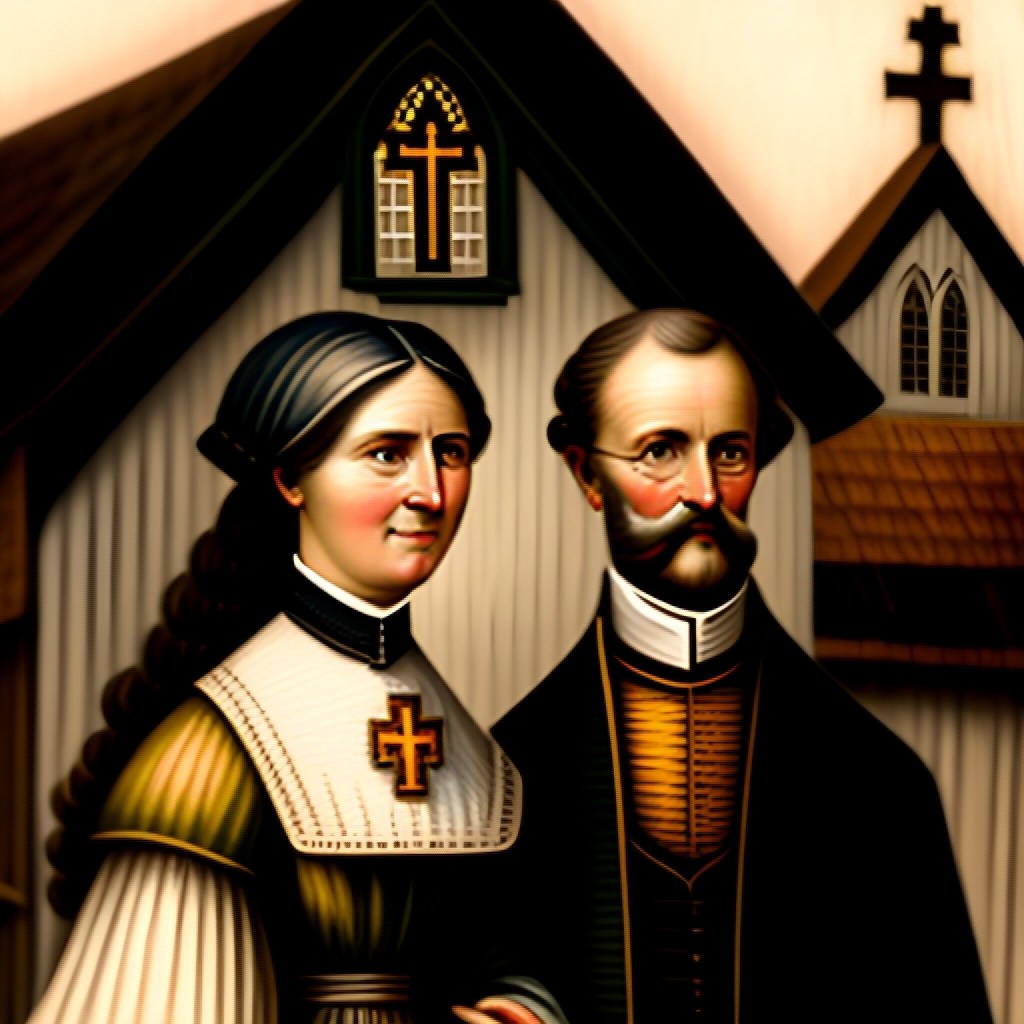
Back in time in the ancient land of Canaan, there lived a man named Abraham. He was a righteous and honorable man, known for his deep faith in the one true God. Abraham was blessed with two sons, Ishmael and Isaac.
Ishmael, the elder son, was born to Abraham and his wife Sarah’s maidservant, Hagar. As Ishmael grew older, he became skilled in hunting and survival in the desert. His father loved him dearly and saw great potential in him.
Isaac, on the other hand, was born to Abraham and his wife Sarah in their old age. Isaac was a gentle and wise young man who possessed great compassion and empathy towards others. His birth was seen as a miracle by his parents.
As the brothers grew older, differences started to arise between them. Ishmael, being strong and independent, often enjoyed exploring the vast desert and its mysteries. He found peace and solitude in the wilderness, developing a deep bond with nature.
Isaac, on the other hand, felt a powerful connection to his father’s teachings and the spiritual world. He dedicated his time to studying and understanding the ways of God, seeking guidance and wisdom.
One fateful day, when Isaac was a young man, a test of faith was placed upon Abraham by God. He was instructed to offer his beloved son as a sacrifice on Mount Moriah. Abraham, though devastated by this command, trusted in God’s plan and prepared to carry out the sacrifice.
As Abraham and Isaac journeyed together up the mountain, Ishmael learned of their mission. Filled with concern for his brother, he followed them quietly from a distance. Deep in his heart, Ishmael hoped that there would be a way to prevent the sacrifice and protect his beloved sibling.
When Abraham and Isaac reached the mountaintop, Isaac willingly submitted himself to his father’s hands, placing his trust in God’s will. Just as Abraham prepared to fulfill the divine command, a voice from heaven called out, guiding him to stop.
God had seen their devotion and faith and provided a ram caught in a nearby thicket as a substitute for Isaac. In that moment, Abraham witnessed God’s mercy and grace, and he praised Him for His endless love.
Ishmael, who had been silently watching from afar, emerged from the shadows and rushed towards his brother, relieved to see him unharmed. The brothers embraced, their bond strengthened by the shared experience and the knowledge that they were indeed loved and protected.
From that day forward, Ishmael and Isaac cherished their relationship, understanding the value of family and the importance of faith. Each brother took a different path in life, but their connection remained strong, as they learned from one another and celebrated their differences.
In a small village nestled amongst rolling hills, there lived a young girl named Lily. Lily had a special connection with animals and spent most of her time in the barn, surrounded by her furry and feathered friends.
One day, as she was tending to the horses, she noticed a little mouse scurrying about. Curiosity piqued, Lily approached the mouse and struck up a conversation. To her surprise, the mouse could talk! His name was Oliver, and he was quite wise for his size.
Oliver shared with Lily that there was a young pony named Starlight who lived in the barn. Unfortunately, Starlight was plagued by anxiety and fear. Every time he was asked to perform a task or participate in a race, his heart would race and his legs would tremble.
Lily instantly felt a connection with Starlight. She understood what it felt like to be scared and anxious. Determined to help him, she turned to Oliver and the barn cat, Whiskers, for guidance. Together, they formed an unlikely team on a mission to teach Starlight how to be fearless.
They started by gently coaxing Starlight to walk a little faster around the track. With each triumphant step, they celebrated his progress. Slowly but surely, Starlight grew more confident. He trotted with grace and determination, his fear slowly melting away.
Months turned into a year, and the transformation in Starlight was astounding. The once anxious pony had blossomed into a beautiful and confident horse. People from all over the village were captivated by his newfound spirit and begged to buy him.
But Lily and her family refused every offer. They had seen firsthand the power of love and friendship in helping Starlight overcome his fears. They couldn’t bear to part with him, knowing the incredible journey they had been on together.
Soon, it was time for Starlight’s first official race. Excitement filled the air as he stepped onto the track, surrounded by cheering spectators. But as the moment approached, anxiety started to creep back into Starlight’s heart. Doubts began to cloud his mind.
However, in the corner of the racetrack were Lily, Oliver, and Whiskers, unwavering in their support. They reminded Starlight of how far he had come and whispered encouraging words into his ears. With every stride, Starlight became more determined to prove his worth.
As the race came to an end, Starlight crossed the finish line in second place. It was a remarkable achievement considering where he had started. The crowd erupted in applause, amazed at the transformation they had witnessed.
From that day forward, Starlight continued to participate in races, winning multiple awards and capturing the hearts of all who saw him. He became a symbol of hope, showing that with love, patience, and the support of dear friends, even the most anxious among us can achieve greatness.
The story of Starlight, Lily, Oliver, and Whiskers spread far and wide, inspiring countless others to overcome their fears and chase their dreams. The power of prayer, friendship, and unwavering love had forever changed the life of one horse and the lives of those who had believed in him.
In a small town, there was a man named Paul who always felt like he wasn’t good enough. He grew up hearing how dumb he was he also had a verbally abusive boss .He would constantly put himself down, without realizing how it was affecting those around him. Over time, people began to distance themselves from him, as his negativity brought them down too.
However, one day, Paul met someone who would change his life forever – Jesus. He was amazed at how this kind and compassionate person saw the good in him, even when he couldn’t see it himself. Jesus helped Paul realize his worth and purpose, giving him the confidence to start believing in himself again. Not to listen to the harsh words of others., he pointed out what a fantastic carpenter he was. And what a good eye he has.
With newfound confidence, Paul started to do great things and inspire others around him. People began to notice the change in him, and soon, they started to appreciate him for who he truly was – a kind and loving soul who just needed a little encouragement.
From then on, Paul continued to spread positivity and joy wherever he went, inspiring others to believe in themselves and reach for their dreams. And in doing so, he discovered the true power of self-love and acceptance.
Once upon a time, in a land far above the clouds, there lived a majestic eagle named Aurora. With her wings spread wide and eyes filled with curiosity, she soared through the boundless sky, exploring the breathtaking wonders of the world below.
Aurora had the most remarkable feathers, painted with shades of gold and silver that glistened in the sunlight. As she glided effortlessly, she couldn’t help but admire her own reflection in the crystal-clear lakes. “Oh, how beautiful I am,” she would whisper to herself.
But being the most beautiful bird in the sky was not the only thing that made Aurora special. She possessed incredible strength and agility, allowing her to fly higher and faster than any other creature. She was a symbol of freedom, grace, and untamed spirit.
One fine morning, as Aurora embarked on her daily adventure, she noticed a lone cloud floating in the distance. Intrigued, she decided to investigate. As she approached, she saw a tiny bird perched upon the fluffy cloud, shivering from the cold.
Eager to help, Aurora gently landed beside the little bird. “Dear friend, why are you alone and freezing up here?” she asked, concern filling her voice.
The small bird looked up and replied, “I have always dreamt of flying like you, Aurora. But without mighty wings like yours, I can only rely on these fragile feathers to keep me warm.”
Aurora’s heart melted with compassion. She understood how the little bird longed to experience the joy of soaring high amidst the vastness of the sky. With a gentle smile, she said, “Fear not, my friend. I shall teach you to fly and show you the wonders of the world from above.”
And so, Aurora became the little bird’s mentor, teaching it how to glide with the wind, how to navigate the currents, and how to believe in its own abilities. Day after day, they practiced together, turning the little bird’s dreams into reality.
As the seasons changed, the small bird blossomed into a magnificent creature. With each passing day, its wings grew stronger, and its confidence soared higher. Together, Aurora and the once-shivering bird discovered hidden valleys, cascading waterfalls, and lush forests that stretched beyond the horizon.
One day, as they rested upon a mountaintop, overlooking a vast expanse of land, the now fearless bird turned to Aurora with gratitude in its eyes. “Thank you, dear friend, for showing me the true meaning of freedom. I will forever cherish your guidance and the beauty of this wondrous sky.”
Aurora smiled, her heart filled with joy. She knew that she had not only given the gift of flight to the little bird but also ignited a spark of courage and determination within it. As they spread their wings once more and took flight, their bond remained unbreakable, eternally united by the love for the sky.
And so, the tale of the eagle who soared through the sky with grace and helped a tiny bird find its wings became a legend, whispered among the clouds and passed down through generations. It reminded all creatures big and small that within each of us lies the potential to rise above our limitations, conquer our fears, and embrace the beauty of the world around us.
In a quaint little village nestled amidst rolling hills and bountiful meadows, there lived a married couple named Clara and Henry. They were both deeply passionate about nature and harbored a shared dream of owning a small farm where they could grow their own food organically, without the use of harmful chemicals.
Clara had always loved tending to plants, her green thumb guiding every delicate touch she bestowed upon the soil. Henry, on the other hand, had a deep yearning to connect with the land, to feel the earth beneath his feet as he nurtured its bounty. Together, they were a force fueled by love, determination, and an unwavering belief in the power of nature’s embrace.
One sunny morning, as Clara gazed out over their modest backyard garden, she turned to Henry with a sparkle in her eyes. “My love,” she whispered, “what if we took our passion for gardening further? What if we had our own farm, where we could sow seeds of love and grow an abundance of healthy, nourishing food?”
Henry’s heart swelled with joy at the mere thought. “Oh, Clara, that would be a dream come true! Just imagine, harvesting fresh vegetables and fruits straight from our land, sharing them with our loved ones, and reveling in the simple pleasures life has to offer.”
With their hearts aligned and minds set aflame with dreams, Clara and Henry embarked on a journey. They scoured the village for a plot of land that could become their sanctuary, their own corner of paradise. After much searching, they stumbled upon a hidden gem, a patch of land surrounded by gentle streams and lush fields.
They wasted no time in bringing their vision to life. The couple worked tirelessly, their hands covered in dirt and sweat, but their spirits soaring high. Day by day, they tilled the land, sowed seeds of hope, and tended to their burgeoning crops with tender love and care.
Seasons came and went, each bringing its own challenges and triumphs. Clara and Henry faced droughts that tested their patience, pests that threatened their harvest, and countless hours of hard work. But amidst it all, their love grew stronger, weaving through the threads of their shared passion, nourishing not just the soil but their souls as well.
On the day they finally tasted the fruits of their labor, Clara and Henry couldn’t contain their joy. They bit into plump, juicy tomatoes, crunched on vibrant lettuce leaves, and savored the taste of pure bliss. Their farm had become a haven, a source of sustenance not just for their bodies but for their spirits too.
Word of their organic oasis spread far and wide, attracting neighbors, friends, and even curious travelers from distant lands. People marveled at the abundance and flavors that could only come from a labor of love and an unwavering commitment to nature’s wisdom.
As time passed, Clara and Henry’s dream expanded beyond their wildest imaginations. They became part of a larger movement, inspiring others to embrace sustainable farming practices, to reconnect with the land, and to appreciate the simplicity and beauty found in growing their own food.
And so, Clara and Henry’s small farm transformed not just their lives, but the lives of many. It became a symbol of hope, a testament to the power of dreams, and a reminder that sometimes, the most wondrous adventures lie right at our fingertips, just waiting for us to reach out and grasp them.
And as the sun set on their beloved farm each day, Clara and Henry would stand hand in hand, their faces aglow with contentment, knowing they had created a life filled with purpose and joy, all born from a simple dream and a boundless love for the earth.
Noah, one of the most well-known figures in the Bible, was a righteous man who found favor in the eyes of the Lord. According to Genesis 6:9, “Noah was a righteous man, blameless among the people of his time, and he walked faithfully with God.”
When God saw how wicked humanity had become, He decided to send a flood to destroy everything on earth. However, He instructed Noah to build an ark so that he and his family could be saved along with a pair of every kind of animal.
Noah’s wife is not named in the Bible, but she is described as the mother of his three sons – Shem, Ham, and Japheth. Together, they worked tirelessly to build the massive ark according to God’s instructions.
After the floodwaters receded, the ark came to rest on the mountains of Ararat (Genesis 8:4). The exact location of these mountains is uncertain, but it is believed to be somewhere in the region of modern-day Turkey.
Noah is an important figure in the Bible because he obeyed God even when it seemed impossible. He trusted in God’s promises and acted on faith, which ultimately saved him and his family from the destruction of the flood.
Through Noah’s story, we can learn valuable lessons about the importance of obedience, faith, and trust in God’s plan. We can also find comfort in knowing that even in the darkest of times, God is always with us and will never abandon us.
Noah did as God commanded, and when he was 600 years old, in Biblical years , he completed the ark. He took his family into it, as well as pairs of all the different animals, two by two. Seven days later, the flood came upon the earth and the rain poured from the skies for forty days and forty nights. The waters rose higher and higher on the face of the earth, until even the tops of the highest mountains were covered and every breathing creature perished (7:22).
After 150 days, the Lord brought a great wind over the earth, causing the waters to subside, and the ark came to rest on top of Mt. Ararat. Noah released a dove:
Then he released a dove, to see if the waters had lessened on the earth. But the dove could find no place to perch, and it returned to him in the ark, for there was water over all the earth. Putting out his hand, he caught the dove and drew it back to him inside the ark. He waited yet seven days more and again released the dove from the ark. In the evening the dove came back to him, and there in its bill was a plucked-off olive leaf! So Noah knew that the waters had diminished on the earth. He waited yet another seven days and then released the dove; but this time it did not come back. (Genesis 8:7-12)
When the dove did not return, Noah opened the covering of the ark and saw that the waters had dried up from the ground. God instructed him to bring his family and all the creatures out of the ark.
What was the first thing Noah did upon exiting the ark? He built an altar to God and presented him with an offering, giving thanks to him for his provision. And God made a promise never to flood the earth again, setting a rainbow in the sky as a sign of this covenant with mankind.
What We Can Learn from Noah
The story of Noah and the Flood is one of judgement and salvation; of obedience and disobedience. In an era of overwhelming wickedness, Noah set himself apart by living righteously. Noah was likely mocked for building a giant boat when no flood was yet seen upon the earth – but he did not worry about what other people thought. He simply responded to God’s commands with a willing heart and hands. God rewarded him for his righteousness and obedience, saving both him and his family from destruction.
The story of the Flood also demonstrates both the gravity of God’s justice and the promise of His salvation. Every sin we commit grieves God, and His justice demands judgement for that sin. Just as God provided salvation for Noah and his family when His judgement was brought upon the world, so also does God provide salvation for each of His followers through Christ.
My thoughts.
In today’s fast-paced and often chaotic world, there is much we can learn from the story of Noah. This ancient tale holds valuable lessons that can guide us in our own lives, helping us navigate through challenges and make wise decisions. The story of Noah teaches us the importance of living with integrity, following our convictions, and trusting in a higher power.
Noah’s unwavering righteousness sets him apart from the rest of society. In a time where wickedness prevailed, he remained steadfast in his commitment to live a righteous life. This teaches us the significance of upholding our moral values, even when it may seem unpopular or go against the prevailing norms. Noah’s example reminds us that staying true to ourselves and our beliefs is crucial, regardless of the opinions of others.
Another vital lesson we can draw from Noah’s story is the importance of obedience. When Noah received the command from God to build an ark, he did not question or doubt. Instead, he immediately set to work, wholeheartedly obeying God’s instructions. This displays his unwavering faith and trust in a higher power. It reminds us of the significance of listening to our inner voice, following our intuition, and having faith in something greater than ourselves. By doing so, we can navigate the challenges and uncertainties of life with confidence and resilience.
Noah’s story also emphasizes the power of perseverance and resilience. As he constructed the massive ark, Noah faced ridicule and disbelief from those around him. Yet, he remained undeterred, focused on the task at hand. This serves as a reminder to stay committed to our goals, even when faced with skepticism or adversity. Noah’s unwavering determination paid off in the end when he and his loved ones were saved from the catastrophic flood. It teaches us the importance of staying persistent and dedicated, even in the face of daunting obstacles.
Furthermore, Noah’s story highlights the necessity of taking action. Noah did not merely pray for salvation; he actively took part in building the ark, playing his role in the grand scheme of things. This teaches us that faith without action is incomplete. We must take concrete steps towards our goals and aspirations, putting in the necessary effort and commitment. By doing so, we can bring about positive change in our lives and the world around us.
Lord, we come before you today seeking the same unwavering faith and determination that Noah displayed. Help us to stay committed to our goals and aspirations, even when faced with skepticism or adversity. Give us the strength to persevere through the challenges that life throws at us, knowing that with you by our side, we can overcome anything. Teach us to take action and not just rely on prayer alone, but to put in the necessary effort and commitment to bring about positive change in our lives and the world around us. May we live with integrity, staying true to our convictions, and may our actions reflect our unwavering faith in you. In your precious name, we pray. Amen.
The Parable of the Prodigal Son (also known as the parable of the Two Brothers, Lost Son, Loving Father, or of the Forgiving Father) is one of the parables of Jesus Christ in the Bible, appearing in Luke 15:11–32.
Today, I want to talk about the story of the Prodigal Son and how it relates to our lives. The Prodigal Son is a powerful story about forgiveness and redemption, but often overlooked is the story of the second son who was just as troubled.
The second son’s story teaches us about judgment, anger, jealousy, and hostility, all traits that we may find in ourselves if we look deep enough. We all have our own pig pens, whether it be drug and alcohol addiction, gambling, food addictions, or any other unhealthy habits that keep us from living a full life.
But the message of the Prodigal Son is a message of hope. No matter how low we may feel, we are never too low to turn our lives around and seek forgiveness and redemption. Just like the father in the story who forgave his son’s wrongdoings, God is always ready to forgive us and welcome us back into His loving embrace.
So let’s take this opportunity to reflect on where we are in our own lives, and ask for forgiveness for any wrongdoings we have committed. Let’s also extend forgiveness and love to those who have hurt us, just as the father in the story did.
Remember, we are all children of God, and He loves us no matter what. All we have to do is ask for forgiveness and try to live a better way.
Let’s spread positivity and hope on social media today by sharing this message and encouraging others to turn their lives around.
The parable of the prodigal son is perhaps one of the most well-known parables mentioned in Scripture. Not only does it paint a picture of God’s love for us, but it also demonstrates how we should love our brothers and sisters in Christ.
The Parable of the Prodigal Son
In the gospel of Luke, Jesus tells the well-known parable of the prodigal son. A son asks his father for his inheritance, then squanders it recklessly as he lives a life of indulgence. With nothing left of his fortune, he is forced to work as a hired hand for a pig farmer. He is so destitute that he longs to eat the food of the pigs. Realizing that his father’s servants have better working conditions, he resolves to return to his father, beg forgiveness, and ask to be his servant.
However, upon arriving at his father’s house, he is welcomed with loving arms. His father is overwhelmed with joy at his son’s return, and holds a feast in his honor:
So he got up and went back to his father. While he was still a long way off, his father caught sight of him, and was filled with compassion. He ran to his son, embraced him and kissed him. His son said to him, ‘Father, I have sinned against heaven and against you; I no longer deserve to be called your son.’ But his father ordered his servants, ‘Quickly bring the finest robe and put it on him; put a ring on his finger and sandals on his feet. Take the fattened calf and slaughter it. Then let us celebrate with a feast, because this son of mine was dead, and has come to life again; he was lost, and has been found.’ Then the celebration began. — Luke 15:20-24
However, the prodigal son’s older brother, who has remained serving in his father’s house, does not share his father’s joy. Instead, he is jealous that his father has not honored him. His father urges him not to resent his brother, but to instead be happy for him.
The Love of God the Father
The story of the prodigal son is a picture of God’s love for us as His children. God’s love for us does not depend on our faithfulness; it is unconditional. He loved us while we were still sinners. Though we are demanding and do not remain faithful, God is still our faithful and loving Father. When we come to repent of our sins, He is willing to forgive us and welcomes us with open arms.
“…I have loved you with an everlasting love; therefore I have continued my faithfulness to you.” — Jeremiah 31:3 (NRSVCE)
Loving the Family of God
The example of the elder son demonstrates how we should not treat other believers. We are all equal in His sight — sinners saved by God’s grace. Jesus tells this parable shortly after a group of Pharisees and scribes complained about how Jesus was fraternizing with tax collectors and sinners. Jesus responds to their criticisms with the parable of the lost sheep and the parable of the lost coin, demonstrating His willingness to pursue sinners.
If Jesus, the King over all creation, values the least of these, how much more so should we? We should not hold ourselves in higher regard than those whose sins we deem “worse” than ours, but love and accept them as fellow members of the church. We are to share in their joys and sorrows and live in harmony with them.
As a body is one though it has many parts, and all the parts of the body, though many, are one body, so also Christ. For in one Spirit we were all baptized into one body, whether Jews or Greeks, slaves or free persons, and we were all given to drink of one Spirit…
The eye cannot say to the hand, “I do not need you,” nor again the head to the feet, “I do not need you.” Indeed, the parts of the body that seem to be weaker are all the more necessary… If [one] part suffers, all the parts suffer with it; if one part is honored, all the parts share its joy. — 1 Corinthians 12:12-13, 21-22, 26
There was a dog named Max. He used to be full of confidence and loved playing with his doggy friends, but that all changed when he got caught in a dog fight, and he lost sight in one eye. Max was left traumatized and lost all his confidence and joy. He lost sight in one eye and seemed to be afraid of his shadow. This made his owners no longer want him as he was a lot of work.
Max was now living in a dog pound, feeling hopeless and alone. One day, a teacher named Ms. Johnson came to the dog pound looking for a companion. When Ms. Johnson saw Max, she was touched by his sad eyes and knew she had found her new furry friend.
At first, Max was cautious and scared, but with time and patience, Ms. Johnson helped him regain his confidence. They would go for walks every day, and Ms. Johnson would help Max navigate his surroundings. Max began to trust again and soon became full of joy and love.
One day, Ms. Johnson was reading her Bible and came across a quote that reminded her of Max. She read, “The Lord is my strength and my shield; my heart trusts in him, and he helps me. My heart leaps for joy, and with my song I praise him.” (Psalm 28:7)
Ms. Johnson realized that just like Max, we all go through difficult moments in life, but with God’s help, we can overcome them and find joy again. Max may have been blind, but he had a heart full of love and trust in his newfound friend and ultimately, his faith in being loved and cared for paid off.
Max and Ms. Johnson became inseparable, and their bond grew stronger each day. They would go on adventures, play games, and enjoy each other’s company. Max may have started out as a lost and scared dog, but with Ms. Johnson’s love and guidance, he became a faithful and happy companion.
It just goes to show that sometimes, when life throws us a curveball, all we need is someone to guide us, love us and help us regain the confidence we once had. And with God’s help, anything is possible.
There was a little girl named Emma. Every year, when Father’s Day rolled around, Emma felt sad because she didn’t have a dad to celebrate with. Her father had passed away when she was just a baby, and she didn’t remember him.
Emma’s mom did her best to make up for it by doing special things with her on Father’s Day, but it never quite felt the same. Emma longed for a father figure in her life.
One day, Emma’s grandfather came to visit. Her grandfather was a kind and loving man who always made her feel special. He took her on walks, told her stories, and taught her how to fish. Emma loved spending time with him.
As Father’s Day approached, Emma’s grandfather noticed that she seemed sad. He asked her what was wrong, and she confided in him about her feelings.
Her grandfather listened carefully and then said, “Emma, I may not be your dad, but I am your grandfather, and I love you just as much. I will always be here for you, and I will always celebrate Father’s Day with you.”
Emma’s heart swelled with gratitude and love. She realized that even though she didn’t have a dad, she had a grandfather who loved her just the same.
On Father’s Day, Emma and her grandfather spent the day together, doing all of their favorite things. They went fishing, watched movies, and even baked a cake together. Emma couldn’t believe how lucky she was to have such a special grandfather in her life.
As she went to bed that night, Emma said a prayer of thanks for her grandfather, and for God, who she knew was always watching over her. She realized that even though life can be hard sometimes, there are always people who love us and care for us. And for Emma, that was the most important thing of all.
In the book of Genesis, it is written that God created the world in six days and rested on the seventh day. Here is a brief summary of what God did on each day:
Day 1: God created light and separated it from darkness. Day 2: God created the sky and separated it from the waters. Day 3: God created the dry land and plants. Day 4: God created the sun, moon, and stars to rule the day and night. Day 5: God created the sea creatures and birds. Day 6: God created land animals and humans in his own image. Day 7: God rested and blessed the seventh day.
This teaches us about the power and majesty of God, his creativity, and the importance of rest and Sabbath.
The Story of Adam, Eve, the Serpent, and the Tree of Knowledge
One of the most well-known passages of the Bible is the story of the creation found in the book of Genesis. This story relates how God created the world and all living things within it. However, one particular aspect of the creation story that has fascinated scholars and theologians for centuries is the narrative of Adam and Eve, the serpent, and the tree of knowledge. In todays teaching , we will explore the biblical account of the creation of humanity and the events that unfolded in the Garden of Eden.
The story begins with God creating the universe, the earth, and all life on it. On the sixth day of creation, God created humans – male and female – in his image and likeness. These two individuals were named Adam and Eve and were placed in the Garden of Eden, a paradise that God had created for them. The Garden was lush and plentiful, full of trees bearing fruit of every kind, including the forbidden tree of knowledge.
The serpent, who was described as crafty and cunning, approached Eve and encouraged her to eat from the tree of knowledge, promising that her eyes would be opened and she would become like God. Eve, in turn, convinced Adam to join her in consuming the fruit, and they both became aware of their nakedness and felt shame. When God returned to the Garden, he confronted Adam and Eve about their disobedience, and they each tried to place blame on the other. In response to their transgression, God punished them by casting them out of the Garden and condemning them to a life of hardship and toil.
So, where was paradise? The Garden of Eden is often depicted as a literal place, but it is more likely to be a symbolic representation of the state of perfection and harmony that existed before the Fall. Regardless of its physical location, the Garden of Eden represents the ideal world that humans long for, a place of peace, abundance, and bliss.
The story of Adam and Eve has been interpreted in a variety of ways throughout history. Some scholars see the story as an allegory or metaphor for the human condition, representing our inherent struggle between good and evil, while others see it as a literal account of the world’s origins. Regardless of how one interprets the story, it is clear that it reflects the fundamental human experience of temptation, guilt, and shame.
I believe every word in the Bible and the story of Adam and Eve, the serpent, and the tree of knowledge remains one of the most iconic and thought-provoking passages in all of literature. Through this story, we are reminded of humanity’s potential for both greatness and failure, and our need for redemption and forgiveness. As Christians, we must strive to live in accordance with God’s will, resisting the temptations that lead us away from him and towards destruction. May we all find our way back to paradise.
Understanding the Fall of Adam and Eve
The details of the creation of man and woman happen after the Bible says God rested on the seventh day. But their creation clearly takes place on day number six. God’s Command to Adam and Eve
God gave Adam and Eve a beautiful garden named Eden in which to live. They had all the fruit and vegetables they could possibly want to enjoy. They were to tend the garden and have dominion over it and the animals. Some people say that work is part of the curse, but the actual curse is that work would be difficult and laborious.
God gave Adam and Eve many beautiful plants and trees to enjoy for food. But He also gave them one tree from which they were not to eat. This was the Tree of the Knowledge of Good and Evil. God’s command to them was that if they ate from that tree they would die. Adam and Eve Bible StoryThe Fall of Adam and Eve
The Bible says that the Devil entered into a serpent and tempted Eve (Genesis 3:1). He got Eve to doubt God’s Word. Satan told her that God knew that Eve would become enlightened and possess the same knowledge as God had if she ate from the fruit of the tree. This is much like Satan’s temptation to man today—that he does not need God.
The fruit was beautiful and Satan was cunning. Eve fell to the temptation and took the fruit from the forbidden tree. Finding it delicious she took it to Adam. Adam also ate from it. At the time he ate their lives, and that of all future humanity, changed. They immediately knew they had done wrong. They disobeyed God and would be punished. Adam and Eve Hid From God
As was God’s custom, He came to visit Adam and Eve in Eden. They tried to cover their nakedness with fig leaves. Their nakedness was something they had never even noticed before. When they heard God coming they hid from Him. God searched for them. Of course we know that God is all knowing. He was not looking for them because He didn’t know where they were, but to give Adam and Eve a chance to return to Him and acknowledge their sin. God Punished Adam, Eve and the Serpent
God spoke with Adam, Eve and the serpent. Each one had a specific punishment from God. Adam was told that his work would be hard. It would become toilsome (Genesis 3:17-19).
The woman would bear children with great pain (Genesis 3:16). God intended that Adam and Eve would have children because He talked about man and woman leaving father and mother to get married (Genesis 2:24). Adam and Eve had no father or mother. It was a pronouncement for future generations which God fully intended to come with time. Eve’s punishment was that the bearing of children would be painful.
To the serpent he was given the punishment of crawling on the ground and that he would be cursed more than any other creature (Genesis 3:14). This punishment was given to the animal and not just to Satan. We don’t know if snakes had feet before this punishment, but God changed the animal in some way. To Satan God said that he would be punished in the future by the promise God would give. God’s Great Promise
When speaking the extent of Satan’s punishment God said that the seed of the woman would come to destroy him. This seed was the promised Redeemer we read so much about in the Old Testament. He was revealed in the New Testament to be Jesus Christ. Although Satan would bruise the Savior’s heel (a fatal wound) the redeemer would crush Satan’s head (a mortal wound) (Genesis 3:15). To show God’s love and to give a sign of things to come, God sacrificed an animal for Adam and Eve (Genesis 3:21). This slain animal was to represent future sacrifices and forgiveness by God. God made clothes for Adam and Eve from the animal which shows God covering their sins with a substitutionary sacrifice. The Rest of the Curse
God told Adam and Eve in the beginning that they would die on the day they ate from the Tree of the Knowledge of Good and Evil. One death was immediate. They were spiritually separated from God. However, their physical bodies continued to live. But they would not live forever as God apparently intended. They would become old, sick and die.
All three (Adam, Eve and the serpent) were put out of the guard and the curse came not only on them but on the whole world. There were briers in the fields now. They had to provide for themselves with their own hands. They no longer had a personal communion with God. The Future for Adam and Eve
They had a few children (Genesis 4). Sadly their firstborn son killed their second son. Their lives were so different than what God intended. Adam died at 930 years of age (Genesis 5:5). Bible years