Posted in Bible, Faith

Resisting the Devil: The Power of Submission and Obedience


The Bible is a source of profound wisdom and guidance for navigating life’s challenges. One well-known verse, often quoted in part, is James 4:7, which states, “Submit yourselves then to God: resist the devil, and he will flee from you” (King James Version). It’s essential to understand the full verse and its implications, as it holds the key to overcoming trials and temptations.

The Power of Submission:
James 4:7 teaches us a valuable lesson: the power to resist the devil lies in our willingness to submit to God. Submission to God is not a sign of weakness but of strength. It means acknowledging God’s authority and entrusting our lives to His divine plan. When we submit to God, we gain the strength and guidance needed to stand against the schemes of the devil.

Taking Responsibility for Our Reactions:
In life, we often face challenges and difficulties, and our reactions to these situations play a significant role in determining our outcomes. While not all problems are a result of our actions, it’s essential to take responsibility for how we respond to them. Asking God if there’s something we should do to address the situation is a wise approach.

Listening for God’s Guidance:
God speaks to us in various ways, and when we seek His guidance, we must be open to His responses. Sometimes, answers may come in the form of a quiet inner voice, a feeling of peace, or through the counsel of trusted individuals. It’s important not to embark on unnecessary “digging expeditions” but to wait patiently for God to make His message clear.

The Value of Bible Reading:
Regularly reading the Bible is a powerful way to stay connected with God and gain insights into His will for our lives. The Word of God provides wisdom, encouragement, and guidance to help us navigate life’s challenges and make informed decisions.

Embracing Obedience for Blessings:
Proverbs reminds us of the importance of discipline and knowledge, stating, “Whoever loves discipline loves knowledge, but he who hates reproof is a fool.” (Proverbs 12:1) The pursuit of wisdom and knowledge is closely tied to embracing discipline and being open to correction. The wise, who seek God’s guidance and submit to His will, often find themselves living blessed lives.

The Wise and the Fool:
The Bible frequently highlights the contrast between the wise and the fool. The wise person, who listens to God’s word and seeks obedience, tends to experience blessings and success. In contrast, the fool rejects discipline and guidance, leading to difficulties and misery. The path to a blessed life lies in making the right choices and embracing God’s wisdom.

Prompt Extreme Obedience:
To experience the fullness of God’s blessings, we must prioritize prompt and extreme obedience. This means swiftly heeding God’s guidance, following His commandments, and living in alignment with His will. In doing so, we position ourselves to receive the abundant blessings He has in store for us.


James 4:7 reminds us that resisting the devil and experiencing God’s protection and guidance begin with submission to His will. When we seek God’s wisdom, take responsibility for our reactions, and embrace obedience, we position ourselves to live a blessed and purposeful life. By immersing ourselves in God’s word and listening to His guidance, we can experience the transformative power of faith and obedience.

Posted in awareness

Navigating the Pain of Hurtful Speech and Disrespect: A Guide for Parents


Experiencing hurtful speech, name-calling, and disrespect from our loved ones, especially from our adult children, can be a deeply painful and challenging ordeal. As a survivor of an abusive first marriage, I know firsthand the impact that such words can have on one’s self-esteem and confidence. In this blog post, we will delve into the emotional toll of being on the receiving end of hurtful speech and discuss strategies for addressing and correcting these behaviors.

Understanding the Impact of Hurtful Speech:

  1. A Broken Self-Image:
    Hurtful words can shatter your self-image, leaving you feeling like a mere shadow of your former self. When you’re repeatedly subjected to verbal abuse, it can be challenging to view yourself as a valuable person.
  2. Escaping Abuse:
    Escaping an abusive relationship, as I did, is a courageous step toward regaining your self-worth. It’s essential to break free from the cycle of abuse and vow never to tolerate such behavior again.
  3. The True Intent Behind Hurtful Words:
    When people resort to terrible names and harsh language, it’s often a reflection of deep-seated resentment or hatred. These words are rarely accidental slips of the tongue; they reveal an underlying animosity towards you.

Addressing Disrespect in Family Dynamics:

  1. Break the Cycle of Disrespect:
    If you encounter individuals who habitually engage in name-calling and disrespect, it’s crucial to acknowledge the issue. These behaviors are often learned and passed down through generations.
  2. The Impact on Children:
    Children learn from their parents’ behavior. If they witness disrespect in the family, they may replicate it. An important principle emphasized in the Bible is to honor and love one’s parents, regardless of their perceived shortcomings.
  3. Setting Realistic Boundaries:
    Setting clear, realistic boundaries is essential when dealing with disrespectful individuals, whether they are your children, spouses, or other family members. Communicate what behaviors are unacceptable and consistently enforce these boundaries.

Strategies for Dealing with Disrespectful Grown Children:

  1. Respond with Composure:
    When confronted with disrespectful behavior from your adult child, take a deep breath before responding. Reacting with anger will not improve the situation.
  2. Maintain Respect:
    Even when faced with disrespect, strive to maintain respect in your interactions. Model healthy communication, as your behavior can influence your child’s future relationships.
  3. Define Boundaries:
    Set clear boundaries to establish expectations for respectful interactions. Ensure that your adult child understands the limits of acceptable behavior.
  4. Acknowledge Mistakes:
    Acknowledge your parenting mistakes, as this can offer validation and support to your child. It’s a step toward healing and understanding.
  5. Practice Empathy:
    Listening and empathizing with your child can help them feel heard and understood. Everyone desires validation, especially from their parents.
  6. Focus on the Present:
    Avoid dwelling on past conflicts when addressing disrespect. Focus on the specific situation at hand to maintain a productive conversation.
  7. Examine Your Parenting Style:
    Reflect on your own parenting style to determine if it contributes to your child’s disrespectful behavior. Consider how your actions may be influencing their conduct.
  8. Set Realistic Expectations:
    Establish realistic expectations for how your adult child should engage with you. It’s essential to communicate what is acceptable and what is not, allowing room for differing opinions.
  9. Be a United Front:
    If you have a partner, ensure that you both have a consistent approach to dealing with your child’s disrespectful behavior. Avoid conflicts that may involve your child in the middle.
  10. Know Your Value:
    Remind yourself that you are doing your best as a parent, and parenting is a challenging journey. This self-affirmation can help you stay calm in times of stress.
  11. Consistency is Key:
    Consistency in parenting is associated with positive development. Maintain consistency in your approach to reduce unnecessary anxiety and instability.
  12. Examine the Reasons:
    Explore the underlying reasons for your child’s disrespectful behavior. Sometimes, it might be a cry for help, especially when they are dealing with significant stressors.

Stopping the Enablement of Disrespect:
Establish clear rules to stop enabling disrespectful behavior from your grown child, such as avoiding raised voices, using specific language, or challenging and hostile behavior. Change won’t happen overnight, but setting boundaries can facilitate positive shifts.


Receiving disrespect from an adult child can be a heartbreaking experience, but it’s crucial to address it in healthy ways. Seek support, set boundaries, and break the cycle of abuse to maintain and build a positive relationship with your child. Remember, love and respect are the cornerstones of family bonds, and it’s never too late to foster a healthier dynamic.

Posted in Stop being mean to others

Transforming Hurtful Speech: 7 Ways to Choose Intentional Words


We’ve all been there either on the giving or receiving end of hurtful speech. It’s time everybody stops dishing it out. – Those moments when we utter thoughtless words, unknowingly or maybe intentionally causing pain to those we claim to care about.

Careless words can leave a lasting impact on our loved ones. To make amends and foster a more loving and intentional communication style, here are seven powerful strategies to break the habit of speaking without thinking.

  1. Pause and Reflect:
    Before letting words escape your lips, take a moment to pause and reflect. Consider the impact your words may have on the listener. A moment of reflection can prevent unintentional hurt and lead to more meaningful conversations.
  2. Practice Empathy:
    Empathy is the key to speaking intentionally. Put yourself in the other person’s shoes and try to understand their feelings and perspective. This will guide you in choosing words that show care and consideration.
  3. Choose Words of Encouragement:
    Swap hurtful words for words of encouragement. Lift others up with kind and supportive language. Words have the power to inspire, motivate, and bring joy to those around us.
  4. Use the “T.H.I.N.K.” Acronym:
    Before speaking, apply the “T.H.I.N.K.” acronym – Is what you’re about to say True, Helpful, Inspiring, Necessary, and Kind? If not, reconsider your words.
  5. Active Listening:
    Become an active listener. Pay close attention to what others are saying, and respond thoughtfully. This practice will help you build deeper connections and choose your words more wisely.
  6. Seek Forgiveness:
    If you slip up and utter careless words, don’t hesitate to seek forgiveness. Admit your mistake, express genuine remorse, and work on improving your communication. In doing so, you demonstrate the sincerity of your intentions.
  7. Draw Inspiration from the Bible:
    The Bible offers guidance on speaking with intention and love. Here are two verses to inspire you:

a. Proverbs 15:1 (NIV) – “A gentle answer turns away wrath, but a harsh word stirs up anger.” This verse underscores the power of gentleness and how it can diffuse conflicts.

b. Ephesians 4:29 (NIV) – “Do not let any unwholesome talk come out of your mouths, but only what is helpful for building others up according to their needs, that it may benefit those who listen.” This verse emphasizes the importance of speaking words that uplift and benefit those who hear them.


Choosing intentional words over careless ones is a journey toward healthier relationships and personal growth. By practicing these seven strategies and drawing inspiration from the wisdom of the Bible, you can transform your speech into a source of love, understanding, and positivity, leaving a lasting positive impact on those around you.

Posted in Storytelling

To Have A Mother- Wish Fulfilled” ( Story Telling)

Once upon a time in a small town, there lived a grown man named Ethan. When he was just a little boy, his mother had passed away when he was only three years old. All he had to remember her by were the fading images in old photographs.

As the years went by, Ethan longed for a mother’s love and care. His father, a good man but often busy with work, brought different women home, but none of them seemed to have the kindness and love that Ethan so desperately craved.

At the age of fourteen, Ethan took it upon himself to do the grocery shopping and even learned how to cook, hoping to make life a bit easier for his dad. One sunny day, while at the local farmers market, he encountered a woman named Sarah. She was always warm, friendly, and helped him pick out the freshest fruits and vegetables.

Over time, Ethan and Sarah struck up conversations during his visits to the market. One day, he mustered the courage to ask her about her husband, and she revealed that he had passed away many years ago in the war, leaving her alone ever since.

Inspired by her kindness and struck by a newfound idea, Ethan invited Sarah to meet his dad. As it turned out, Sarah and his father were old high school sweethearts who had lost touch over the years. Their friendship rekindled, and they began to date, realizing that the love they once shared had never truly faded.

Months passed, and Ethan’s father and Sarah decided to marry. For the first time in years, Ethan felt the warmth of a mother’s love and the joy of seeing his father happy again. Sarah, who had known Ethan’s mother many years ago, shared cherished stories about her, giving Ethan a deeper understanding of the mother he had lost.

In their happiness, Ethan believed that God and his late mother had sent Sarah into their lives as a blessing, fulfilling his long-held wish for a mother.

Bible Verses:

  1. On Friends:
  • Proverbs 17:17 – “A friend loves at all times, and a brother is born for a time of adversity.”
  1. On Mother Figures:
  • Isaiah 66:13 – “As a mother comforts her child, so will I comfort you; and you will be comforted over Jerusalem.”
  1. On Hope:
  • Romans 15:13 – “May the God of hope fill you with all joy and peace as you trust in him, so that you may overflow with hope by the power of the Holy Spirit.”

These verses reflect the themes of friendship, motherly love, and hope that are present in Ethan’s heartwarming story.

Posted in Anger

Understanding Anger from a Biblical Perspective

The Bible provides valuable insights into how we should deal with anger and live alongside individuals who struggle with this emotion. In Proverbs 22:24-25, it cautions us against forming close friendships with those who have a quick temper or are prone to anger. The warning is clear: associating with such individuals can lead us down a troubling path, entangling us in their ways.

Proverbs further highlights the consequences of anger in several verses. Proverbs 14:17 reminds us that a quick-tempered person often acts foolishly and may harbor wicked intentions. Proverbs 14:29 emphasizes the importance of being slow to anger, as impulsivity can lead to folly. Proverbs 15:1 offers practical advice, noting that responding to anger with a soft answer can defuse the situation, while a harsh word only fuels the flames of anger.

Christianity is a way of life, not merely a label or affiliation. It’s an ongoing journey of faith that involves personal growth and transformation. Recognizing our weaknesses is an essential aspect of this journey, and for some, anger may be one such weakness.

It’s important to understand that anger is a choice. We often condition this choice into our subconscious, making it seem automatic. To break this cycle, we must consciously choose differently and remind ourselves that we have the power to control our anger.

Prayer is a powerful tool in this process. Seek guidance from the Holy Spirit’s patient and kind voice within you, rather than succumbing to the impatient and angry one. Remember that everyone has flaws that others must tolerate, just as you do. Extend to them the same benefit of the doubt that you would want for yourself when you make mistakes.

Acknowledging your own imperfections can greatly reduce your tendency to get angry. When we believe we’re infallible, it becomes easy to be irate with others. However, recognizing our own fallibility allows us to be more understanding of others’ mistakes and shortcomings.

Lastly, consider giving people the benefit of the doubt in various situations. That impatient driver might be rushing to save a life or attend to an urgent family matter. Put yourself in their shoes, and you’ll find that choosing understanding over anger can lead to a more peaceful and harmonious existence. Remember, everything you do is a decision, including how you respond to anger.

If you have chronic anger:

  1. Seek Professional Help: Consult a therapist or counselor who specializes in anger management to understand and address the underlying causes.
  2. Practice Relaxation Techniques: Learn relaxation methods like deep breathing, meditation, or progressive muscle relaxation to manage your anger.
  3. Exercise Regularly: Physical activity can help release pent-up tension and reduce anger.
  4. Identify Triggers: Keep a journal to recognize patterns and specific situations that trigger your anger.
  5. Develop Healthy Coping Strategies: Replace aggressive reactions with healthier ways to express your feelings, such as assertiveness or communication.
  6. Use Time-Outs: Step away from stressful situations to cool off before reacting in anger.
  7. Improve Communication: Enhance your interpersonal skills to express yourself clearly and listen effectively.
  8. Join a Support Group: Sharing experiences with others who have chronic anger can provide valuable insights and encouragement.
  9. Manage Stress: Find ways to reduce overall stress in your life through time management, self-care, or hobbies.
  10. Monitor Progress: Track your anger management efforts and adapt your strategies as needed.

If you’re dealing with someone’s chronic anger:

  1. Stay Calm: Don’t escalate the situation by responding with anger. Keep your own emotions in check.
  2. Listen Actively: Allow the person to express themselves, and show empathy by listening without interrupting or judging.
  3. Set Boundaries: Clearly communicate what behavior is acceptable and not, and be consistent in enforcing boundaries.
  4. Encourage Professional Help: Suggest therapy or counseling and offer support in finding a suitable professional.
  5. Avoid Blame: Instead of blaming them, focus on helping them find healthier ways to manage their anger.
  6. Offer Distractions: Sometimes, redirecting their focus to something positive or engaging can help diffuse their anger.
  7. Be Patient: Understand that change takes time, and be patient with their progress.
  8. Self-Care: Take care of your own well-being, and seek support or counseling if their anger is affecting you negatively.
  9. Open Communication: Encourage open and honest conversations about their feelings and issues that may contribute to their anger.
  10. Know Your Limits: If their anger becomes a threat to your safety or well-being, don’t hesitate to seek help or distance yourself

Prayer daily – it will help you get through what ever situation you are in. seek professional help if needed.

Posted in Blessed

Embracing Friday the 13th: Overcoming Superstitions and Spreading Positivity


Friday the 13th has long been associated with superstitions and fear, with some people dreading the day while others embrace it as a symbol of good luck. In this post, we’ll explore the myths and realities surrounding this day, and share how we can overcome superstitions to make it an amazing day for ourselves and those around us.

The Superstition of Friday the 13th:
For centuries, people have harbored superstitions about Friday the 13th, leading to the creation of the term “Triskaidekaphobia” to describe the fear of this date. It’s a fear so ingrained that it has influenced various aspects of society. Buildings often skip naming a 13th floor, and airlines report decreased flight bookings on this day. Even in the financial world, some investors choose to defer their investments to avoid the perceived bad luck.

Overcoming Fear:
While superstitions can have a psychological impact on people, it’s essential to remember that Friday the 13th is just a date, like any other. Instead of letting fear control our lives, we can choose to face this day with positivity and optimism.

Making Friday the 13th an Amazing Day:

  1. Invest with Confidence: Challenge the superstitions and invest on Friday the 13th, reminding yourself that your success depends on your knowledge and decisions, not the date.
  2. Acts of Kindness: Spread positivity by doing something nice for someone. It could be as simple as buying a stranger a coffee or holding the door open for someone. These small acts of kindness can make the day better for both you and others.
  3. Read Your Bible: Take a moment to reflect and find inspiration in your faith. Spend 5-10 minutes reading a passage from the Bible to center yourself and find strength.

Bible Verse:
“Fear not, for I am with you; be not dismayed, for I am your God; I will strengthen you, I will help you, I will uphold you with my righteous right hand.” – Isaiah 41:10 (ESV)

Positive Quote:
“The only thing we have to fear is fear itself.” – Franklin D. Roosevelt


Friday the 13th may carry superstitions, but it’s up to us how we choose to perceive and experience it. By rejecting fear and embracing positivity, we can make this day truly amazing for ourselves and those around us. Remember, it’s just a number on the calendar, and our actions and attitudes determine the outcome of our day.

Tell me what you did today to be a blessing to others?

Posted in community

My Unexpected Medical Journey in Florida: A Tale of Varicose Veins and Healthcare Frustrations

Moving to the beautiful state of Florida was a dream for me. Being closer to family , the sunshine, the palm trees, and the promise of a fresh start had me brimming with excitement. However, we hit many bumps in this journey that have us wondering if this was the right thing to do.

just when I thought I had comes to grips with twists and turns and trying to settle into my new life, an unexpected accident sent me on a whirlwind medical adventure.

The other evening, as I was getting ready for dinner, I decided to take a relaxing shower and even planned to shave my legs. Little did I know that this simple act would lead to a rather peculiar mishap. In the midst of it all, I accidentally nicked a varicose vein in my leg. The result? A surprising burst of bleeding, like a pinhole in a water hose.

In that moment, I knew I needed help, and fast. I wrapped my leg in what felt like an entire stack of bath towels, desperately trying to stem the flow. With my husband’s assistance, we made our way to the nearest urgent care and ER hospital in Oviedo, my new hometown.

However, this is where my otherwise promising Florida journey took an unexpected turn. The triage nurse, or so he claimed, was not only indifferent but downright rude. He seemed disinterested in my condition, leaving me to fill out paperwork, sit in the waiting area, and continue to bleed. It felt as though I was an inconvenience to them. This had me frightened as it’s never happened. To make matters worse, they wouldn’t even assist me in getting into a wheelchair or onto a hospital bed. My husband had to step in to provide the help I needed.

I’ve encountered numerous medical professionals in my life, once in Ohio I had a Dr like this triage nurse, I was treated with such disrespect and disregard. The experience left me feeling frustrated and hurt. The staff’s response or lack there of was a stark contrast to the compassion and care that I expected during a medical emergency.

When it was my turn I still didn’t get the triages undivided attention, they made me wait when they spoke to others walking in. Giving them paper work taking the time to tell them he’d be with them soon etc….

As if this weren’t enough, I was told to do a follow up.

So when I inquired about a follow-up appointment with my soon to be new doctor, I was met with dismissiveness. The woman at the doctor’s office also lacked compassion, showing no concern for my newness to the area or the fact that I had a blood clot disorder and needed immediate follow-up care. She appeared more focused on the limitations of my Ohio HMO plan in Florida than my medical needs.

I even offered to pay cash for the visit out of pocket, but my request was declined. The office insisted that I could only be seen after my Florida HMO plan took effect, starting November 1. It was disheartening to realize that, even if I were willing to pay in cash, the rules in Florida prevented me from seeking medical attention.

One aspect that deeply troubled me was the difference in treatment based on insurance types. I observed that people on Medicaid and those with ACA (Obamacare) insurance were handled with more consideration, while my Medicare status seemed to garner less respect. It’s important to note that Medicare isn’t free; I pay for this plan, and yet I felt unheard and disregarded.

To add to the frustration, when I tried to explain the specifics of my Medicare plan to the doctor’s office, I was met with skepticism. It seemed as though they believed I was not following the proper procedures for healthcare in Florida. I had to clarify that my plan didn’t take effect immediately, unlike ACA, but rather on November 1.

This experience has left me conflicted. Florida offers a beautiful environment and wonderful weather, but the encounters I’ve had with the healthcare system and some individuals have been far from welcoming. It’s disheartening to feel that in a place I hoped to call home, a significant portion of the population appears rude and uncaring. As someone who has just started life in this area, I’m left wondering if this is the Florida I had dreamed of.

Moving forward, I hope for a more compassionate and understanding healthcare experience and look forward to building more positive connections in this vibrant state.

The doctors office said they have to speak to the doctor and call me back. So we will see if today I will get a follow up.

Dear Heavenly Father,

We come before you today with heavy hearts, asking for your grace and mercy to be poured out upon those who are mean rude and dismissive to others. We understand that hurt people often hurt others, and we ask for your guidance and healing in their lives.

Lord, help them to see the light of your love and find compassion in their hearts. Grant them the strength to overcome their anger, bitterness, and negativity. May they be transformed by your love and become instruments of kindness and understanding.

We also pray for those who have been on the receiving end of unkindness. Comfort them, Lord, and help them find forgiveness in their hearts. May they be empowered to respond with love and grace.

In your infinite wisdom, may you bring harmony and unity to all people, and may your love shine through even in the most challenging situations. We trust in your divine plan and pray for a world filled with compassion and empathy.

Amen.

Posted in Faith

Understanding God’s Ways When Prayers for Healing Go Unanswered

In Jeremiah 17:14, we find the poignant words: “Heal me, O Lord, and I will be healed; save me and I will be saved, for you are the One I praise.” These words resonate through the ages, capturing the essence of faith in divine healing.

As we reflect on the life of Jesus, we see that His mere presence had a profound impact on those seeking healing. It wasn’t His robe that held mystical power, but rather His omnipotence as the Savior of the world.

In the face of illness today, many of us echo the hopeful prayer of the woman in the Bible: “If I only touch his cloak, I will be healed.” It’s a beautiful expression of faith. However, there are moments when our prayers for physical healing go unanswered.

Why does this happen? Some may believe they lack faith, while others turn away from God in disappointment. Yet, at the heart of the matter lies an eternal truth: Sometimes, God chooses not to heal.

Here are four biblical reasons to ponder when grappling with the mystery of unanswered prayers for healing:

  1. He Sees the Beginning from the End:
    God’s perspective transcends our limited view. He knows the entire timeline of creation, from beginning to end. We must trust that His ways are higher than ours, even when we yearn for immediate comfort and healing. Ecclesiastes 3:11, Isaiah 44:6, and Revelation 22:13 remind us of God’s sovereignty.
  2. He Wants to Save:
    While physical healing is a heartfelt desire, God’s ultimate aim is the healing of our hearts unto salvation. Romans 10:9-10 assures us that those who call upon Jesus and believe in Him are saved. Sometimes, unanswered prayers for physical healing are a means to draw people to God for eternal healing.
  3. Our Days Are Numbered:
    Accepting that our days are predetermined can be challenging, especially when we question the timing and circumstances of death. However, verses from Psalm 139:16, Job 14:5-6, and Hebrews 9:27-28 emphasize the divine plan. In our pain and loss, we must hold onto the promise of a future without tears, sickness, or pain (Revelation 21:4).
  4. His Ways Are Not Our Ways:
    God’s wisdom surpasses our understanding. His decisions may seem perplexing, much like a parent’s choices may appear unjust to a child. However, true faith is rooted in trusting that God knows what is best, even when it comes to healing.

Remember – the woman in Mark chapter five and her simple yet profound words: “If I only touch His cloak, I will be healed.” Hold on to faith, trusting in a sovereign God, even when physical healing remains elusive.

Posted in Uncategorized

World Mental Health Day

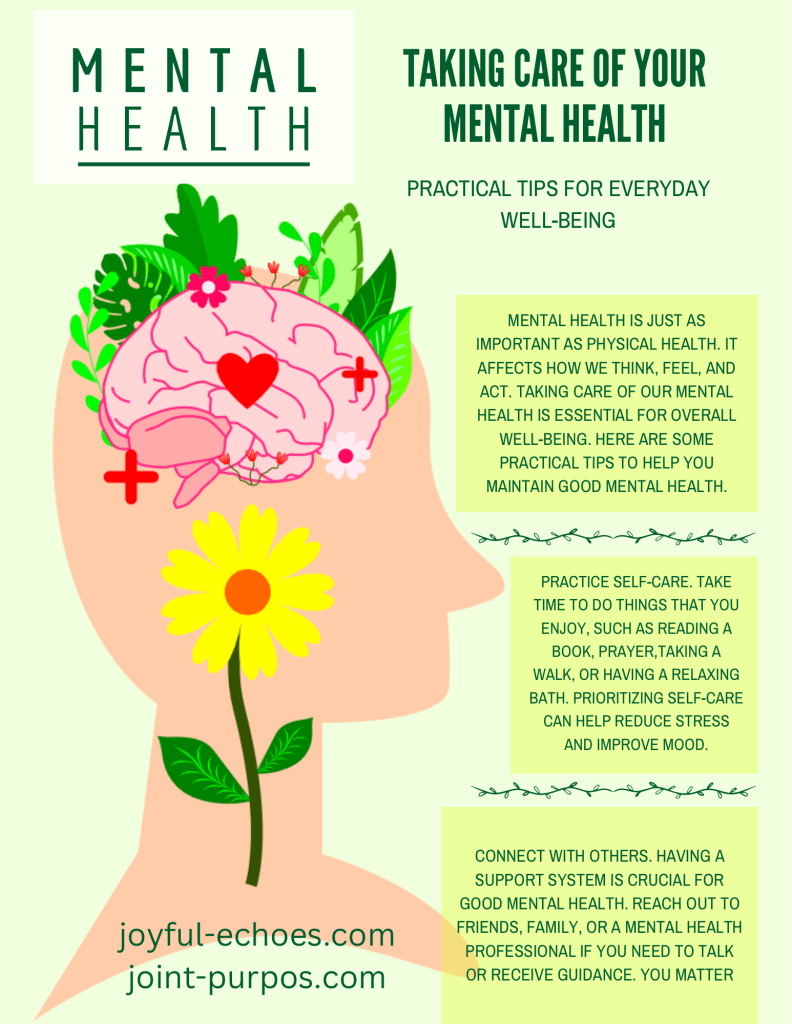
Today, we come together to recognize World Mental Health Day, a day dedicated to promoting awareness and understanding of mental well-being. In a world that often rushes us along, it’s essential to take a moment to care for our mental health.

First and foremost, make self-care a priority in your life. Embrace practices that soothe your soul, whether it’s a warm bath, a good book, or a long walk in nature. Self-care is not selfish; it’s an act of self-love.

Exercise and nutrition are powerful allies in the quest for mental wellness. Regular physical activity releases endorphins, those natural mood lifters. Pair this with a balanced diet, rich in nutrients, and you’re nurturing your body and mind in harmony.

In moments of quiet reflection, prayer and meditation can bring peace and clarity. These practices help us connect with our inner selves and find solace in the midst of life’s challenges.

But let’s also remember that it’s perfectly okay to seek help when needed. If you find yourself struggling with the weight of your thoughts and emotions, reach out to a counselor or therapist. They possess the expertise to guide you through difficult times.

There is no shame in seeking professional help. In fact, it’s a courageous step towards healing. Just as we turn to doctors for physical ailments, we should seek support for our mental health without hesitation or embarrassment.

Let’s close with a prayer:

“Dear universe, grant us the strength to embrace our mental health journey. May we find solace in self-care, strength in exercise and nutrition, and serenity in prayer and meditation. And when we face darkness, may we have the courage to seek help and guidance. Amen.”

On this World Mental Health Day, let’s remember that we’re not alone in our struggles, and there is always hope for brighter days ahead.

Posted in Blogging, Joyful-Echoes.com, Monday

Embracing Happy Magnificent Mondays: A Personal Reflection

Happy Magnificent Monday, everyone! As the new work week dawns upon many us, I find myself filled with a sense of gratitude and purpose. It’s a day that sets the tone for the rest of the week, and I want to share some thoughts and inspirations with you all.

In the hustle and bustle of our daily lives, it’s easy to get caught up in the routine of work, responsibilities, and the never-ending to-do lists. But as we embark on this new week, I’m reminded of the importance of dedicating our efforts to a higher purpose, a purpose that transcends the tasks on our desks.

One Bible verse that has always resonated with me and guides my approach to Mondays and every day is Colossians 3:23 (NIV): “Whatever you do, work at it with all your heart, as working for the Lord, not for human masters.” This verse serves as a beautiful reminder that our work should be an offering to the divine, and it encourages us to give our very best, pouring our hearts into our endeavors.

But it’s not just about working diligently; it’s also about cultivating a spirit of gratitude. Practicing gratitude can transform our outlook on life. Even on the busiest Mondays, take a moment to count your blessings, big and small. Gratitude helps us find joy in the little things and appreciates the journey we’re on.

In addition to dedicating our work to a higher purpose and embracing gratitude, let’s also make an effort to be kind to others, especially strangers. We never truly know the battles someone else may be fighting, and a simple act of kindness can make a world of difference in their day. Kindness is a ripple effect; it not only brightens someone else’s life but also brings a sense of fulfillment to our own.

To encapsulate the spirit of Happy Magnificent Monday, I’d like to share a positive quote for the day: “Your work is going to fill a large part of your life, and the only way to be truly satisfied is to do what you believe is great work. And the only way to do great work is to love what you do.” – Steve Jobs

So, as we embark on this week, let’s remember to work for a higher purpose, embrace gratitude, and spread kindness wherever we go. Let’s make this Happy Magnificent Monday the start of a remarkable week filled with purpose and positivity. Have a blessed day, my friends!