Stop Judging, Start Loving
We live in a world where judging others has become almost second nature, something we do without even realizing it. But the truth is, we all judge people – you, me, and even our ministers. Today, I want to shed light on the importance of recognizing our tendency to judge and challenge ourselves to shift our mindset to one of love and acceptance.
Acknowledging Our Tendency to Judge:
It’s a fact that we all judge people, whether consciously or unconsciously. We pass judgment on politicians, not caring for their decisions and policies. We judge those struggling with addiction or going through recovery, failing to see the battles they face every day. We even judge individuals making difficult choices like abortion or adoption, forming opinions without truly understanding the complexities involved. From our partners and children to people of different religions or appearances, our judgments know no boundaries.
Reflecting on Our Shared Humanity:
Amidst our tendency to judge, it is crucial to pause and reflect on our own flaws and mistakes. By acknowledging our own imperfections, we can develop empathy and understanding towards others. Our kids, for instance, teach us valuable lessons about acceptance and unconditional love. We need to recognize that playing God and passing judgment does more harm than good.
Embracing the Good in Each of Us:
Instead of focusing on judgment, let us shift our attention towards the good in each person we encounter. We all have unique qualities, experiences, and challenges that shape who we are. Rather than dwelling on our differences, we can choose to celebrate diversity and embrace the shared humanity that binds us together.
Stop Judging, Start Loving:
Ultimately, it comes down to making a conscious choice. Let’s break free from the cycle of judgment and replace it with compassion, kindness, and love. By shifting our mindset, we create a more inclusive and accepting world, fostering connections and understanding among all individuals, regardless of their background or choices.
In a world filled with judgments, it’s time for us to take a step back and reflect on our own biases. Let’s choose love over judgment, empathy over criticism, and understanding over prejudice. Together, we can create a more compassionate and accepting society, where the power of love surpasses the destructive force of judgment.
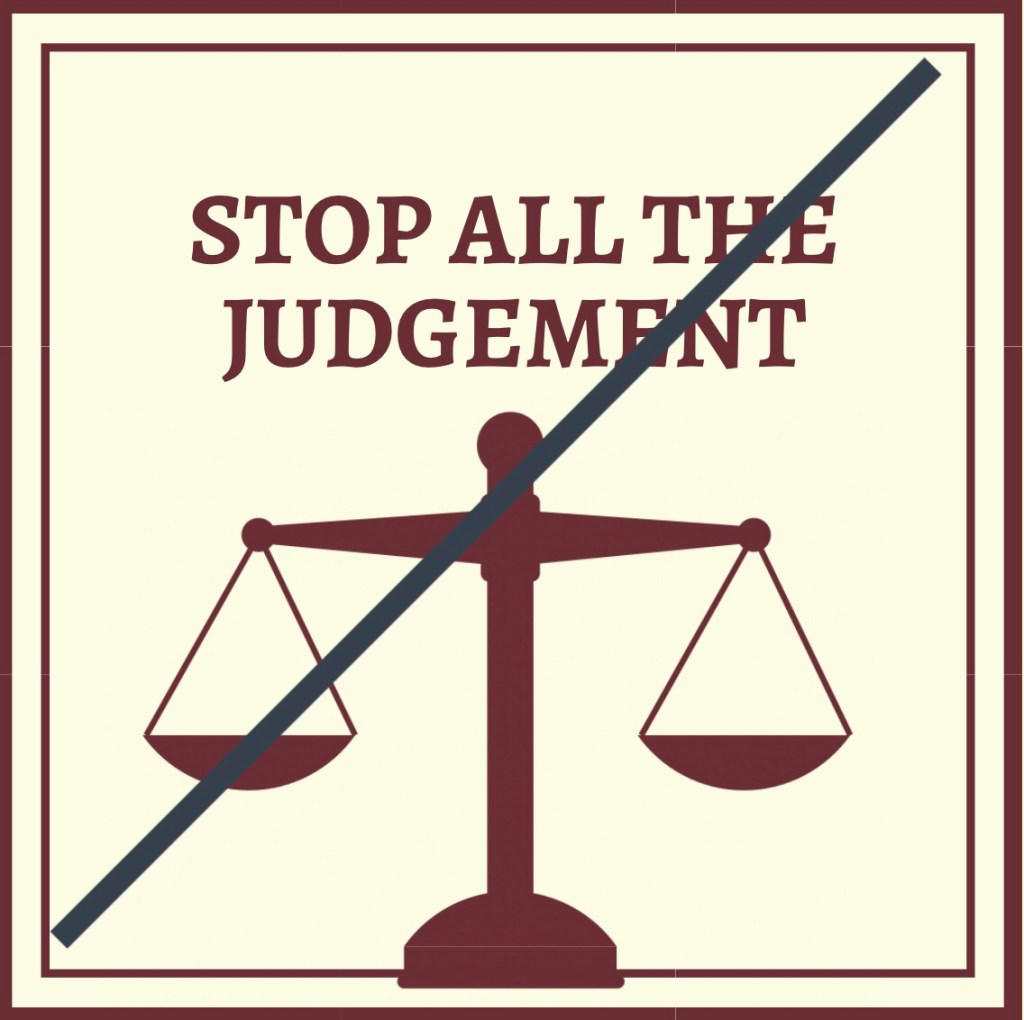
The Bible has several verses that address the topic of judging others. Here are a few key passages:
- Matthew 7:1-5 (NIV):
“Do not judge, or you too will be judged. For in the same way you judge others, you will be judged, and with the measure you use, it will be measured to you. Why do you look at the speck of sawdust in your brother’s eye and pay no attention to the plank in your own eye? How can you say to your brother, ‘Let me take the speck out of your eye,’ when all the time there is a plank in your own eye? You hypocrite, first take the plank out of your own eye, and then you will see clearly to remove the speck from your brother’s eye.”
This passage reminds us not to judge others while overlooking our own faults. It encourages self-reflection before looking to criticize or point out flaws in others.
- Romans 14:10-13 (NIV):
“You, then, why do you judge your brother or sister? Or why do you treat them with contempt? For we will all stand before God’s judgment seat… Therefore let us stop passing judgment on one another. Instead, make up your mind not to put any stumbling block or obstacle in the way of a brother or sister.”
Here, the Bible emphasizes that it is not our place to judge others because we will all ultimately be held accountable by God. It encourages us to focus on building each other up rather than creating divisions.
- James 4:11-12 (NIV):
“Brothers and sisters, do not slander one another. Anyone who speaks against a brother or sister or judges them speaks against the law and judges it. When you judge the law, you are not keeping it but sitting in judgment on it. There is only one Lawgiver and Judge, the one who is able to save and destroy. But you—who are you to judge your neighbor?”
This passage warns against slandering and judging others, reminding us that God alone is the ultimate Lawgiver and Judge. It encourages humility and refraining from placing ourselves in a position of judgment over others.
These passages highlight the importance of self-reflection, humility, and treating others with love and respect rather than judgement. They remind us that we are all fallible and that only God has the authority to judge.

 Joyful-Echoes