Posted in Christ has Risen, Easter, Uncategorized

Easter Sunday: Embracing the Resurrection and Living as Symbols of Christ’s Love

As Easter Sunday arrives, our hearts are drawn to the profound significance of this sacred day—the cornerstone of the Christian faith. Beyond the colorful eggs and joyful celebrations lies a deeper truth that calls us to reflect on the transformative power of Christ’s resurrection and to live as symbols of His boundless love.

Easter Sunday marks the culmination of Holy Week, commemorating the resurrection of Jesus Christ from the dead. It is a day of triumph, hope, and redemption—a reminder that death has been defeated and that new life is available to all who believe.

At the heart of Easter lies the message of God’s unfailing love for humanity. In the death and resurrection of Jesus, we see the ultimate expression of this love—a love so profound that it conquered sin and death, offering forgiveness, reconciliation, and eternal life to all who accept it.

As Christians, Easter Sunday challenges us to embody the message of Christ’s resurrection in our daily lives. It calls us to make every moment count by living in a way that reflects the transformative power of His love.

So, what does it mean to be symbols of the love Jesus gave to us on Easter Sunday?

First and foremost, it requires us to embrace the reality of Christ’s resurrection in our hearts and minds. We are called to live with a deep sense of gratitude and awe, recognizing the immense sacrifice Jesus made for us and the new life He offers to all who believe in Him.

Secondly, it entails embodying the love and compassion of Jesus in our relationships and interactions with others. Just as Christ laid down His life for us, we are called to love one another selflessly, putting the needs of others before our own, extending grace and forgiveness, and seeking reconciliation and healing wherever there is brokenness.

Furthermore, Easter Sunday challenges us to be agents of transformation and renewal in a world that is often marked by brokenness and despair. It calls us to actively engage in acts of justice, mercy, and compassion—to stand up for the oppressed, to advocate for the marginalized, and to bring hope and healing to all who are in need.

Lastly, Easter Sunday invites us to live with a sense of hope and anticipation, knowing that the resurrection is not just a historical event but a present reality that continues to shape our lives and the world around us. It calls us to live with confidence in the promise of new life and to share that hope with others through our words and actions.

As we celebrate Easter Sunday this year, let us not only rejoice in the empty tomb but commit ourselves anew to living as symbols of the love Jesus gave to us. May our lives be a testament to the transformative power of His resurrection, and may we strive to make every moment count in service of His kingdom and glory.

Posted in Faith

Title: Holy Saturday: A Day of Reflection and Waiting

Holy Saturday, is the day nestled between Good Friday and Easter Sunday, it holds a profound significance on the Christian calendar. It’s a day of quiet reflection, deep anticipation, and profound hope.

While not as widely celebrated as other days in the Easter Triduum, Holy Saturday carries its own unique weight in the Christian faith.

The Biblical Context:

Holy Saturday marks the day when Jesus Christ’s body lay in the tomb. According to Christian tradition, it’s the day when Christ descended into the realm of the dead, freeing the souls of the righteous who had died before his coming. This descent, often referred to as the Harrowing of Hell, signifies Christ’s triumph over death and his role as the savior of humanity.

Mary and Joseph: A Silent Presence:While Holy Saturday is primarily associated with the entombment of Jesus, it’s also a day to consider the experiences of those closest to him, including Mary and Joseph.

Mary, the mother of Jesus, and Joseph, his earthly father, are often portrayed in the biblical narrative as figures of quiet strength and unwavering faith.For Mary,

Holy Saturday would have been a day of unimaginable grief and sorrow. She had witnessed her son’s crucifixion and now faced the agonizing wait for his promised resurrection.

Yet, amidst her anguish, Mary remained a symbol of faith, trusting in God’s plan even in the darkest of hours.Joseph, too, played a significant role in the events leading up to Holy Saturday. As Jesus’s earthly father, he would have experienced the anguish of seeing his son crucified and laid in the tomb.

Joseph’s steadfastness and obedience to God’s will are evident throughout the Gospels, and on Holy Saturday, his quiet presence serves as a reminder of the importance of faithfulness and trust in God’s providence.The Silence of Holy Saturday.

Holy Saturday is marked by a solemn silence, as Christians around the world contemplate the mysteries of Christ’s death and await his glorious resurrection. Churches often hold services that reflect this solemnity, with readings, prayers, and meditations on Christ’s passion and the hope of his resurrection.In the midst of this silence, Holy Saturday invites us to embrace the mystery of Christ’s death and resurrection. It’s a day to confront the reality of death and the profound hope that springs from Christ’s victory over the grave. As we wait in anticipation for Easter morning, we are reminded of the transformative power of Christ’s love and the promise of new life that awaits us.

Holy Saturday occupies a very blessed and important place in the Christian calendar, serving as a bridge between the sorrow of Good Friday and the joy of Easter Sunday. It’s a day of quiet reflection, deepening our understanding of Christ’s sacrifice and the hope of his resurrection. As we contemplate the events of Holy Saturday, let us remember Mary and Joseph, who stood faithfully by Jesus’s side in his darkest hour, and let us hold fast to the promise of new life that awaits us in Christ.

Heavenly Father,On this Holy Saturday, we gather in quiet reflection and anticipation. As we await the joy of Easter morning, we pray for strength and faith to endure the darkness of this day. Grant us the grace to embrace the mystery of Christ’s death and resurrection, and fill our hearts with hope as we await the dawn of new life. May your presence be felt deeply in our midst, and may your love sustain us through every trial.

Amen.

Posted in Easter,Good Friday

Good Friday: Reflecting on the Sacrifice of Jesus

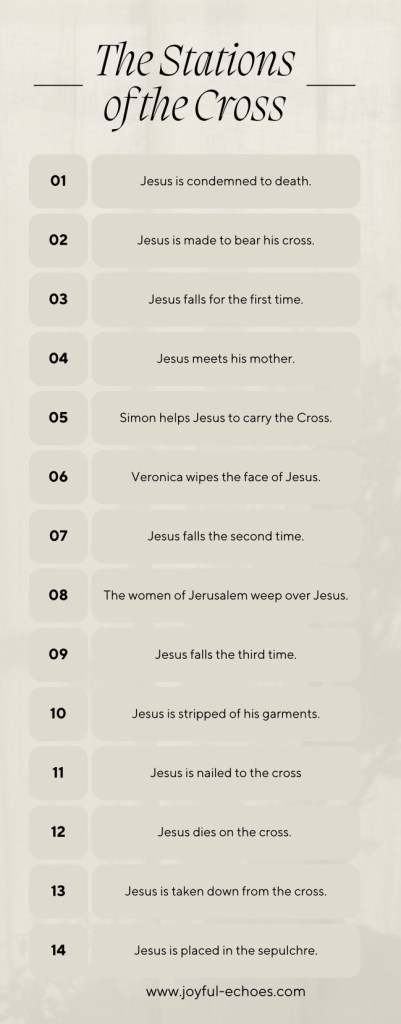
Good Friday is a day of solemn remembrance as we reflect on the sacrifice of Jesus Christ that died for us on the cross. It is a time to contemplate the immense suffering and agony Jesus endured for the sake of humanity’s redemption.

On Good Friday, we recall the events of Jesus’ crucifixion—the betrayal, the mocking, the agony of the cross. Yet, amidst the darkness and despair, we find hope in the promise of salvation through Christ’s sacrifice.

As we reflect and move through Good Friday, let us not shy away from the discomfort of the cross but embrace it as a symbol of God’s unfailing love for all of us, not just specific colors, nationalities etc..

May we be moved to repentance and renewal, turning away from sin and towards the light of Christ’s grace.

In the quiet moments of reflection, may we draw near to the foot of the cross and encounter the transformative power of Jesus’ sacrifice.

May we be filled with gratitude for the gift of salvation and inspired to live lives of devotion and service, bearing witness to the love of Christ in all that we do.

Heavenly Father, on this Good Friday, we lift up to you those who are sick, lonely, grieving, lost, found, and grateful. May your comforting presence surround them, bringing healing to the sick, companionship to the lonely, solace to the grieving, guidance to the lost, and continued blessings to the found and grateful. Grant them strength, peace, and renewed hope in your love. Amen.

Posted in Faith

Holy Thursday: Remembering the Last Supper

Holy Thursday, also known as Maundy Thursday, is a day of solemn remembrance as we commemorate the Last Supper—the final meal Jesus shared with his disciples before his crucifixion.

On this sacred day, we reflect on the profound significance of the Last Supper, where Jesus instituted the sacrament of the Eucharist and washed his disciples’ feet as a symbol of humble service.

As we gather to celebrate Holy Thursday, let us be mindful of Jesus’ example of selflessness and love. May we be inspired to follow in his footsteps, serving others with humility and compassion, and partaking in the sacrament of communion with hearts full of gratitude and reverence.

In the quiet moments of reflection, may we draw near to God and recommit ourselves to lives of discipleship, following Jesus’ commandment to love one another as he has loved us.

Posted in Palm Sunday, Easter, Worship, Bible

Palm Sunday: A Reflection on Unwavering Grace

As we approach Palm Sunday, the air is filled with a sense of anticipation and reflection. This day marks the beginning of Holy Week, a time of profound significance in the Christian calendar. Amidst the waving palms and jubilant cries of “Hosanna,” lies a timeless message that resonates deeply with the human experience—the unwavering grace of Jesus Christ.

Palm Sunday commemorates Jesus’ triumphant entry into Jerusalem, riding on a donkey as crowds laid down palm branches in His path, symbolizing honor and adoration. Yet, woven into this scene of celebration is a poignant reminder of the complexities of human nature and the depths of divine love.

In the midst of the jubilation, there were those who hailed Jesus as the long-awaited Messiah, while others harbored doubts or outright hostility. The same crowds that welcomed Him with shouts of praise would soon cry out for His crucifixion. In this paradox lies a profound truth: our ever-changing hearts do not alter the unwavering love and purpose of Christ.

The message of Palm Sunday speaks to the universality of human experience—the fickleness of our emotions, the frailty of our faith, and the tendency to vacillate between adoration and rejection. Yet, amidst our shortcomings and inconsistencies, Jesus remains steadfast in His love and commitment to our well-being.

Even as we, like the crowds of Jerusalem, may at times seek to snuff out His light with our doubts, fears, and sins, His heart remains open to us. His love knows no bounds, reaching out to heal and redeem even the most broken and wayward of souls.

Palm Sunday serves as a poignant reminder that no matter where we find ourselves on our spiritual journey, Jesus continues to work tirelessly for our healing and restoration. His grace is not contingent upon our merit or worthiness but flows freely and abundantly to all who call upon His name.

As we reflect on the message of Palm Sunday, may we be humbled by the depth of Christ’s love and inspired to respond with hearts of gratitude and devotion. Let us lay down our doubts and fears at His feet, trusting in His unfailing grace to lead us into wholeness and reconciliation.

In the midst of life’s uncertainties and struggles, may the timeless message of Palm Sunday resonate within our hearts, reminding us of the unchanging love and mercy of our Savior, Jesus Christ.

Posted in Spring

Welcome Spring

In Spring’s embrace, God’s blessings unfold,
Miracles abound, in colors bold.
Flowers bloom, a symphony of grace,
Each petal whispers, in their sacred space.

Bees dance freely, their melody sweet,
Buzzing with joy, as they softly greet.
Grass awakens, from its slumber deep,
Turning green, in nature’s gentle sweep.

Sunshine kisses every living thing,
Warming the earth, in its gentle fling.
Spring’s beauty sings, in every hue,
God’s masterpiece, ever anew.

By Deb Andio ©️ 2024

Posted in Faith, Jesus, Uncategorized

John 12:25-26 what it reveals

In John 12:25-26, Jesus reveals the essence of discipleship, urging us to weigh the cost and rewards. He emphasizes that clinging to our earthly desires will lead to loss, while embracing selflessness and surrender to Him yields eternal life. By serving and following Jesus, we align with His purpose, assured of the Father’s honor. These verses prompt introspection, challenging us to prioritize God’s will over selfish pursuits. They underscore the eternal significance of a life devoted to Jesus, encouraging obedience and trust in Him. Ultimately,

Jesus desires your joy, not your misery. He wants you to recognize that He is the ultimate treasure, worth sacrificing everything to obtain. In John 12:25, Jesus teaches that if we prioritize our own lives above all else, we will remain unfulfilled. However, if we understand the supreme value of Christ, we will willingly surrender our lives to Him. By following Jesus, even in the face of death or material loss as mentioned in verse 26, our lives will be dedicated to serving Him. In doing so, we will be honored by the Father and become fruitful trees, rather than lonely seeds.

John 12:25-26

Anyone who loves their life will lose it, while anyone who hates their life in this world will keep it for eternal life. Whoever serves me must follow me; and where I am, my servant also will be. My Father will honor the one who serves me.

John 12:25-26 calls us to count the cost, embrace selflessness, and experience the abundant life found in Christ.

Have a blessed day. ✝️

Posted in Lent

Reflecting on the Fourth Week of Lent: Embracing Divine Love

As we journey through the season of Lent, a time of reflection, repentance, and renewal, we find ourselves now in the fourth week, a period marked by a deeper exploration of God’s boundless love for humanity. In this week’s reflection, we turn to one of the most cherished verses in the Bible, John 3:16-17:

“For God so loved the world that he gave his one and only Son, that whoever believes in him shall not perish but have eternal life. For God did not send his Son into the world to condemn the world, but to save the world through him.”

These verses encapsulate the essence of Lent – the sacrificial love of God manifested through the gift of His Son, Jesus Christ. In this profound act of love, we find hope, redemption, and the promise of eternal life. Lent invites us to meditate on the depth of this love, to internalize its significance, and to respond with gratitude and faith.

Throughout this season, we are called to examine our lives, to repent of our sins, and to align our hearts with the will of God. Yet, amidst the solemnity of Lent, we are reminded of the overwhelming love that motivates God’s actions. It is a love that knows no bounds, a love that seeks to reconcile and restore, a love that offers forgiveness and grace to all who believe.

As we navigate the challenges and uncertainties of life, especially during this Lenten season, let us hold fast to the assurance found in John 3:16-17. Let us embrace the truth that we are deeply loved by our Creator, and that through Christ, we have the opportunity to experience eternal life and abundant grace.

Positive Quote for the Day:

“In the end, only three things matter: how much you loved, how gently you lived, and how gracefully you let go of things not meant for you.” – Unknown

As we continue our Lenten journey, may we be inspired by this quote to love wholeheartedly, to live with kindness and compassion, and to release that which weighs us down, trusting in the unfailing love of God.

Posted in The Book of Psalms

Hope in the Timeless Message of Psalm 2

Psalm 2, despite being penned thousands of years ago, resonates profoundly with the realities of our world today. Its depiction of nations raging and peoples plotting against the Lord and His Anointed One is a timeless narrative that continues to unfold throughout history. Yet, amidst the chaos and turmoil, Psalm 2 offers a beacon of hope for all nations and peoples.

The opening lines of Psalm 2 pose a question that echoes through the ages: “Why do the nations rage and the peoples plot in vain?” This question speaks to the perennial struggle of humanity to assert its autonomy and independence from divine authority. From ancient times to the present day, we see evidence of this rebellion against God’s rule in the actions and ambitions of nations and rulers.

The imagery of kings and rulers conspiring against the Lord and His Anointed One reflects a universal truth: the pursuit of power and control often leads to conflict and chaos. Throughout history, we have witnessed the rise and fall of empires, the clash of civilizations, and the perpetuation of injustice and oppression. Yet, in the midst of these struggles, the message of Psalm 2 remains relevant and timely.

The psalmist portrays God’s response to the rebellion of the nations with a mix of humor and severity. God, enthroned in the heavens, laughs at the feeble attempts of humanity to cast off His authority. Yet, He also warns of His wrath and judgment against those who defy Him. This dual portrayal of divine sovereignty and justice underscores the enduring relevance of God’s character and His interaction with the world.

Amidst the turmoil and uncertainty of our times, Psalm 2 offers a message of hope and redemption. It reminds us that God is ultimately in control, and His purposes will prevail despite the machinations of humanity. The promise of God to establish His King on Zion, His holy hill, speaks to the ultimate triumph of His kingdom over all earthly powers and principalities.

We are invited to acknowledge the authority of God’s Son and to submit our lives to His rule. In doing so, we find hope and assurance in the midst of a world marked by turmoil and uncertainty.

Psalm 2 stands as a timeless testament to the enduring power and sovereignty of God. It offers hope to all nations and peoples, reminding us that God’s purposes will ultimately prevail and His kingdom will be established for all eternity. As we navigate the challenges of life, may we take comfort in the unchanging promises of God, knowing that He holds the destiny of nations and peoples in His hands.

Psalm 2- King James Version

2 Why do the heathen rage, and the people imagine a vain thing?

The kings of the earth set themselves, and the rulers take counsel together, against the Lord, and against his anointed, saying,

Let us break their bands asunder, and cast away their cords from us.

He that sitteth in the heavens shall laugh: the Lord shall have them in derision.

Then shall he speak unto them in his wrath, and vex them in his sore displeasure.

Yet have I set my king upon my holy hill of Zion.

I will declare the decree: the Lord hath said unto me, Thou art my Son; this day have I begotten thee.

Ask of me, and I shall give thee the heathen for thine inheritance, and the uttermost parts of the earth for thy possession.

Thou shalt break them with a rod of iron; thou shalt dash them in pieces like a potter’s vessel.

10 Be wise now therefore, O ye kings: be instructed, ye judges of the earth.

11 Serve the Lord with fear, and rejoice with trembling.

12 Kiss the Son, lest he be angry, and ye perish from the way, when his wrath is kindled but a little. Blessed are all they that put their trust in him.

Posted in Faith

Understanding Hebrews 11:1: Faith Defined

Hebrews 11:1 is a cornerstone verse in the Bible that provides a profound definition of faith. Let’s delve into its meaning and significance, exploring how it guides our understanding of faith and its role in our lives.

The Verse:

Hebrews 11:1 (NIV): “Now faith is confidence in what we hope for and assurance about what we do not see.”

Breaking it Down:

  1. Faith as Confidence: The verse begins by stating that faith is confidence. It’s not blind belief or wishful thinking; it’s a deep conviction based on trust. Faith gives us the assurance that what we hope for will come to pass.
  2. Hope: Faith is intricately connected to hope. It’s not just about believing in something; it’s about hoping for it with expectation and anticipation. Faith fuels our hopes and keeps them alive, even when circumstances seem bleak.
  3. Assurance about the Unseen: This part of the verse underscores the supernatural aspect of faith. It’s about believing in things that are beyond our physical senses or rational understanding. Faith gives us certainty about realities that are unseen but no less real.

Implications:

  1. Living by Faith: Hebrews 11:1 challenges us to live our lives with faith as our guiding principle. It’s about trusting in God’s promises and His unseen hand at work in our lives, even when we can’t see the outcome.
  2. Overcoming Doubt: In times of doubt and uncertainty, Hebrews 11:1 serves as a reminder to hold fast to our faith. It encourages us to trust in God’s faithfulness, even when our circumstances seem dire.
  3. Stepping into the Unknown: Faith often requires us to step out of our comfort zones and into the unknown. It’s about taking risks and trusting that God will guide us and fulfill His promises.
  4. An Anchor for the Soul: Faith provides a solid foundation amidst life’s storms. It anchors our souls, giving us stability and peace even in the midst of turmoil.

Conclusion:

Hebrews 11:1 offers a profound definition of faith that transcends mere belief. It challenges us to live with confidence and assurance in the unseen realities of God’s promises. As we embrace faith, it becomes the lens through which we view the world and the anchor that sustains us through life’s challenges. May we continue to grow in faith, trusting in the goodness and faithfulness of our God.