As I bask in the glow of this fabulous Friday, December 8, 2023, I find myself immersed in the enchanting spirit of Advent. We’re joyously navigating our way through the second week, and there’s an air of anticipation that envelops the day. Advent, for those unfamiliar, is a season of preparation and expectation observed by Christians around the world as they eagerly await the celebration of the birth of Jesus Christ.
In this second week of Advent, we focus on the theme of love. It’s a time to reflect on the profound love that God has bestowed upon us through the gift of His Son. As I contemplate the significance of this week, two Christian Bible verses come to mind, each resonating with the essence of love and the anticipation of Christ’s arrival.
1 Corinthians 13:13 (NIV): “And now these three remain: faith, hope, and love. But the greatest of these is love.” This verse from Corinthians beautifully encapsulates the core message of the second week of Advent. Love is the focal point, reminding us that amidst the hustle and bustle of the season, it’s the love we share with one another that truly matters.
1 John 4:16 (NIV): “So we have come to know and to believe the love that God has for us. God is love, and anyone who abides in love abides in God, and God abides in them.” John’s words serve as a poignant reminder that our connection with God is intricately woven through the fabric of love. As we light the second candle on the Advent wreath, let it symbolize the growing warmth of love in our hearts.
And now, a quote to complement the essence of this second week:
“Love is not just something we feel. It is something we do.” – David Wilkerson
As we immerse ourselves in the activities and festivities of this fabulous Friday, let’s make a conscious effort to embody the love that defines the season. Whether it’s through acts of kindness, expressions of gratitude, or simply spending quality time with loved ones, let the spirit of love permeate every aspect of our day.
May this Friday be filled with joy, love, and a sense of anticipation as we continue our journey through the beautiful season of Advent.
Wednesdays are often considered the midpoint of the week, and what better time to reflect on embracing change and recognizing your inherent worth. In the hustle of our lives, it’s crucial to acknowledge the beauty of change and the perfection in being yourself, just as God intended.
Embracing Change: Change is an inevitable part of life, and Wednesdays provide the perfect opportunity to welcome it with open arms. Proverbs 3:5-6 reminds us, “Trust in the Lord with all your heart, and do not lean on your own understanding. In all your ways acknowledge him, and he will make straight your paths.” Embracing change becomes easier when we trust in a higher plan, knowing that every twist and turn is guided by a divine purpose.
Never Underestimating Yourself: You are fearfully and wonderfully made (Psalm 139:14). Never underestimate the unique qualities and capabilities that make you who you are. Romans 12:6 encourages us, “We have different gifts, according to the grace given to each of us.” Recognize and celebrate your gifts, for they are a part of the intricate design God has bestowed upon you.
Positive Quote for Wednesday: “Embrace each new day with gratitude, knowing that every moment is a blessing and every change is an opportunity for growth.”
As Wednesday unfolds, take a moment to appreciate the beauty in change and the perfection in your individuality. Trust the path laid before you, honor your gifts, and remember that you are wonderfully made. Embrace the unique journey only you can walk, for it is a testament to the divine plan woven into the fabric of your existence.
In the intricate tapestry of life, where uncertainty often prevails, the wisdom of Proverbs 3:5-6 resonates as a guiding light: “Trust in the Lord with all your heart, and do not lean on your own understanding. In all your ways acknowledge him, and he will make straight your paths.” These verses encapsulate the profound essence of allowing God to be our guide.
The Foundation of Trust: At its core, trusting in God is a profound commitment. It’s a surrendering of our understanding, an acknowledgment that our finite perspectives may not always grasp the grand design of God’s plan. Trust becomes the bridge between our uncertainties and the unwavering certainty of divine guidance.
The Path to Alignment: Leaning on our own understanding can often lead us astray, clouded by our limited knowledge and perspectives. However, when we choose to acknowledge God in every facet of our lives, we invite His wisdom to align our paths. It’s an intentional choice to let go of control and embrace the assurance that comes with trusting in a higher power.
A Journey of Faith: Trusting in God is not a passive act but an active journey. It requires us to release our anxieties, doubts, and fears into His capable hands. As we navigate the twists and turns of life, this trust becomes a beacon, illuminating the way forward. In times of joy and challenges alike, acknowledging God’s presence fosters a deep sense of purpose and peace.
Believing in God’s Best: Trusting in God is inherently intertwined with the belief that He is working for our best interests. Even in moments of adversity or when life’s path seems unclear, faith whispers that God’s plan is unfolding, guided by a profound love that seeks our well-being.
Embracing the Journey: Trusting in God transforms the journey of life into a meaningful pilgrimage. It’s an invitation to relinquish our worries, uncertainties, and need for control. By placing our trust in God, we open ourselves to the transformative power of His guidance, allowing Him to make straight our paths.
Proverbs 3:5-6 serves as a timeless reminder of the beauty that unfolds when we trust in the Lord with all our hearts. This trust is not a blind leap but a purposeful step into the arms of divine guidance. As we navigate life’s journey, let us hold fast to the belief that trusting in God is the key to unlocking paths that lead to fulfillment, purpose, and an enduring connection with the Divine.
Embrace life’s simplicity and break free from unnecessary seriousness. If something feels amiss, take action—don’t overcomplicate. I believe in proactive living, steering clear of stagnation. If a situation persists, I choose serenity by distancing myself. This philosophy applies to relationships, careers, friendships, and more. Our existence is meant for joy, not suffering.
Life doesn’t need to be so complex we make it that way.
I am happy with a decent roof over my head a good meal and surrounded by people I enjoy and who enjoy me.
Not a fan of drama or always complaining, sometimes I get off track but soon bring myself back to center by reading my Bible.
Find solace in the Bible, cherish family moments, relish good meals, and savor fresh air. Bid farewell to defeatism; cultivate a positive mindset. Here are two uplifting Bible verses and a daily positive quote:
“Rejoice in the Lord always. I will say it again: Rejoice!” – Philippians 4:4
“The Lord is my strength and my shield; my heart trusts in him, and he helps me.” – Psalm 28:7
Positive quote for the day: “Optimism is the faith that leads to achievement. Nothing can be done without hope and confidence.” – Helen Keller
In the journey of life, fear often creeps in, attempting to paralyze us and hinder our progress. It’s crucial to recognize that succumbing to fear allows negative influences to take root. As Christians, we are blessed with a powerful arsenal of promises found in the Bible—7000 promises, to be exact. Amidst the turbulence, the Scripture reassures us with a profound message of peace and quietude.
The adversary, Satan, cunningly seeks to undermine our faith by fostering fear. He whispers doubts, attempting to convince us that he is in control and can fulfill our desires. However, as believers, we stand firm in the truth that there is a God, and there is Jesus—the ultimate source of strength and salvation.
Confronting fear is not about never feeling it; rather, it’s about making a conscious choice when fear arises. Uttering the words “I will not fear” and acknowledging the divine presence within us empowers us to declare that the devil has no hold over us. As children of the almighty God, fear loses its grip, allowing us to navigate life with courage and confidence.
Recognizing the various types of fear that hinder us is essential. Satan often exploits fear to keep us from realizing our full potential and purpose in life. But we are reminded that in moments of fear, we can choose faith over flight.
The Book of Proverbs emphasizes prudence—wise and godly management. God has entrusted us with resources that, when managed well, lead to growth. Incorporating God into every aspect of our lives ensures that we navigate challenges with divine wisdom.
Willpower alone cannot shield us from the schemes of the devil. It’s about recognizing our unique gifts and using them for good. Like a singer needing the ability to carry a tune, we must leverage the gifts God has bestowed upon us to fulfill our purpose.
A powerful reminder comes from 1 Corinthians 1:27, highlighting the divine wisdom that surpasses worldly standards. Embracing faith and aligning our actions with God’s guidance empowers us to overcome fear, navigate life’s challenges, and fulfill the purpose for which we were created.
The path to victory over fear involves a continuous choice to trust in God’s promises, manage our resources wisely, and use our unique gifts for good. By doing what is right, even when it feels wrong, we embody the strength and courage that comes from our faith.
tomorrow will be part 2
Read
1 Corinthians 1 New International Version
1 Paul, called to be an apostle of Christ Jesus by the will of God, and our brother Sosthenes,
2 To the church of God in Corinth, to those sanctified in Christ Jesus and called to be his holy people, together with all those everywhere who call on the name of our Lord Jesus Christ—their Lord and ours:
3 Grace and peace to you from God our Father and the Lord Jesus Christ.
Thanksgiving
4 I always thank my God for you because of his grace given you in Christ Jesus. 5 For in him you have been enriched in every way—with all kinds of speech and with all knowledge— 6 God thus confirming our testimony about Christ among you. 7 Therefore you do not lack any spiritual giftas you eagerly wait for our Lord Jesus Christ to be revealed. 8 He will also keep you firm to the end, so that you will be blameless on the day of our Lord Jesus Christ. 9 God is faithful, who has called you into fellowship with his Son, Jesus Christ our Lord.
A Church Divided Over Leaders
10 I appeal to you, brothers and sisters,[a] in the name of our Lord Jesus Christ, that all of you agree with one another in what you say and that there be no divisions among you, but that you be perfectly united in mind and thought. 11 My brothers and sisters, some from Chloe’s household have informed me that there are quarrels among you. 12 What I mean is this: One of you says, “I follow Paul”; another, “I follow Apollos”; another, “I follow Cephas[b]”; still another, “I follow Christ.”
13 Is Christ divided? Was Paul crucified for you? Were you baptized in the name of Paul? 14 I thank God that I did not baptize any of you except Crispus and Gaius, 15 so no one can say that you were baptized in my name. 16 (Yes, I also baptized the household of Stephanas; beyond that, I don’t remember if I baptized anyone else.) 17 For Christ did not send me to baptize, but to preach the gospel—not with wisdom and eloquence, lest the cross of Christ be emptied of its power.
Christ Crucified Is God’s Power and Wisdom
18 For the message of the cross is foolishness to those who are perishing, but to us who are being saved it is the power of God. 19 For it is written:
“I will destroy the wisdom of the wise; the intelligence of the intelligent I will frustrate.”[c]
20 Where is the wise person? Where is the teacher of the law? Where is the philosopher of this age? Has not God made foolish the wisdom of the world? 21 For since in the wisdom of God the world through its wisdom did not know him, God was pleased through the foolishness of what was preached to save those who believe. 22 Jews demand signs and Greeks look for wisdom, 23 but we preach Christ crucified: a stumbling block to Jews and foolishness to Gentiles, 24 but to those whom God has called, both Jews and Greeks, Christ the power of God and the wisdom of God.25 For the foolishness of God is wiser than human wisdom, and the weakness of God is stronger than human strength.
26 Brothers and sisters, think of what you were when you were called. Not many of you were wiseby human standards; not many were influential; not many were of noble birth. 27 But God chosethe foolish things of the world to shame the wise; God chose the weak things of the world to shame the strong. 28 God chose the lowly things of this world and the despised things—and the things that are not—to nullify the things that are, 29 so that no one may boast before him. 30 It is because of him that you are in Christ Jesus, who has become for us wisdom from God—that is, our righteousness, holiness and redemption.31 Therefore, as it is written: “Let the one who boasts boast in the Lord.”[d]
Footnotes
1 Corinthians 1:10 The Greek word for brothers and sisters (adelphoi) refers here to believers, both men and women, as part of God’s family; also in verses 11 and 26; and in 2:1; 3:1; 4:6; 6:8; 7:24, 29; 10:1; 11:33; 12:1; 14:6, 20, 26, 39; 15:1, 6, 50, 58; 16:15, 20.
In the journey of life, uncertainties and challenges may cast shadows, but as Christians, we are called to dig deeper and trust in God’s unwavering plan for our lives.
Letting Go of Worry: It’s easy to be consumed by worry, especially when faced with uncertainty. However, as believers, we are encouraged to release our concerns and anxieties to God, knowing that He holds the ultimate control over our destinies.
Embracing a Proactive Approach: Rather than dwelling on the unfairness of circumstances, we are called to take a proactive stance. By actively participating in the unfolding of our destinies, we align ourselves with God’s guidance, making conscious efforts to turn things around for the better.
Trusting God’s Timing: In times of uncertainty, it’s essential to remember that God’s timing is perfect. Trust that your destiny is intricately woven into His divine plan, and by diligently doing your part, you contribute to the beautiful tapestry of your life that God is orchestrating.
Persisting Despite Challenges: Challenges may seem insurmountable, but remember, your assignment is calling, and your destiny is waiting. The effort you put forth is not in vain, for God is with you every step of the way. Despite setbacks, have faith that He won’t allow you to fail, especially after bringing you this far.
Staying Positive in Faith: In moments of difficulty, resist the temptation to become sour or resentful. Instead, focus on the positive aspects of your journey. Acknowledge the lessons learned, the growth experienced, and the strength gained through your faith in God.
Conclusion: As Christians, digging deeper involves surrendering worries, taking a proactive approach, and trusting in God’s unfailing plan. Your destiny is a testament to His faithfulness, and your efforts, rooted in faith, contribute to the unfolding of His divine purpose for your life. So, dig deeper, embrace your assignment, and trust that God’s plan for you will prevail.
In the midst of the festive season encompassing Thanksgiving, Black Friday, Hanukkah, Christmas, and New Year’s, it is crucial to redirect our focus towards those battling addiction, grief, and loneliness. As we celebrate, let us extend our love and care to the hungry, homeless, poor, and the working poor.
Bible Verses:
“Bear one another’s burdens, and so fulfill the law of Christ.” – Galatians 6:2
“The Lord is near to the brokenhearted and saves the crushed in spirit.” – Psalm 34:18
“Let each of you look not only to his own interests but also to the interests of others.” – Philippians 2:4
Positive Quote for the Day: “Kindness is the language which the deaf can hear and the blind can see.” – Mark Twain
National Suicide Prevention Lifeline (United States): 1-800-273-TALK (8255)
Crossroads Hospice & Palliative Careprovides services to those facing serious or terminal illness. Please call us at 1-888-564-3405 for more information.
As we revel in the joy of the holidays, let’s make an effort to create a compassionate and inclusive atmosphere for everyone, ensuring that no one feels alone or forgotten.
In our journey through life, it’s easy to find ourselves fixated on the rearview mirror, reflecting on the moments behind us. Today’s message serves as a reminder that our progress lies in moving forward, unburdened by the weight of our past.
Letting Go of the Past:
The truth is, we cannot move forward while our gaze is fixed on what’s behind us. Whether it’s the mistakes we’ve made, the people who have hurt us, or the memories we can’t shake, dwelling on the past can hinder our present and future.
As the saying goes, “You cannot drive a car forward by constantly looking in the rearview mirror.” The rearview mirror is a tool for brief glances, not a place for prolonged focus. Similarly, we need to acknowledge our past but resist the temptation to let it dictate our every step.
Forgiving and Forgetting:
A crucial aspect of moving forward is forgiveness, both for others and ourselves. The Bible teaches us the power of forgiveness in Matthew 6:14-15, “For if you forgive other people when they sin against you, your heavenly Father will also forgive you. But if you do not forgive others their sins, your Father will not forgive your sins.”
Forgiveness doesn’t mean condoning the actions that caused pain; rather, it’s a conscious choice to release the hold those actions have on our lives. By forgiving, we create space for personal growth and positive change.
Embracing Change:
People can be resistant to change, especially when they hold onto preconceived notions about who we used to be. It’s essential to remind ourselves and others of the changes we’ve made and the progress we’ve achieved. Romans 12:2 encourages us, “Do not conform to the pattern of this world, but be transformed by the renewing of your mind.”
The Positive Quote for the Day:
“Look ahead with hope, not behind with regret.”
This quote serves as a daily affirmation, encouraging us to focus on the possibilities of the future rather than dwelling on what’s already done. Each day is a new opportunity for growth and change.
So today’s message encourages us to shift our focus from the rearview mirror to the road ahead. Letting go of the past, forgiving, and embracing change are pivotal steps toward a brighter future. As we navigate life’s journey, may we be guided by the wisdom of the Bible and the positive energy of our daily quote.
In the tapestry of our lives, we often find solace in the threads of nostalgia, woven from cherished memories and comforting moments. However, nostalgia can be a double-edged sword, as it also unravels slips of darkness – mistakes, regrets, and the haunting echoes of should-haves. It’s a delicate dance between finding comfort in the familiar and avoiding the pitfalls of dwelling in the past.
The Comfort of Nostalgia:
Nostalgia, like an oversized sweatshirt, wraps us in the warmth of familiar emotions. From the aroma of a childhood meal to carefree summer days, these memories provide a sense of ease and belonging. Yet, the past also confronts us with shadows, urging us to grapple with the imperfections and missteps we wish we could undo.
Escaping the Whirlpool:
It’s easy to become ensnared in the whirlpool of alternate scenarios, replaying past choices with a desire for change. However, dwelling on the past can keep us submerged while life marches forward. The key is to recognize that the past does not define us; it is a teacher, not a captor.
The Black and White of the Future:
The future, in stark contrast to the shades of the past, welcomes us with an array of choices. Each day, each hour, presents an opportunity to shape our path. Failing to achieve a goal by a certain age or facing heartbreak in relationships doesn’t equate to failure. The future is a canvas waiting for the strokes of our choices and actions.
Forgiveness and Forward Momentum:
Forgiving ourselves for past indiscretions is the crucial first step toward moving forward. The past is unchangeable, but the future is a variable waiting for our input. Just as ‘x’ in an equation can represent anything, our future is an open field of possibilities. It’s within our power to make that variable positive.
Gratitude for the Journey:
Each day is a chapter in the book of our lives, with the past as a foundation and the future as a blank page. Gratitude for the lessons learned, regardless of their origin, allows us to navigate forward with purpose. It’s about finding peace with what the past has delivered and embracing the potential for positive transformation.
In conclusion, moving forward is a conscious choice to liberate ourselves from the shackles of the past. The power to shape a positive and fulfilling future lies within our grasp. So, let the past be a companion, not a captor, as we stride confidently into the possibilities that each new day holds.
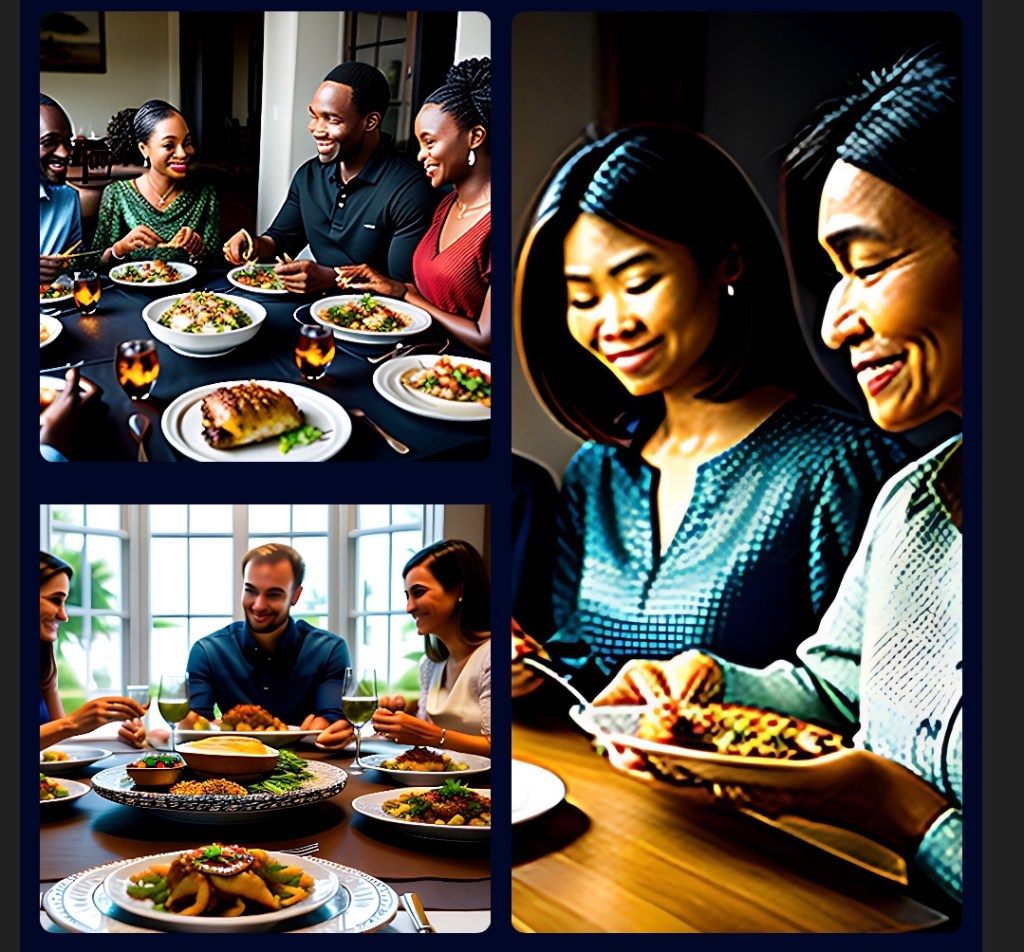
In our fast-paced world, where each family member often has a different schedule and set of obligations, finding time to sit down together for a family breakfast, lunch, or dinner may seem like a challenge. However, the simple act of sharing a meal can have profound effects on the closeness and communication within a family. Let’s explore why this tradition is essential and how it can bring a family closer together.
**The Power of Family Meals:**
1. **A Time for Connection:** Family meals provide a unique opportunity for family members to come together and connect on a daily basis. Sharing a meal allows for conversation, laughter, and the exchange of stories, helping family members understand each other’s lives and experiences better.
2. **Building Stronger Relationships:** Sitting down together regularly strengthens the bonds between family members. It fosters a sense of unity, trust, and support within the family, making everyone feel valued and loved.
3. **Communication and Sharing:** It’s during these moments that family members can discuss their day, express concerns, or share their dreams and aspirations. Open and honest communication is vital for the overall well-being of a family.
4. **Cultivating Healthy Eating Habits:** Regular family meals can also contribute to healthier eating habits. When parents or guardians set a positive example by serving nutritious meals, it encourages children to make healthier food choices.
5. **Teaching Values:** The act of coming together for meals can also teach important values like gratitude, respect, and discipline. These values help shape children into responsible and empathetic individuals.
**Bible Verses on Family:**
1. *Ephesians 6:4* – “Fathers, do not provoke your children to anger, but bring them up in the discipline and instruction of the Lord.” This verse highlights the importance of parental guidance and nurturing in a family.
2. *Proverbs 22:6* – “Train up a child in the way he should go; even when he is old he will not depart from it.” This verse emphasizes the role of parents in guiding and teaching their children.
**Positive Quote about Eating Dinner Together:**
*”The fondest memories are made when gathered around the table.”* – This quote beautifully encapsulates the idea that the most cherished moments are often shared during family meals. It’s a reminder of the warmth and joy that can be found when we come together to dine as a family.
In conclusion, making the effort to sit down as a family for meals is an investment in the well-being and closeness of your loved ones. It’s a time for connection, communication, and the nurturing of values that will stay with your family for a lifetime. So, let’s make a commitment to prioritize family meals and cherish the moments we share around the table.
Receiving the news that a family member has been diagnosed with cancer is a life-altering moment. It can be an emotionally and mentally challenging journey, but with love, faith, and support, families can weather this storm together. In this blog post, we will discuss the emotional and spiritual aspects of this situation, offer some Bible verses for comfort, and provide tips on how you can help your family member, even from a long distance.
**Coping with a Cancer Diagnosis:**
1. **Emotional Support:** The first step when a family member is diagnosed with cancer is to offer emotional support. Be there to listen, provide a shoulder to lean on, and acknowledge their feelings and fears. Your presence alone can be a source of comfort.
2. **Faith and Spirituality:** For many families, faith can be a source of strength during these trying times. Encourage prayer, meditation, and seeking spiritual guidance if that is part of your family’s beliefs.
3. **Educate Yourself:** Learn about the type of cancer your family member has been diagnosed with. Understanding the disease, treatment options, and potential side effects can help you provide more informed support.
4. **Attend Medical Appointments:** If possible, accompany your family member to medical appointments. It shows your commitment to their well-being and provides an extra set of ears to ensure important information is not missed.
**Bible Verses for Comfort:**
1. *Isaiah 41:10* – “Fear not, for I am with you; be not dismayed, for I am your God; I will strengthen you, I will help you, I will uphold you with my righteous right hand.” This verse offers reassurance that God is with us during challenging times.
2. *2 Corinthians 1:3-4* – “Blessed be the God and Father of our Lord Jesus Christ, the Father of mercies and God of all comfort, who comforts us in all our affliction, so that we may be able to comfort those who are in any affliction, with the comfort with which we ourselves are comforted by God.” This passage speaks to the idea that we can draw strength from God’s comfort and, in turn, offer comfort to our loved ones.
**Supporting from a Distance:**
1. **Regular Communication:** Maintain regular contact with your family member through calls, video chats, and messages. Knowing that you are there, even from afar, can be reassuring.
2. **Coordinate Help:** If you’re not physically present, coordinate help from others in the family or community. This could involve arranging meal deliveries, transportation, or assistance with daily tasks.
3. **Send Care Packages:** Send care packages with items that can provide comfort, such as books, soothing teas, or inspirational messages. These gestures can brighten their day.
4. **Be Patient:** Understand that you might not always have the answers or immediate solutions. Be patient and supportive as your family member navigates their cancer journey.
In times of crisis, love and support from family can be a beacon of hope. Remember that your presence, whether in person or from a distance, is a powerful source of strength for your family member. Lean on your faith, maintain open communication, and stand united as a family to face the challenges of a cancer diagnosis. Together, you can provide the love and support needed to navigate this difficult journey.





 Joyful-Echoes