As a new week begins, we come before You with grateful hearts. We thank You for the gift of this day and the opportunities that lie ahead. Whether we are heading into work, caring for our families, or navigating the joys and challenges of retirement, we invite You to be at the center of all we do.
Lord, help us to put You first in our thoughts and actions. Guide us in our decisions and inspire us to serve others with kindness and compassion. May we find joy in our tasks, patience in our struggles, and strength in Your presence.
As we embark on this week, fill us with clarity and purpose. Let our work reflect Your love and grace, and may we be a blessing to those around us. We trust in Your wisdom to lead us through each day, filling our hearts with hope and our minds with peace.
I always felt the pressure to have the utmost respect for the Pope. Sometimes, it seemed like the faith placed him on a pedestal, almost alongside God. But personally, I never fully shared that reverence. After all, he is a man—not Jesus, not God—and I haven’t always agreed with everything he had to say.
My experiences in Catholic school shaped my perspective. I witnessed moments where not all nuns and priests embodied the very Christian values they preached. It was disheartening to see acts of punishment, like being smacked with paddles, or swated with a pojer ( the long stick they used to point at things on the black board or slam on the test when too many of us were talking in class) that certainly didn’t feel loving or compassionate. I know, because on once or twice I was on the receiving end of that long poker and paddle , and the verbal abuse was regular.
Because I approached my faith differently, I often faced criticism. The principal who was a nun and the Monsignor labeled me as not being a “good “ Catholic all because I had a mind of my own and thoughts.
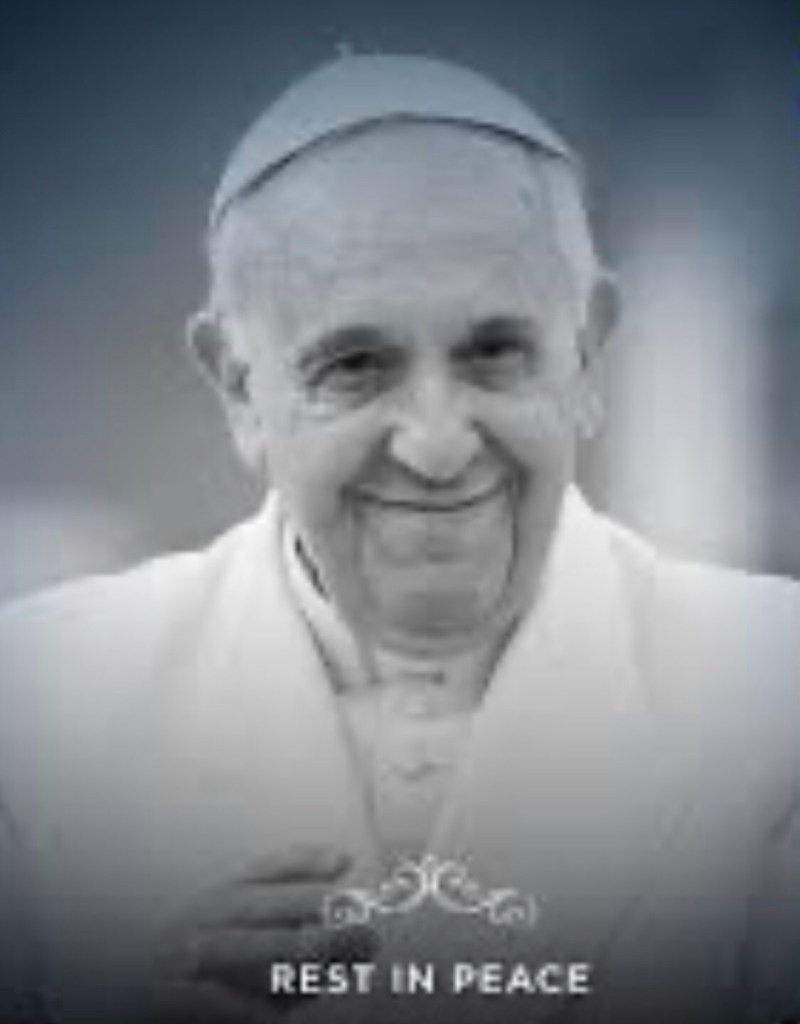
Despite that, today, I offer prayers for those mourning the loss of the Pope and for those wondering who will follow in his footsteps.
Pope Francis was a kind and dedicated man, who truly devoted his life to serving God and his faith. May his family and followers find comfort, knowing he is now resting with our Father in Heaven.
I left the Catholic faith after my divorce of being married to an abuser for 10 years and the church kept trying to convince me to stay even longer;
And when I didn’t, they decided to excommunicate me which was fine and that’s when I found Highway, Tabernacle in the shield of faith ministry and make sure my daughter got a Christian education just not Catholic education although she is baptized Catholic
You see I may not have been a good catholic girl based on their opinions, but I was a good Christian. I never recall in religion class learning about the Bible. Just how to act.
I don’t hold my experience against all catholic church’s :
Because I find the beauty of the Catholic Church in their services.
The beauty of the altar- I still till this day will often visit various churches of all denominations to sit there in silence, and say a prayer.
Prayer in Remembrance of Pope Francis
Heavenly Father,
Today we come before You as we remember the life and legacy of Pope Francis. We thank You for the gift of his leadership, wisdom, and compassion that inspired millions around the world. He dedicated his life to serving others, promoting peace, and spreading Your love.
Lord, may we carry forward his teachings of humility, kindness, and love.
In this time of mourning, we ask for Your comfort for all who are grieving his passing. May Your peace surround them and the Church and guide us as we continue on our spiritual journeys.
We pray for Pope Francis’ soul, asking that he finds eternal rest in Your loving embrace. May his example continue to encourage us to live with faith, hope, and charity, reaching out to those in need and advocating for justice and mercy.
Happy Easter ! Jesus has Risen ! Thank you for stopping by , today we celebrate the most significant event in our Christian faith: the resurrection of Jesus Christ. This glorious moment signifies new life, hope, and the incredible gift of grace bestowed upon us. As we reflect on the meaning of this day, let us remember the profound truths about Jesus’ sacrifice for our sins and how we can live a life filled with gratitude and purpose.
The Sacrifice of Jesus
Jesus came into this world not only to teach us about love and compassion but to make the ultimate sacrifice for our sins. Romans 5:8 reminds us, “But God shows his love for us in that while we were still sinners, Christ died for us.” This powerful verse encapsulates the essence of God’s unconditional love and His desire for us to be free from the burdens of our sins. Jesus endured unimaginable suffering so that we could experience true forgiveness and reconciliation with God.
Living Your Life for Christ
As we acknowledge Jesus’ sacrifice, it’s essential to consider how we can honor Him by living our lives fully devoted to His teachings. In Galatians 2:20, Paul shares, “I have been crucified with Christ; it is no longer I who live, but Christ who lives in me. And the life I now live in the flesh I live by faith in the Son of God, who loved me and gave himself for me.” This verse calls us to die to our old selves and embrace a new identity in Christ. By surrendering our lives to Him, we allow His light to shine through us, impacting those around us.
Gratitude and New Beginnings
Easter is a beautiful reminder that no matter what sorrow, grief, or anger we may carry, we can leave those burdens at the foot of the cross. Jesus did not die for us to live a miserable, lonely life; He desires for us to experience joy, community, and fulfillment. Philippians 4:6-7 encourages us to “do not be anxious about anything, but in everything by prayer and supplication with thanksgiving let your requests be made known to God.” Through prayer and gratitude, we can find peace even amid life’s challenges.
So, on this joyous Easter Sunday, I urge you to reflect on the immense sacrifice that has been given for you. Reach out to your family and friends, attend church services, or gather together for a meal. If you are unable to get out, consider tuning in to uplifting messages from pastors like Charles Stanley, Joel Osteen, Joyce Meyer, or Jack Hibbs. These resources can inspire and encourage you in your walk with Christ.
A Call to Rejoice
Let today be a day of rejoicing and new beginnings. As you celebrate the resurrection of Christ, may you also cultivate a spirit of gratitude in your heart. Remember, you are forgiven, loved, and called to live a life that reflects His glory.
Wishing you all a blessed Easter filled with joy, hope, and a renewed commitment to live for Christ. Embrace the new life He offers, and share that light with everyone around you. Happy Easter!
The Greatest Act of LoveAs we gather to reflect on Good Friday, it’s a poignant time to meditate on the depth of Jesus’ love expressed through sacrifice. In John 15:13, we read, “Greater love has no one than this, that someone lay down his life for his friends.” This powerful verse encapsulates the essence of what Good Friday represents—the ultimate act of love through self-sacrifice.
The Core Message
At its heart, this scripture reveals that true love often requires significant sacrifice. By laying down His life, Jesus demonstrated the highest form of love—one that goes beyond mere words or gestures. It is a call to action, urging us to consider how we can show love to those around us by putting their needs before our own.
And the Context
This verse comes from a profound moment known as Jesus’ farewell discourse, where He imparts wisdom to His disciples prior to His crucifixion. He emphasizes the imperative of loving one another and remaining obedient to God’s commands. In these final moments, Jesus not only reassures His followers but also sets the stage for the greatest sacrifice in history.
Understanding “Friends”
When Jesus refers to His disciples as “friends,” He establishes a deep, intimate relationship with them. This term signifies more than companionship; it reflects a bond of loyalty and shared purpose. As followers of Christ, we are invited into this friendship, called to love others in the same way He loved us.
Application: Living Out the Love of Christ
Good Friday challenges us to examine our own lives and consider how we might embody this sacrificial love. Whether through acts of service, like volunteering, teaching gods word, random acts of kindness, or even personal sacrifice, we are reminded of our calling to care for others. Others means your family, friends and strangers.
Jesus’ life and death set the standard, urging us to prioritize the well-being of our family, and neighbors and friends. You don’t have to be rich to make them a priority, call them , check on them, if they are struggling help them.
Jesus and his willingness to give everything for humanity underscores our duty to reflect that love in our own actions. We are encouraged to reach out to those in need, stand up for justice, and serve selflessly, even when it is difficult.
The Crucifixion: A Moment of Surrender
In Luke 23:46, Jesus uttered the poignant words, “Father, into your hands I commit my spirit!” This moment of surrender beautifully encapsulates His obedience and trust in God’s plan. It serves as a reminder that surrendering to God is a powerful act of faith, especially in times of pain and uncertainty.
The Foundation of Our Faith
Several scriptures further illuminate the significance of Christ’s sacrifice.
1 Peter 2:24 tells us, “He himself bore our sins in his body on the tree, that we might die to sin and live to righteousness. By his wounds you have been healed.” This verse highlights how His suffering was for our benefit, offering us healing and redemption.
1 Corinthians 15:3 proclaims, “Christ died for our sins in accordance with the Scriptures.” This reinforces the fulfillment of God’s promise throughout history.
John 3:16 famously states, “For God so loved the world, that he gave his only Son, that whoever believes in him should not perish but have eternal life.” Here, we see the expansive reach of Jesus’ love, inviting all into relationship with Him.
Romans 5:8 echoes this sentiment, “But God shows his love for us in that while we were still sinners, Christ died for us.” His love is unconditional, offered freely even when we fall short.
In John 19:30, as Jesus declared, “It is finished,” He confirmed the completion of His mission, paving the way for salvation.
A Call to Reflect
On this Good Friday, let us take a moment to reflect on the profound implications of Jesus’ sacrifice. How can we honor His love in our daily lives? How can we emulate the selflessness that He demonstrated? As we remember His journey to the cross, let’s commit ourselves to living out our faith through acts of love and service.
May this day inspire us to deepen our understanding of sacrifice—both His and our own—as we strive to be vessels of His love in the world. Happy Good Friday!
Make time to watch the movie about the crucifixion of Jesus .
The Garden of Gethsemane, located in East Jerusalem, is an olive grove whose name means “a place of pressing.” It’s here where workers would place olives into a press and extract valuable olive oil under significant pressure. Before Jesus went to the cross and rose from the dead, He passed through this very garden. It was in Gethsemane that He felt immense distress, knowing the crucifixion awaited Him;
His sweat became like drops of blood as He expressed, “My soul is overwhelmed with sorrow to the point of death” (Matthew 26:38). This was His moment of trial, a season of suffering that He had to endure.
In the stillness of Gethsemane, the devil sought to sway, Whispering doubts and tempting Jesus to stray. Yet amidst the anguish, His resolve held strong, Choosing God’s will, He proved where we belong.
While we celebrate the resurrection, it’s crucial to recognize that the true victory was achieved in Gethsemane. It was here that Jesus chose not to give in, despite the impending betrayal, the unjust trial, the brutal beatings, the agony of the cross, and the weight of our sins. Under immense pressure, He made a pivotal decision: “Father, not My will but Your will be done” (Matthew 26:39). This shows us that real victory isn’t achieved in public; it’s forged in private moments. How we respond in our own Gethsemane—whether we are grappling with challenges, facing delays in our dreams, or enduring personal trials—is what truly matters.
The apostle Paul expressed, “I want to know Him and the power of His resurrection, and the fellowship of His sufferings” (Philippians 3:10). Resurrection cannot exist without some suffering. It requires a strong will, a determined mind, a warrior’s mentality: “I will not give in to complaining, blaming, doubting, or worrying. I know that beyond this suffering lies the power of the resurrection.” Beyond that struggle lies healing, abundance, divine connections, and new opportunities. The anguish and pressure we face are temporary; they do not define the conclusion of our story. Gethsemane is merely a season—a passage meant for us to experience so we can embrace the power, fullness, and abundance God has in store.
However, the enemy would love for us to become trapped in Gethsemane, questioning, “God, why? Why did this door close? Why is this taking so long?” Doubts about our families or jobs may creep in, just as the devil attempted to exploit Jesus’ moment of vulnerability, trying to persuade Him toward despair. Yet Jesus stood strong, even faced with His imminent death.
You cannot reach your destiny without experiencing pressure, feeling squeezed, or hearing thoughts that suggest things won’t work out and that God has forgotten you. Your very feelings of pressure are indicators that a resurrection is on the horizon.
You wouldn’t be in Gethsemane if something extraordinary wasn’t imminent—doors opening that you never imagined, business opportunities finding you, the right people entering your life, and healing from situations that seem impossible. It’s essential to keep doing the right thing, especially during tough times, because soon enough, you will witness the power of the resurrection!
Death to self occurs at the moment of salvation , we are “born again” its when we are crucified with Christ, as stated in Romans 6:6.
At this point, we receive a new nature because the Holy Spirit comes to dwell within us (John 14:17).
However, sometimes it takes time for us to willingly make sacrifices.
If you can recall, there are times when you might be in a pickle and you start praying. Oh Lord, if you just help me out, I will go to church or oh Lord, if you get me out of the situation or change my ways , or Lord if you let me survive, I will do better …..and then you come out of that pickle ; you get out of that jam and you survive the situation were in and then you don’t follow through
So we’re really not ready to sacrifice everything to grow closer to God. You haven’t followed through even though God followed through. We must stop acting as if God grants us wishes he is not a genie. He is your Lord and you should be obedient or at least follow through and keep your word.
When we truly value what God has given us, we can experience the freedom He intends for us. Jesus’ purpose is to shape us into His likeness, as outlined in Romans 8:29.
But to fulfill this calling, we must be willing to place Christ in a prominent position in our lives. That means put him above everything and everyone else above your self and your significant other your parents your children, friends, money …everything .
This means that the Lord calls us to the cross on a daily basis.
and lay down anything that distracts us from serving and following Him.
It’s important to understand that God isn’t asking us to give up everything so we see ourselves as lonely or poor.
Instead, laying down our treasures—whether they are possessions, relationships, or dreams—at the foot of the cross frees us from worldly attachments. You don’t want to worship money, things, you don’t want to brag about how much money you have , you don’t want to brag about who you gave $ to , you are to give quietly. Don’t throw money at a junkie you’re not helping him. Don’t throw money at people using you give to those who you know lives could be better by your help. A single parent raising kids, battered women, veterans living with ptsd, elderly who struggle to have food and medicine. Surprise someone with a car not a new car but a used one. If a woman’s or man is driving a 1980 Toyota that body looks like Swiss cheese maybe get them a 2000 Toyota or a something better they will be just as grateful. Pay a persons medical bill ease their burden, do good with what you have , if your broke volunteer , help in other ways. but don’t idolize it ! we must release these things, so our self-esteem no longer depends on them, and our sense of acceptance comes from being complete in the Lord. As Paul said, we are alive in God through Jesus Christ (Romans 6:11).
We must be a blessing to others but we should never worship fame and money more than we do our God.
When we idolize money it ourself it sets us up for the devil to slide in to convince you you are better than God
Your not.
So when you are saved you start to put God first and you will begin to grow.
Dear Lord, Thank You for this beautiful Sunday morning, a new beginning adorned with Your grace. I am truly grateful for Your boundless love and for the gift of Your Son, Jesus, who sacrificed everything for me. Guide me today through Your Holy Spirit, filling me with the courage to face challenges and the wisdom to walk in Your ways. May my heart remain light, my actions be filled with kindness, and my faith steadfast, trusting that You hold my future in Your hands. In Jesus’ name, Amen.
Daytona Beach 2025
Sunday is a time for reflection and worship. Rejoice in the Lord and remember that His mercies are new every morning. Thank you for your Grace.
Today your heart be filled with hope and gratitude.
Ephesians 2:8–9
For by grace you have been saved through faith. And this is not your own doing; it is the gift of God, not a result of works, so that no one may boast. For we are his workmanship, created in Christ Jesus for good works, which God prepared beforehand, that we should walk in them.
By grace refers to God’s favor upon those who have transgressed his law and sinned against him. But grace may also be understood as a “power” in these verses. God’s grace not only offers salvation but also secures it. Saved refers to deliverance from God’s wrath at the final judgment (Rom. 5:9); “by grace you have been saved” is repeated from Eph. 2:5 for emphasis. The verb form for “have been saved” (Gk. sesōsmenoi, perfect tense) communicates that the Christian’s salvation is fully secured. through faith.Faith is a confident trust and reliance upon Christ Jesus and is the only means by which one can obtain salvation. this. The Greek pronoun is neuter, while “grace” and “faith” are feminine. Accordingly, “this” points to the whole process of “salvation by grace through faith” as being the gift of God and not something that we can accomplish ourselves. This use of the neuter pronoun to take in the whole of a complex idea is quite common in Greek (e.g., 6:1); its use here makes it clear that faith, no less than grace, is a gift of God. Salvation, therefore, in every respect, is not your own doing.
Today marks the start of Holy Week, and I wanted to take a moment to reflect on what Palm Sunday really means. This day remembers when Jesus rode into Jerusalem, and the crowds celebrated Him like a superstar!
They waved palm branches and shouted praises—talk about a hero’s welcome!
But here’s the twist: just a week later, many of those same people turned against Him. It’s a powerful reminder of how quickly things can change in life. 🙁
Jesus didn’t come as a typical king; He chose to enter on a humble donkey, showing us that true leadership is about serving others. His journey was all about love and sacrifice, ultimately leading to His crucifixion for our sake.
As we celebrate today, let’s remember the incredible love He has for each of us. His story teaches us about forgiveness, hope, and grace—values we can all embrace in our lives.
So, as you wave your palm branches or simply reflect on this day, think about how you can spread a little more love and kindness in the world. 💖
God Sees Everything: A Call to Authentic LivingDear brothers and sisters in Christ,
Today, I want to remind you of a profound truth: God sees everything, knows everything, and is everything. In our lives, we may feel tempted to hide our actions, thoughts, or intentions from others, thinking we might fool those around us. But let us not forget – we are never out of God’s sight. He knows our hearts, our motivations, and our struggles.
The Invitation to Live for Jesus
In Romans 12:1, the Apostle Paul opens with a heartfelt plea: “I beseech you therefore, brethren.” This is not just a casual request; it is a passionate invitation. Paul begs us to consider our lives in light of God’s mercy. The imperative here is clear: God’s mercies compel us to live authentically for Him.
As we dive into this message, let’s take a moment to reflect on just how blessed we truly are, despite our trials or feelings of inadequacy. The very fact that we woke up today is a testament to God’s grace and mercy. His love is ever-present, and His heart yearns for us to respond in kind.
Understanding God’s Mercy
The term “mercies” in Greek (oiktirmos) denotes compassion, empathy, and the act of feeling deeply for someone. When God extends His mercy toward us, He grants us the opportunity for redemption — not because we deserve it, but because He chooses to love us unconditionally.
Consider Galatians 4:4-5, which reminds us that “when the fullness of time had come, God sent forth His Son, born of a woman, born under the law, to redeem those who were under the law.” Jesus came into our broken reality to offer us adoption as sons and daughters of the Most High. This act of divine mercy is available to everyone, everywhere.
The Weight of Nakedness
In Genesis, we observe the moment Adam and Eve disobeyed God. The serpent, cunning and deceitful, led them into temptation, causing them to dwell on their shame. When their eyes were opened, they recognized their nakedness — not merely in a physical sense, but spiritually, as they were now exposed before God. They tried to cover themselves with fig leaves, hiding in shame.
Isn’t it true that in our own lives, when we stray from God’s path, we often attempt to cover up our wrongs? We might camouflage our sins, pretending everything is okay when deep down, we know it isn’t. But just like Adam and Eve, our attempts to hide from God are futile. He knows where we are, and more importantly, He desires our honesty and confession.
The Importance of Confession and Forgiveness
When God calls out to Adam and Eve, asking, “Where are you?” it’s not because He doesn’t know. Instead, He wants them to acknowledge their failings. If they had confessed their sin, they would have received forgiveness and perhaps a covering crafted by God Himself.
Yet, instead of owning up to their mistakes, Adam shifts the blame to Eve, and Eve blames the serpent. This pattern of denial creates distance between them and God. It’s vital for us to recognize that God invites us to come to Him with open hearts, ready to confess our shortcomings, knowing that He will meet us with grace.
The Sacrifice of Love
Even after their transgression, God still loved Adam and Eve. He provided a sacrifice to cover their shame—an innocent animal whose skin was used to clothe them. This foreshadowed the ultimate sacrifice of Jesus Christ, who was offered for our sins so that we could be reconciled to God.
No matter the depth of our failures, God’s love remains steadfast. He sees everything, including our struggles and our pain. While He does not condone our sinful actions, He continues to reach out, urging us to respond to His call.
Live Authentically
As we move forward, let us remember that God sees us, and we cannot hide from Him. Whether we’re wrestling with shame, guilt, or the desire to live authentically, let’s approach God with humility and trust. It’s time to drop the fig leaves and stand bare before Him, allowing His mercy to envelop us.
May we beckon one another to a life of authenticity, extending the same mercy and grace that God has shown to us. You are not alone in this journey. God desires an intimate relationship with you. Today, let’s choose to embrace that relationship wholeheartedly, knowing that nothing can separate us from His love.
Ash Wednesday A sacred time of prayer, reflection, and preparation for the joy of Easter. This day reminds us of our mortality and calls us to turn inward, focusing on repentance and renewal. It’s a gentle nudge to refocus our spiritual lives and embrace the teachings of Christ as we embark on this six-week journey of penitence.
Growing up in a Catholic school, I remember the profound impact that attending church every morning had on me. The first moments of each day were dedicated to worship, fostering a connection with God that still resonates within me. My heart was often moved by the Stations of the Cross, where each moment of Jesus’ journey resonated deeply. While many may have gone through the motions, I found myself lost in gratitude, contemplating the sacrifices made for us all.
Yet, my path through Catholic school was not without its challenges. I confess, I was no angel. As I navigated the halls with a mouth that sometimes overflowed with sass, I often found myself at odds with authority figures. A pivotal moment for me was when a stranger chased me near my home, Thank God I knew where to run and get away, but it was an experience that shattered my childhood belief in the goodness of adults. From that point on, I struggled to respect those I perceived as “elders.”
In my younger years, interactions with nuns and Monsignors often felt less like guidance and more like punishment. Their methods could be harsh, and the emotional scars lingered far longer than the actual reprimands. I remember an instance vividly: arriving at an early mass unknowingly conducted in Polish. Despite feeling a sense of God’s presence, I was met with disdain rather than understanding. Instead of being encouraged in my efforts, I faced criticism for not knowing the language. At times, it felt like the ceremony was marred by the drama that came with it.
I often pondered what Jesus would say to me during those difficult moments. I believed He would offer understanding, compassion, and reassurance that everything would be okay. Over time, my disillusionment pushed me away from the Catholic faith. However, as I grew older and encountered kinder souls, I found my way back to the church, albeit at my own pace, sometimes attending services at non-denominational congregations.
Today, on Ash Wednesday, I encourage each of us to reflect on our actions and strive to be better individuals. In a world often filled with hate and selfishness, let us choose kindness. The teachings of Jesus remind us of the power of love and compassion, urging us to uplift one another rather than tear each other down.
The Stations of the Cross serve as an incredible guide for reflection—not just on Christ’s journey but on our own. Each station calls us to consider our lives, the pain we endure, and the beauty we can create through acts of love and service. Remembering these stations helps to ground us and keeps our hearts open to empathy.
As we embark on this Lenten season, let us commit to seeking peace in our hearts and extending that peace to others. May this Ash Wednesday inspire us to rise above the noise, cherishing moments of calm and reflection.
Wishing you all a blessed, peaceful day filled with joy and love. Let us go forth, inspired and connected, striving to make the world a little brighter, one act of kindness at a time.