There are seasons in life when our burdens feel unbearable. Our bodies grow weary, our emotions run dry, and our hope begins to fade. Responsibilities, health struggles, financial worries, family issues, and past regrets can pile up until we wonder how much more we can carry. In those moments, we often look for relief in people, distractions, or temporary escapes—but Jesus offers something far greater.
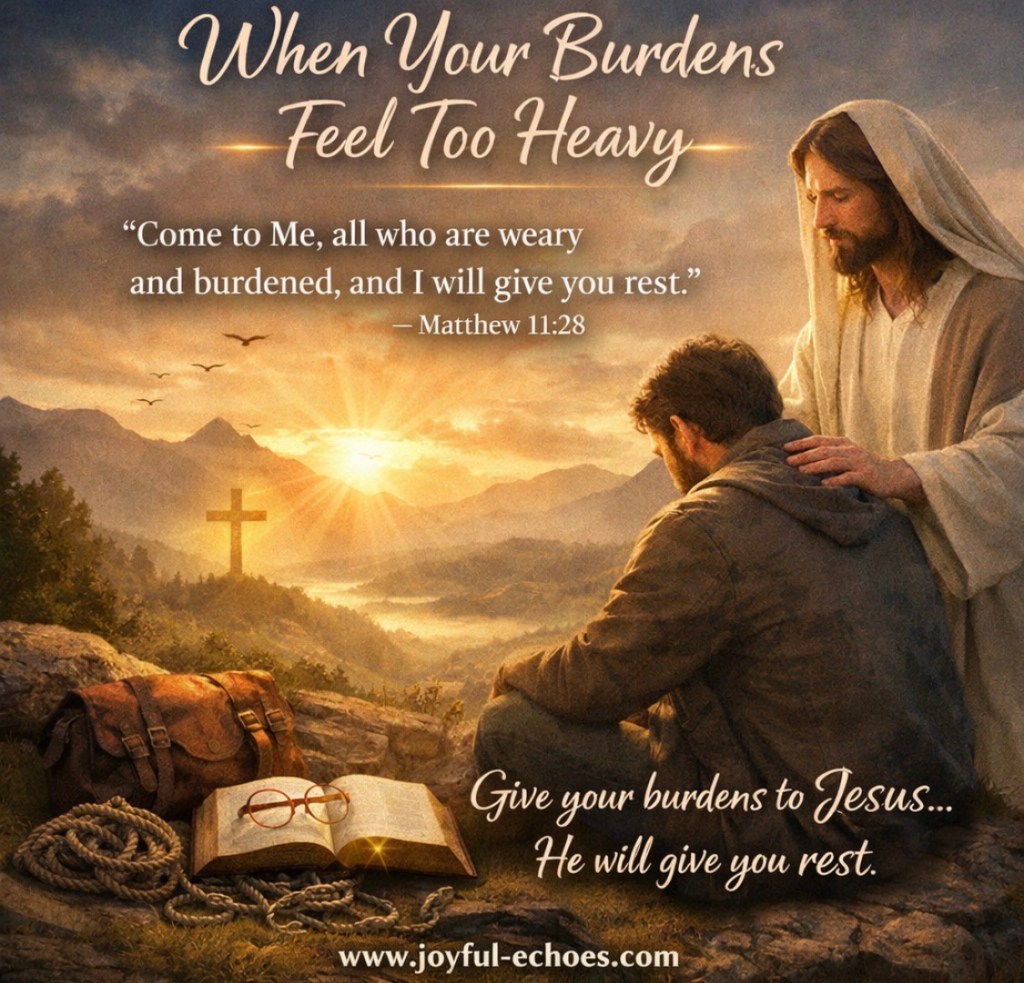
In Matthew 11:28-30, He lovingly invites us, “Come to Me, all who are weary and burdened, and I will give you rest.” This promise was first given to people living under oppression, poverty, and heavy religious expectations, yet it still speaks powerfully to us today. Life in a fallen world will always include trials, but Christ never intended for us to carry them alone.
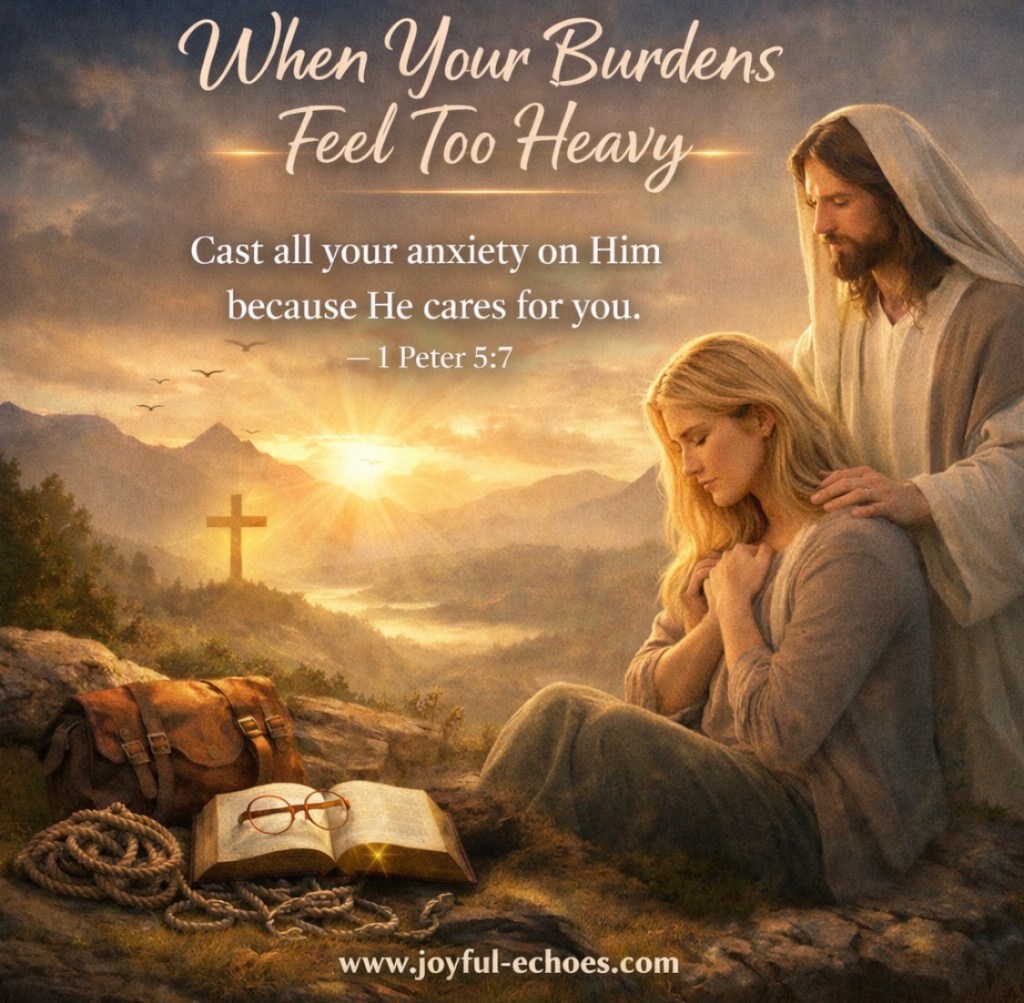
Some burdens come from our calling—like the urge to pray for someone, encourage others, or share God’s truth. Other burdens are simply part of everyday life: illness, loss, stress, anxiety, or strained relationships. No matter the source, Jesus invites us to bring every weight to Him in prayer, humbly admitting our weakness and trusting in His strength (1 Peter 5:7).
When we come to Christ, He doesn’t always remove the burden, but He promises to help us bear it. He asks us to take His yoke and learn from Him—a life of grace, surrender, and faith instead of striving and fear. His yoke is easy and His burden is light because He walks beside us, guiding and strengthening us each step of the way.
Our Savior is gentle and humble in heart. He will never turn us away or condemn us when we come to Him weary. Instead, He offers rest for our souls—peace that replaces anxiety, confidence that quiets fear, and assurance that we are never alone.
God also comforts us through other believers. We are called to bear one another’s burdens in love (Galatians 6:2), reminding each other that Christ is sufficient for every trial. Even Jesus asked His closest friends to pray with Him in His time of deep sorrow.
When life feels heavy, our first response should be to run to Jesus, not away from Him. Surrender your burdens daily, fix your mind on His promises, and trust that the One who carried the cross is more than able to carry you.
When you accept Jesus as Lord of your life, you declare your trust and commitment to obey Him because of His incredible love for us. True faith produces obedience—it’s the natural response to God’s grace. As Paul taught in Romans, obedience of faith is vital, and disobedience stems from unbelief. If we truly believe in Jesus, our actions will reflect that belief; we will walk in love.
Reflection and Application:
What does it mean to be connected to Jesus? Being connected to Jesus means trusting Him completely, following His teachings, and allowing His love to guide our actions.
Have you been involved in church or small groups? Engaging in fellowship helps us grow in faith and walk in obedience. If you’re not yet involved, consider joining a community of believers.
Have you been baptized or are working toward it? Baptism is a step of obedience that publicly declares your faith in Christ.
Are you spending regular time with God in His Word and prayer? Daily devotional time helps deepen your relationship with God and reinforces your faith.
What Is True Love? (1 Corinthians 13:4-7) Love is patience, kindness, humility, and endurance. It’s not jealous, boastful, proud, rude, self-seeking, easily angered, or keeps records of wrongs.
Most challenging? Being patient and forgiving is often hardest to practice. Because people can hurt our feelings, especially those we love. When they are mean to us or do foolish things.
How to allow the Spirit to produce this love? Pray daily, ask the Holy Spirit to fill you with love, and practice these qualities intentionally.
The Fruit of the Spirit (Galatians 5:22-23) Love is just one fruit of the Spirit. Others include joy, peace, patience, kindness, goodness, faithfulness, gentleness, and self-control.
What qualities need growth? If you notice a lack of patience or gentleness, ask the Spirit to cultivate these traits.
How to let the Spirit work? Stay close to God through prayer and Bible study, and be receptive to His guidance.
Loving God and Others Jesus summarized the greatest commandments: Love God and love your neighbor.
Why two commands? Because loving God naturally leads to loving others, and vice versa. They’re inseparable.
What does it mean to love God with all your heart, soul, and mind? To love Him completely—putting Him first in everything, seeking His will, and obeying His Word.
How does loving God influence loving others? It fills us with His love, making us more compassionate, forgiving, and patient.
Who is my neighbor? Anyone in need—family, friends, strangers, even those difficult to love.
Who are the people in your life who may not feel loved?
Living in Full Obedience Obedience to God isn’t optional; it’s about living all His Word—both the easy and the hard parts. Don’t come to church for appearances or pick what fits your lifestyle. Live fully in His love, practicing what He teaches, and let His Spirit guide you toward genuine obedience.
Heavenly Father, Guide our hearts and minds to walk faithfully in Your way. Help us to be obedient to Your will and draw closer to You each day. Fill us with Your Spirit so that we may shine Your light brightly to others, illuminating their paths with love and truth. May our lives be a beacon of hope and grace, bringing glory to Your name. Amen.
In the journey of life, there are moments when God orchestrates a shift in our circumstances—an unexpected turn that seems challenging and confusing at first. But often, these changes serve a greater purpose: to help us develop a new attitude, a renewed perspective on life. You may find yourself in a situation that feels isolating, where you no longer resonate with the habits or mindsets of your friends or family. And that’s absolutely okay.
God has placed you in this unique scenario for a reason. He is calling you to rise above the ordinary, to shed the layers of familiarity that no longer serve your growth. It can be daunting to step away from the crowd, especially when it feels like you’re drifting from the people you once knew so intimately. But remember, this transformation is not just a call to be different; it’s a divine invitation to embrace your true self.
You’ve been saved by grace—a concept that is as profound as it is liberating. Grace means that you have been pulled from the pits of darkness and set free to live a life filled with purpose. It’s important to understand that grace covers every part of you; every sin, both those you’ve confessed and those buried deep within your heart. This unconditional love from God doesn’t give you a license to revert to old ways. Instead, it empowers you to break free from the chains that once bound you, allowing you to step into a new identity that reflects His love and forgiveness.
You are no longer the person you once were. Your slate has been wiped clean, and now your name is written in the Lamb’s Book of Life. This is not just a change in status; it’s an invitation to walk in the fullness of what it means to be a child of God. Picture it: one day, you will be raised up and seated with our heavenly Father, basking in the glory of His presence. But until that time comes, you have a crucial role to play here on Earth.
Every day is an opportunity to demonstrate the transformative power of grace in your life. Be a shining example of what it means to be saved. Your actions, thoughts, and words should reflect the incredible gift you have received. It’s about embracing a new way of thinking and living—one that honors the grace that has been bestowed upon you.
So, when you feel different or out of place, remind yourself that being set apart is part of God’s plan for you. Take pride in the fact that you are evolving, growing, and becoming the person He has always intended you to be. Let your life be a testament to the truth that you are indeed a new creation. Walk boldly into the future He has for you, knowing that His grace is sufficient for every challenge you face.
Celebrate the journey! Embrace the new attitude, the fresh perspective, and the beautiful life that awaits you. You are not alone—God is with you every step of the way, guiding you toward a destiny filled with hope, purpose, and love.
As we journey through life, it’s impossible to escape the reality that challenges will arise. For those of us who identify as Christians, it’s essential to understand that becoming a believer does not guarantee an easy path. In fact, sometimes it may feel like we’ve stepped into a battlefield where obstacles lurk at every corner, especially when we strive to live a life that reflects the light of Jesus Christ.
When you choose to follow the path of righteousness, you may find yourself facing even more trials than before. The enemy does not appreciate our efforts to glorify God, and he will work tirelessly to plant discouragement in our hearts. You might find that after doing your best, instead of receiving praise or support, you experience criticism from all sides. It is during these moments that you need to remind yourself, “Lord, I am working for you today. In all things, I do it to glorify you.”
This mindset shift can transform the way we approach our daily lives. Whether you’re at work and facing constant scrutiny from your boss, or you’re a student striving for excellence while feeling overwhelmed by teachers and parents alike, remember that your dedication is not in vain. When you commit your efforts to God, acknowledging that you’re ultimately serving Him, your spirit will be uplifted, and you will find the strength to persevere.
However, let’s not sugarcoat it—there will be moments of difficulty. Friends and family may not understand your faith, and there may be times when you feel isolated in your journey. The devil, knowing how to strike at your vulnerabilities, may tempt you in ways you’ve previously thought you’d overcome. Whether you’ve fought addiction for years or learned to resist harmful habits, the enemy might try to lure you back into those temptations. Remember, he seeks to steal, kill, and destroy (John 10:10). But with God on your side, you have the power to resist and stand firm.
In this battle against negativity and temptation, make it a priority to nourish your spirit. Dedicate time each day to read your Bible—even if just for five minutes. At the end of the day, express gratitude for the blessings you’ve received and identify three things you are thankful for. When you wake each morning, thank Him for the gift of another day to serve Him.
If you’re reading this and find yourself yearning for salvation, take a moment to reach out to God. Repeat after me: “Lord, I come to you now asking for forgiveness. I am a sinner and regret my past actions. Please wash away my sins and save me. I trust in you, Lord, and I am grateful for the new life you offer.”
You are now born again, and it would be good if you found or became part of a good Bible based church and if you are housebound, or can’t seem to find one, there are ministries that you can watch online listen to them on the radio and surround yourself with Christian people
Bible Verses to Reflect On:
On Salvation: “For by grace you have been saved through faith, and that not of yourselves; it is the gift of God.” – Ephesians 2:8
On Resisting Temptation: “Submit yourselves, then, to God. Resist the devil, and he will flee from you.” – James 4:7
On the Reality of Spiritual Warfare: “The thief comes only to steal and kill and destroy. I came that they may have life and have it abundantly.” – John 10:10
Stand strong in your faith. Know that while challenges may arise, you are equipped with the strength that comes from above. May you face each day with courage, anchored in God’s promises, and may His peace guide you through the storms.
The concept of the Armor of God, as outlined in Ephesians 6:10-18, is a powerful metaphor for spiritual preparedness and resilience in the face of spiritual warfare. Here’s an explanation of the armor, its significance, and relevant biblical references:
The Armor of God: A Spiritual Battle Preparednes
The Belt of Truth (Ephesians 6:14)\
Significance: The belt represents the Word of God, which holds everything together. In ancient times, a soldier’s belt held their armor in place and allowed them to move freely.\n –
Application: Truth is fundamental in our battle against deceit and falsehood. By grounding ourselves in God’s truth, we can combat the lies of the enemy.
Biblical Reference: “Then you will know the truth, and the truth will set you free.” (John 8:32)\n2.
The Breastplate of Righteousness (Ephesians 6:14)
Significance: The breastplate protects vital organs, especially the heart. Righteousness—living in a way that pleases God—provides protection against guilt and shame.\n
Application: Embracing a lifestyle of integrity helps guard us from the enemy’s attacks on our character and sense of worth.
Biblical Reference: “For he made him who knew no sin to be sin for us, that we might become the righteousness of God in him.” (2 Corinthians 5:21)
The Shoes of the Gospel of Peace (Ephesians 6:15)
Significance: Footwear enables movement and readiness. Shoes symbolize our readiness to share the gospel and spread peace.
Application: Being prepared to share the message of Christ helps us evangelize and serve others, showing the love of God in our actions.
Biblical Reference: “How beautiful are the feet of those who bring good news!” (Romans 10:15)
The Shield of Faith (Ephesians 6:16)
Significance: The shield protects against incoming attacks. Faith serves as our defense against doubt, fear, and temptations that the enemy throws at us.
Application: A strong faith allows us to deflect lies and negativity and maintain our trust in God’s promises in challenging times.
Biblical Reference: “Now faith is confidence in what we hope for and assurance about what we do not see.” (Hebrews 11:1)
The Helmet of Salvation (Ephesians 6:17)\n – Significance: The helmet protects the mind. Salvation guards our thoughts, anchoring our identity in Christ
Application: Understanding and believing in our salvation guards against discouragement and the enemy’s attacks on our mental state.
Biblical Reference: “For I am convinced that neither death nor life, neither angels nor demons, neither the present nor the future, nor any powers… will be able to separate us from the love of God.” (Romans 8:38-39)
The Sword of the Spirit (Ephesians 6:17)
Significance: Unlike the other pieces, the sword is an offensive weapon that allows us to actively combat evil. It symbolizes the Word of God.
Application: Knowing Scripture equips us to counter the enemy’s lies and provides strength in moments of temptation and battle.
Biblical Reference: “For the word of God is alive and active. Sharper than any double-edged sword.” (Hebrews 4:12)
Each piece of the armor is not only protective but also empowers us to move forward, facing challenges with confidence and purpose. As we prepare for spiritual battle, it’s crucial to foster a community of believers who support one another through prayer, encouragement, and shared truths.
Biblical Encouragement\nUltimately, we are reminded that God’s love is unwavering. When we don the armor of God, we stand firm and ready, trusting in His strength.
‘Finally, be strong in the Lord and in his mighty power. Put on the full armor of God, so that you can take your stand against the devil’s schemes.” (Ephesians 6:10-11)\n\nBy embodying these principles, we can navigate the trials of life confidently, knowing we are equipped for the battles we will face, both seen and unseen.
The armor of God equips every Christian to face the forces of evil, but it must be “taken up” to be effective (Ephesians 6:13). Sadly, many believers never learn how to utilize this armor, leaving them vulnerable to fear, temptation, and emotional pain.Unlocking this spiritual armory involves prayer, as exemplified by the Lord’s Prayer, which asks for deliverance from evil (Luke 11:4). Overcoming Satan requires God’s aid, and prayer is the battleground for Christians. It’s not a passive activity; rather, it demands a proactive commitment to persistent, fervent prayer, as stressed in Colossians 4:2.
Despite the temptation to give up when prayers seem unanswered, we are reminded by Daniel’s experience that answers may take time due to spiritual battles (Daniel 10:12–14). James 4:7–8 teaches us to submit to God and resist the devil to achieve spiritual victory.
“The Warrior’s Prayer,” inspired by Ephesians 6, is a powerful declaration against spiritual adversaries:
**Heavenly Father, Your warrior prepares for battle. Today I claim victory over Satan by putting on the whole armor of God!
I put on the Girdle of Truth, standing firm against deception.
I don the Breastplate of Righteousness, guarding my heart under the blood of Jesus.
I wear the Shoes of Peace, bringing the Good News to all I encounter.
I take the Shield of Faith, deflecting doubt and deceit.
I put on the Helmet of Salvation, keeping my thoughts focused on You.
I wield the Sword of the Spirit, ready to expose temptation with Your Word.
By faith, I am clothed in the whole armor of God, prepared for spiritual victory today! Amen.**
In a world filled with uncertainty and diverse beliefs, the question of faith often looms large: should one believe in God? For many, this is not just a theological inquiry but a deeply personal decision that shapes their worldview and approach to life. After much contemplation, I propose that if you have the choice, choosing to believe in God is a path filled with potential gains and minimal risks. Here’s why:
1. A Source of Hope and Purpose
Believing in God can instill a profound sense of hope and purpose. In times of struggle, when faced with life’s challenges, having faith offers comfort and reassurance. It provides a framework through which individuals can find meaning, even in difficult circumstances. The belief that there is a higher power or divine plan can be incredibly empowering, encouraging people to persevere when they might otherwise lose hope.
2. Community and Connection
Faith often fosters a sense of community. Many religious traditions emphasize fellowship and support, bringing people together in shared beliefs and values. This community can become a source of strength, providing friendship, emotional support, and encouragement. When you choose to believe, you open yourself up to forming deep connections with others who share your faith, enriching your social life and providing a support network during tough times.
3. Moral Framework and Guidance
Belief in God typically comes with a moral framework that can guide your actions and decisions. Many religions promote teachings that encourage kindness, compassion, and empathy toward others. Embracing these values can lead to a more fulfilling life, as they encourage positive interactions with those around you. Even outside of a formal religious context, living by such principles can enhance your personal integrity and self-respect.
4. The Comfort of Spirituality
The spiritual aspect of believing in God can provide immense comfort. Many people find solace in prayer, meditation, or rituals that connect them to something greater than themselves. This spiritual dimension can help alleviate feelings of loneliness and existential dread, offering a sense of belonging to a larger universe. The act of believing itself becomes a source of peace and tranquility, enhancing overall well-being.
5. Life’s Uncertainties
Life is full of uncertainties and unanswered questions. Believing in God can help individuals navigate these complexities with a sense of assurance. It can create a mental space where one can rest in the belief that everything happens for a reason, even if that reason is not immediately clear. This perspective can reduce anxiety about the future and foster resilience in facing life’s unpredictability.
6. Personal Growth and Transformation
For many, the journey of faith is one of personal growth and transformation. Engaging with spiritual teachings can prompt self-reflection and inspire individuals to strive for improvement. The process of questioning, exploring, and ultimately choosing to believe can lead to profound insights about oneself and the world around us. This journey fosters a sense of achievement and fulfillment that can greatly enrich one’s life.
7. Minimal Risk Involved
When considering whether to believe in God, it’s important to note that the risks are relatively low compared to the potential benefits. Even if one believes and later finds that their faith is not supported by evidence, the values, relationships, and personal growth that come from the experience can still be valuable. On the other hand, choosing not to believe may close the door to these enriching experiences and connections
So if faced with the choice of whether to believe in God, I advocate for embracing that belief. The potential rewards are vast—hope, community, moral guidance, comfort, personal growth, and a new perspective on life’s uncertainties. While doubt and questioning are natural parts of the human experience, choosing to believe offers a pathway to a richer, more meaningful existence. After all, in the grand tapestry of life, believing in something greater than ourselves may indeed provide the most vibrant colors and deepest meanings. So why not take that leap of faith? You truly have nothing to lose and everything to gain.
In the whirlwind of life, it’s easy to become overwhelmed by challenges, uncertainties, and the unexpected twists that come our way. Yet, amidst the storm, there lies a powerful choice waiting for us: the choice to embrace joy. Today, I want to encourage you to choose joy, not because everything around you is perfect, not because your life is perfect but because the One who holds your future is.
God is perfect
Rejoice in the Lord, Always
The Bible reminds us in Philippians 4:4 to “Rejoice in the Lord always; again I will say, rejoice.” This isn’t just a suggestion; it’s an invitation to cultivate a heart of gratitude and celebration, even when life seems daunting. The beauty of this command is found in its source—the Lord Himself. Our joy is rooted in who He is: loving, faithful, and good. No matter what trials we face, we can find solace in the unchanging nature of God.
Joy vs. Happiness
It’s essential to distinguish between joy and happiness. Happiness often hinges on external circumstances—it’s fleeting and can vanish with the slightest change in events. Joy, however, is a deep-seated assurance that transcends our current situation. It is a state of being that flourishes in the heart, nurtured by our relationship with God. It’s recognizing that while we may be walking through difficult valleys, we are never alone.
Finding Strength in Vulnerability
Choosing joy doesn’t negate the reality of our struggles; instead, it empowers us to face them with a renewed perspective. In times of vulnerability, allow yourself to feel and express your emotions, but don’t linger there. Lean into prayer and worship, inviting God to fill you with His peace. Psalm 30:5 reminds us, “Weeping may tarry for the night, but joy comes with the morning.” Each new day presents an opportunity for restoration and hope.
Discovering a Wellspring of Peace
When we choose to rejoice in the Lord, we tap into a wellspring of strength and peace. Life might be throwing us curveballs, but joy acts as an anchor, guiding us through turbulent waters. In John 16:33, Jesus said, “In the world you will have tribulation. But take heart; I have overcome the world.” This promise reassures us that no matter the chaos surrounding us, we can stand firm in our faith, knowing God has already won the ultimate victory.
Practical Steps to Choose Joy
Gratitude Journaling: Take time each day to write down three things you’re thankful for. Shifting your focus to gratefulness opens your heart to joy.
Worship and Praise: Create a playlist of worship songs that uplift your spirit. Singing praises can transform your mood and draw you closer to God.
Acts of Kindness: Spread joy by serving others. Engaging in acts of kindness not only blesses those around you but also cultivates joy within your own heart.
Meditate on Scripture: Revisit passages that remind you of God’s goodness and faithfulness. Let these truths resonate in your heart throughout the day.
Connect with Community: Surround yourself with fellow believers who inspire and encourage you. Fellowship is a powerful means of experiencing joy shared among friends.
Closing Thoughts
So today, if you find yourself facing challenges or uncertainties, consciously choose joy. Rejoice in the Lord, not because your circumstances are perfect, but because He is. As you do, you’ll discover a wellspring of strength and peace that will carry you through any storm. Remember, joy is not merely a feeling; it’s a choice—a beautiful declaration of faith in the midst of life’s chaos. Embrace it, and watch how it transforms your outlook and uplifts your spirit.
5 Now, brothers and sisters, about times and dates we do not need to write to you,2 for you know very well that the day of the Lord will come like a thief in the night.3 While people are saying, “Peace and safety,” destruction will come on them suddenly, as labor pains on a pregnant woman, and they will not escape.
4 But you, brothers and sisters, are not in darkness so that this day should surprise you like a thief. 5 You are all children of the light and children of the day. We do not belong to the night or to the darkness. 6 So then, let us not be like others, who are asleep, but let us be awake and sober. 7 For those who sleep, sleep at night, and those who get drunk, get drunk at night. 8 But since we belong to the day, let us be sober, putting on faith and love as a breastplate,and the hope of salvation as a helmet. 9 For God did not appoint us to suffer wrath but to receive salvation through our Lord Jesus Christ. 10 He died for us so that, whether we are awake or asleep, we may live together with him. 11 Therefore encourage one another and build each other up, just as in fact you are doing.
Final Instructions
12 Now we ask you, brothers and sisters, to acknowledge those who work hard among you, who care for you in the Lord and who admonish you. 13 Hold them in the highest regard in love because of their work. Live in peace with each other. 14 And we urge you, brothers and sisters, warn those who are idle and disruptive, encourage the disheartened, help the weak, be patient with everyone. 15 Make sure that nobody pays back wrong for wrong, but always strive to do what is good for each other and for everyone else.
16 Rejoice always, 17 pray continually, 18 give thanks in all circumstances; for this is God’s will for you in Christ Jesus.
19 Do not quench the Spirit. 20 Do not treat prophecies with contempt 21 but test them all; hold on to what is good, 22 reject every kind of evil.
23 May God himself, the God of peace,sanctify you through and through. May your whole spirit, soul and body be kept blameless at the coming of our Lord Jesus Christ. 24 The one who calls you is faithful,and he will do it.
25 Brothers and sisters, pray for us. 26 Greet all God’s people with a holy kiss. 27 I charge you before the Lord to have this letter read to all the brothers and sisters.
28 The grace of our Lord Jesus Christ be with you.
Bible Study on “The Day of the Lord” (1 Thessalonians 5:1-28)
Today, we’re diving into a passage from 1 Thessalonians 5, where the Apostle Paul encourages the early Christian community about the return of Jesus and how they should live in expectation of that great day. This text is rich with practical instructions on faith, community life, and our response to God’s calling.
Reading the Passage
Let’s begin by reading the entire passage together (1 Thessalonians 5:1-28), which we will break down for discussion.
Verses 1-11: The Day of the Lord
Verses 1-2 Paul starts by mentioning times and dates concerning “the Day of the Lord.” He stresses that believers do not need detailed information about when this will happen, as it will come unexpectedly, “like a thief in the night.”
Discussion Question: Why do you think Paul uses the imagery of a thief? What does this say about our preparedness?
Paul’s use of the imagery of a thief in the night serves several powerful purposes in his message about the Day of the Lord. Here are a few key insights:### 1. Suddenness and Unexpectedness The metaphor of a thief suggests that the return of Christ will happen suddenly and without warning. Just as a thief does not announce their arrival, the Day of the Lord will come unexpectedly. This emphasizes the need for believers to be continually vigilant and prepared for Christ’s return, signifying the unpredictable nature of God’s timing. 2. Call to Watchfulness By likening this event to a thief, Paul stresses the importance of being alert and aware. It implies that spiritual negligence can leave one unprepared. Believers are encouraged to stay awake spiritually, cultivating a life of faith and good deeds rather than becoming complacent or distracted by worldly concerns. 3. Contrast Between Light and Darkness The imagery highlights the contrast between those who are in darkness (the unprepared) and those who are in light (the believers). A thief operates in darkness, while believers are called to walk in the light. This contrast reinforces the idea that followers of Christ should live differently, reflecting their awareness of God’s truth and the hope of salvation. What This Says About Our Preparedness This imagery serves as a wake-up call for Christians today. It challenges us to evaluate our own lives and spiritual readiness. Here are a few reflections on what this means for our preparedness: Active Engagement: Being prepared involves actively engaging in spiritual practices like prayer, reading the Bible, and participating in community worship. Living with Purpose: It encourages us to live with a sense of urgency and purpose, prioritizing our faith and relationships over mundane distractions. Faith Over Fear: We must remember that, unlike the fearful anticipation of those in darkness, believers can approach the future with hope and confidence, knowing they are secure in Christ. Ultimately, Paul’s imagery of the thief is a poignant reminder that we should live as if each day could be our last, fostering a spirit of readiness that aligns with our faith in Christ and our hope for His return.
Verses 3-4 Many will be caught off guard, saying “Peace and safety,” only to face sudden destruction. But believers are reminded they are not in darkness; they should not be surprised.
Key Point: As children of light, we are called to vigilance. It’s important for us to remain awake and aware of spiritual realities.
Verses 5-8 Paul contrasts those in darkness with the “children of the light.” He urges them to stay sober, putting on faith, love, and hope.
Discussion Question: How can we actively put on these virtues daily? What does it mean to “put on faith and love as a breastplate”?
Answer : Putting on virtues like faith and love daily is about cultivating a mindset and lifestyle that reflects these qualities in our interactions and decisions. Here’s a breakdown of how we can actively do this, along with an explanation of the metaphor of “putting on faith and love as a breastplate.”### 1. Intentional Practice Morning Routine: Start each day with prayer or meditation to set your intentions on embodying faith and love throughout the day. Affirmations: Use positive affirmations focused on being loving and faithful in all circumstances, which can help shape your mindset. 2. Mindfulness and Reflection Self-Examination: Reflect at the end of the day on moments where you embodied these virtues, and where you could improve. Journaling can be a helpful tool for this. Awareness of Others’ Needs: Make it a habit to be aware of the feelings and needs of those around you. This mindfulness can help guide your actions toward more loving responses. 3. Acts of Kindness Small Gestures: Incorporate small acts of kindness into your daily routine—compliment a coworker, help a neighbor, or volunteer your time. Encouragement: Actively look for opportunities to encourage others in their faith, whether through words or actions. 4. Community Engagement Support Groups: Join or participate in groups that reflect your values. Being part of a community provides support and accountability for practicing faith and love. Service Projects: Engage in community service that aligns with your values, allowing you to put love into action. What It Means to “Put on Faith and Love as a Breastplate” The metaphor of putting on faith and love as a breastplate emphasizes protection and readiness: Protection Against Challenges: Just as a breastplate guards vital organs, having faith protects us from doubts and fears, while love shields us from bitterness and hostility. By prioritizing these virtues, we’re less likely to be swayed by negativity or adversity. Defensive Armor: In spiritual terms, faith and love act as armor against temptation and discouragement. They help us maintain our integrity and remain steadfast in our beliefs, even when faced with trials. Visibility in Action: Wearing faith and love implies that these virtues should be visible in our actions and attitudes. It means living in a way that reflects our commitments to love others and trust in God, showcasing the transformative power of our beliefs to those around us.
Verses 9-10 Here, Paul reassures the Thessalonians that they have not been appointed to suffer wrath but to receive salvation through Jesus Christ.
Verse 11 Finally, Paul encourages them to encourage and build each other up, emphasizing the importance of community.
Verses 12-15: Final Instructions
Verses 12-13 Paul acknowledges those who labor among them and urges respect and peace within the community.
Verses 14-15 He addresses specific behaviors: warning the idle, encouraging the disheartened, helping the weak, and promoting patience and goodness.
Key Point: Each member has a responsibility to foster a supportive community—how can we look out for others actively?
Verses 16-22: Instructions for Living
Verses 16-18 Paul gives three commands: rejoice always, pray continually, and give thanks in all circumstances.
Verses 19-22 He advises against quenching the Spirit and encourages testing prophecies. It’s vital to hold on to what is good and reject evil.
Discussion Question: How can we discern what is good? What practices help you stay connected to the Holy Spirit?
1. Pray Daily: Seek guidance through regular prayer. Read the Bible: Focus on passages about goodness and wisdom. Read 5-10 minutes a day Seek Counsel: Talk to spiritually mature friends or mentors. Practice Gratitude: Reflect on what you’re thankful for. Do not take things for granted. Listen: Be open to the Holy Spirit’s promptings. That gut feeling could be the Holy spirit letting you know something is wrong. Be Respectful and Be Kind: Control your anger,be kind. When you ask for help, don’t lash out in cruelty. Stop lashing out at people who care. Do the right thing.
Verses 23-28: Closing Blessings and Encouragement
Verses 23-24 Paul prays for their sanctification, emphasizing that God will accomplish this because He is faithful.
Key Point: Our growth in faith and holiness is a work of God’s grace, not merely our own efforts.
Verses 25-27 Paul requests prayer and community greetings, highlighting the importance of unity in Christ.
Verse 28 He concludes with a blessing of grace, which is central to the Christian message.
Final Thought: Reflect on how God’s grace has impacted your life and relationships.
As we wrap up today’s study, let us remember that being children of the light means living in expectation of Jesus’ return, encouraging one another, and embodying faith, love, and hope. Let’s commit to supporting each other and growing together in grace as we await the day of the Lord.
I must tell you – As an Amazon affiliate if you click on the link to buy a Bible, I may get a small commission which I use to keep my blogs going. This does not bring you any additional costs.
Life can often feel like a series of trials and tribulations. Whether it’s dealing with job loss, relocation challenges, childcare issues, or adult children facing difficulties, the weight of these struggles can be overwhelming.
In moments like these, it’s vital to remember that sometimes God takes us back a bit to thrust us forward, guiding us through the fire rather than leaving us alone in it.
Surrender to God’s Will
Surrendering to God’s will is not always easy. We may find ourselves questioning our circumstances and complaining about our plight. But in those moments of turmoil, we must remind ourselves that God is present in the fire with us. He does not abandon us in times of trouble; instead, He walks alongside us, offering strength and guidance.
When you feel overwhelmed, it’s crucial to stop worrying and complaining, and instead turn your heart towards praise. Gratitude shifts our focus from our problems to God’s greatness. When we express our trust in Him—like Jesus did when He prayed, “Not my will, but yours be done”—we invite peace into our hearts.
A Shift in Perspective
Imagine transforming your question marks into exclamation marks! Instead of asking, “Why is this happening to me?” declare, “God is with me in this!” By shifting our perspective, we foster an attitude of hope and resilience.
Take the story of Abraham as an example. Abraham longed for a son, and after years of waiting, he and Sarah took matters into their own hands by trying to fulfill God’s promise in their way. But God had a different plan. When Sarah finally became pregnant with Isaac, God tested Abraham’s faith by asking him to sacrifice his son. Despite his fear, Abraham obeyed, demonstrating profound trust in God.
Just when Abraham was ready to follow through, God provided a ram to take Isaac’s place—a testament that God’s plan was in motion all along, even when Abraham couldn’t see it. This story serves as a powerful reminder that when faced with our own trials, we should give them to God and trust in His divine timing and purpose.
Finding Peace Amidst Chaos
In the chaos of life, remember to return to a place of peace. God is always at work, even when we cannot see it. Praise Him instead of focusing on your worries, and watch how His presence transforms your situation.
As we navigate our challenges, let these scriptures guide you:
Isaiah 41:10 – “So do not fear, for I am with you; do not be dismayed, for I am your God. I will strengthen you and help you; I will uphold you with my righteous right hand.”
Philippians 4:6-7 – “Do not be anxious about anything, but in every situation, by prayer and petition, with thanksgiving, present your requests to God. And the peace of God, which transcends all understanding, will guard your hearts and your minds in Christ Jesus.”
Romans 8:28 – “And we know that in all things God works for the good of those who love him, who have been called according to his purpose.”
So, the next time you feel overwhelmed by life’s trials, remember the stories of faith and the truth found in scripture. Stop the worrying and complaining; instead, surrender your will to God and trust in His plan. Know that He is by your side, working everything out for your good. Let’s praise Him through our struggles, turning those question marks into victorious exclamation marks!
She lost her job last year after the company she was working for was sold. Since then, she has been taking on temporary jobs that don’t quite align with her skills and interests. She wonders why her prayers seem to go unanswered when it comes to finding a more suitable opportunity for herself.
He recently relocated for a job that paid well and utilized his skills, only to discover that the company wasn’t as reputable as he had hoped. Despite being promised a role that involved both driving and wrenching, the reality fell short of expectations. Misled by false assurances, he went from feeling content to deeply discouraged.
Having moved and started working remotely, she lost her job just 3 weeks after beginning in a new state. Now, after four months of unemployment, she finds herself on the brink of losing everything she has worked so hard for.
He was excelling as a nurse, on track for a promotion, until a new supervisor who held personal biases against him came into the picture. Despite his qualifications, the supervisor favored her friends for raises and promotions, leading to a toxic work environment that ultimately forced him to resign. This experience left him homeless and turning to alcohol as a coping mechanism.
Why do those in positions of power often act unfairly and deceitfully? How can individuals navigate such challenging situations?
As Americans celebrate Labor Day today, let us take a moment to honor the hardworking individuals who have contributed to making our nation a better place. Across the globe, similar annual observances recognize the value of labor.
The Bible speaks of the virtuous woman setting about her work vigorously (Proverbs 31:17). Labor Day serves as a reminder of the dignity and significance of work in God’s eyes. Our ability to work is a gift from God, and regardless of our occupation, we are called to fulfill our responsibilities faithfully and excellently. Reflecting on Jesus’ life as a carpenter, we are reminded of the importance of craftsmanship and dedication in our work.
While hoping for new opportunities in the future, I urge you to remain steadfast in prayer and diligent in your search. Gratitude for your current job, even amidst uncertainty, is essential. In a world where unemployment remains prevalent, acknowledging the blessings of steady employment is vital. Cultivate a spirit of thankfulness, as encouraged by Ephesians 5:20.
Remember, God’s love for you is unwavering, and His plans are always for your good. Strive to live for Christ and prioritize His will in all aspects of your life, including your work. Colossians 3:23 exhorts us to dedicate ourselves to our tasks wholeheartedly, as if working for the Lord rather than for human approval.








 Joyful-Echoes