The body always knows what to do to heal itself. The challenge is listening and doing what your body needs.
I was diagnosed with Osteoarthritis in 1997ish, Avascular Necrosis aka Osteonecrosis in my knee in 2014 and Factor V Leiden hetero, and Spondylolisthesis 2005ish
Health Advocate-Health Activist-World Changer
Love photography, cooking, hiking, walking ,traveling and learning to live a new normal since my diagnosis.
My Links
Facebook Main Profile
https://www.facebook.com/debbie.briglovichandio
Main Blog
www.ChronicallyGratefulDebla.com
Twitter - https://twitter.com/debbiea001
Instagram - https://www.instagram.com/debbiea_1962 and https://www.instagram.com/chronicallygratefulme
Support Group Avascular Necrosis/Osteonecrosis Support Int’l
https://m.facebook.com/groups/DeadBoneDiseaseAvn
Awareness for Avascular Necrosis & Other Conditions of The Bone and Joints
https://www.facebook.com/AvascularNecrosisAndBoneDiseaseAwareness/
Avascular Necrosis Awareness Day November 29 – working with elected officials to get this recognized in all states
https://www.facebook.com/AwarenessByDebla/
Avascular Necrosis-Osteonecrosis Knowledge and Education
https://www.facebook.com/AvascularNecrosisEducation/
Facebook Link
https://m.facebook.com/ChronicallyGrateful.Me/
Jesus is often depicted as a savior, protector and guide, much like a classic car that can be relied upon to get you where you need to go. Just like a vintage car that has been maintained and cared for over time, Jesus has stood the test of time, providing hope and comfort to people throughout history.
One of the most important attributes of a classic race car is its reliability. Similarly, Jesus is someone we can always count on in times of trouble or need. He is a constant source of support, offering unwavering emotional and spiritual guidance to those who seek it.
Another similarity between Jesus and a classic race car is their ability to inspire awe and admiration. A well-maintained vintage car can leave people speechless, and the teachings of Jesus have had a profound impact on millions of people around the world. Both have a timeless quality that continues to capture the imaginations of people today.
Finally, both Jesus and a classic race car represent a connection to the past. They are symbols of a bygone era, reminding us of the values, traditions and beliefs that were once so important to us. By celebrating these connections, we can gain a deeper understanding of ourselves and our place in the world.
Jesus can be compared to a classic car in many ways. Both offer dependability, inspiration and a connection to the past. By recognizing these similarities, we can gain a deeper appreciation for the timeless qualities that make each of them unique.
The story of Cain and Abel is one of the oldest and most tragic tales in the Bible. It tells how the first two sons of Adam and Eve, Cain and Abel, both offered sacrifices to God, but God was pleased only with Abel’s offering of the firstlings of his flock . Cain, who was a farmer, became angry and jealous of his brother, and killed him in the field . God confronted Cain and asked him where Abel was. Cain lied and said he did not know, adding, \”Am I my brother’s keeper?
God knew what Cain had done and cursed him to wander the earth as a fugitive and a vagabond . God also put a mark on Cain to protect him from anyone who might try to kill him. Cain left the presence of God and settled in the land of Nod, east of Eden . There he had a son named Enoch and built a city.
It’s often said that our actions speak louder than words. For the first two sons of Adam and Eve, their actions spoke of their level of faith in God. One son demonstrated his faith and was received from God. The other son, Cain, demonstrated his faith in works leading to his sinful demise. Bible Story Summary
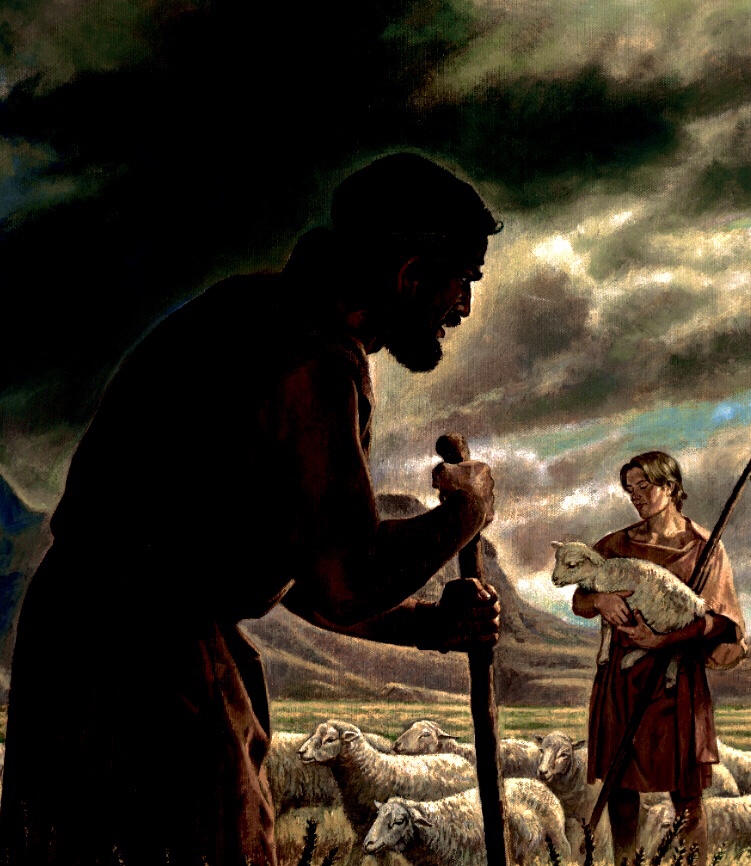
Sometime after Adam and Eve sinned against God and were forced out of the Garden of Eden, they began to have children. The first son was Cain and he was a farmer. The next son was Abel who was a shepherd. When it was time to offer sacrifices to God, Cain brought fruit from the ground and Abel brought the fat portions from some of the firstborn. God favored Abel’s sacrifice, but He didn’t extend that same grace to Cain. This rejection made Cain angry and God admonished Cain to do the right thing and his sacrifice would be accepted. Cain was also warned that if he refused to do the right thing—sin was ready to consume him.
Cain disregarded God’s admonition and warning. Instead he took out his anger on his righteous brother, Abel. In a premeditated manner, Cain invited Abel out to the fields where he murdered him! Later God approached Cain about the whereabouts of Abel just as He did with Adam and Eve with their sin. Cain (being a child of sin and the devil) lied and countered the all-knowing God with the infamous question, “Am I my brother’s keeper?” Cain’s response lacked remorse for his dead brother, but rather that his punishment was too severe and that he would be killed in revenge.
Cain’s response lacked remorse for his dead brother, but rather that his punishment was too severe and that he would be killed in revenge.
God responded quickly with the pronouncement of his punishment: Cain would be driven from his people, no longer able to farm the land and he would be a wanderer. Cain’s response lacked remorse for his dead brother, but rather that his punishment was too severe and that he would be killed in revenge. The Lord God, being full of mercy and grace, put a mark on Cain to keep people from killing him. As a result Cain left the presence of God, started a family, and built a city. His descendants were prosperous, worldly, and without God.
The legacy of Cain led to the destruction of the entire world with the flood. (You can read the Biblical account of Cain and Abel in Genesis 4) What can we learn from this Bible story for our lives today? Question #1) Are we better than Cain?
“Anyone who hates a brother or sister is a murderer, and you know that no murderer has eternal life residing in him” (1 John 3:15).
It’s easy for us to judge Cain without taking a look at our own sinful hearts. Cain was jealous of Abel because of God’s favor on him. Do we harbor jealousy and envy towards our brothers and sisters in Christ who are honored for their righteous service and gifts to the Lord? The sin of jealousy can wind itself around our hearts and minds with such deception that we may not even recognize it right away.
When the Holy Spirit sends us that gentle nudge about envy or jealousy in our hearts, we have the same opportunity that was afforded to Cain…repent! By admitting our weakness in the flesh we can be forgiven and restored to right relationship with God. Otherwise, we allow the bitter root to grow into sin and become murderers in our hearts. Question #2) Are we offering the right sacrifices?
“You also, like living stones, are being built into a spiritual house to be a holy priesthood, offering spiritual sacrifices acceptable to God through Jesus Christ” (1 Peter 2:5).
Cain gave back to God what he deemed adequate. Abel brought a better offering in faith and was honored by God. Do we offer sacrifices out of duty, compulsion, or seeking the admiration of other people? While our spiritual sacrifice may seem great on the surface, God knows our hearts. He knows our true motives in giving towards the kingdom of God in our time, energy, finances, and efforts. There is nothing hidden from Him.
By spending time in prayer and Bible study, our hearts are kept sensitive to the leading of the Holy Spirit. We are compelled by our love for God to give the best we have to offer in light of the sacrifice of Jesus Christ. Question #3) Are we mastering sin or being mastered by it?
“For sin shall no longer be your master, because you are not under the law, but under grace” (Romans 6:14).
God warned Cain that sin desired to have him, but that he should master it. Are we entangled in sin as much as those without Christ? It should never be so with believers! We’ve been bought with the precious blood of Jesus so that we no longer live as slaves to sin. Just as Cain, we’re warned through the Holy Spirit to not use grace as an opportunity to sin.
As Christians we have the power of the Holy Spirit to overcome sinful choices. Sin wants to take root in our hearts. But we resist it by keeping our hearts fertile with the desire to please God more than pleasing ourselves. Cain or Abel? Your choice…
Cain’s actions were evil and Abel’s were righteous. Both men demonstrated in action the passions of their hearts. What is your passion concerning the Lord? If you’re spiritually passive and stale—it may be time for a heart check. The Lord wants the best from you and the best for you. Don’t ignore the knocks on your heart from the Holy Spirit, repent and be made whole in the way of righteous Abel rather than the error of Cain.
We often complain about our problems and difficulties, forgetting how much we have to be thankful for. We may think we are grateful, but our words and actions show otherwise. How can we cultivate a spirit of thankfulness in our lives? The Bible gives us many examples and commands to be thankful in all circumstances, even when we face trials and hardships. God is good and faithful, and He deserves our praise and gratitude for everything He has done for us..
One way to be thankful is to go to the Bible fast and start thanking God for His promises and blessings. The Bible is full of verses that remind us of God’s love, grace, mercy, and power. We can read them aloud, meditate on them, memorize them, and pray them back to God. Here are some examples:
“Give thanks to the LORD, for he is good; his love endures forever.” (1 Chronicles 16:34)
“For it is by grace you have been saved, through faith—and this is not from yourselves, it is the gift of God.” (Ephesians 2:8)
“Every good and perfect gift is from above, coming down from the Father of the heavenly lights, who does not change like shifting shadows.” (James 1:17)
“For God so loved the world that he gave his one and only Son, that whoever believes in him shall not perish but have eternal life.” (John 3:16)
“Do not be anxious about anything, but in every situation, by prayer and petition, with thanksgiving, present your requests to God.” (Philippians 4:6)
Another way to be thankful is to look around us and notice all the good things that God has given us. We can thank Him for our family, friends, health, food, shelter, clothing, nature, talents, opportunities, and more. We can also thank Him for the challenges and struggles that help us grow and depend on Him more. We can express our gratitude to God in prayer, song, journaling, or sharing with others.
Being thankful is not only a duty but also a delight. It fills our hearts with joy and peace, and it honors God who is the source of all good things. Let us be thankful in everything, in all circumstances, for this is God’s will for us in Christ Jesus. (1 Thessalonians 5:18)
Look at the 2 pictures which one would you rather be around
Angry and Complaining or Happy and Thankful
Life is full of ups and downs, and it’s easy to get caught up in the negative aspects of our experiences. However, it’s important to remember that we don’t need a perfect life to live a thankful life. In fact, cultivating a sense of gratitude can help us find joy and appreciation even in difficult circumstances.
One way to practice gratitude is to focus on the blessings in our lives, no matter how small they may seem. Maybe we have a supportive family or friends who lift us up when we’re feeling down. Perhaps we have a job that allows us to provide for ourselves and our loved ones. Even the simple things, like a warm cup of coffee in the morning or a beautiful sunset, can bring us a sense of gratitude.
Another way to cultivate gratitude is to shift our perspective and look for the lessons in our hardships. While it may be difficult to find positive aspects in challenging situations, focusing on what we can learn from them can help us grow and become more resilient.
Ultimately, living a thankful life is about intentionally choosing to focus on the good in our lives, even when things are tough. By practicing gratitude, we can find meaning and purpose in every situation and live a more joyful and fulfilling life.
In a land far away, there was a small village nestled in a valley. It was a place where the people lived simple lives, close to nature. They grew their own crops and raised their own livestock.
One of the most beautiful things about the village was the summer season. As soon as the cold winter months passed, the entire village would come alive with a burst of energy. The warm sun would shine down on the fields, and the flowers would bloom in every color of the rainbow.
Everyone loved the long, lazy days of summer, when they could work in the fields until sundown and then spend the evenings sitting outside, watching the stars. The children would run around playing with each other, chasing after fireflies and swimming in the nearby river.
As the summer months went by, the villagers were reminded of the beauty in God’s creation. The lush greenery that surrounded them, the shimmering water that flowed through their village, and the warmth of the sun on their skin made them feel grateful for all that they had.
One day, a traveler passing through the village asked a villager why they were so content and happy. The villager looked up at the sky, took a deep breath of the fresh summer air, and replied, “We are blessed to be in a place where we can appreciate the beauty of God’s creation. The warmth of the sun, the sound of the birds singing, and the aroma of the flowers all remind us of how wonderful life can be.”
And so, the traveler stayed for a while, soaking in the beauty of the summer season and feeling grateful for all the simple joys of life. From that day forward, he too appreciated the beauty of nature and the warmth of summer, and never forgot the lessons he learned from the kind villagers.
The notion that one must attend church to enter into heaven is a common misconception among many individuals. While attending church can be a vital part of one’s faith journey, it is not a requirement for entry into heaven. The idea that God would exclude someone from eternal life simply because they were unable to physically attend church, due to reasons such as age or mobility challenges, seems unfounded. As a Christian, I firmly believe that the most important aspect of our faith is our personal relationship with Jesus Christ. It is through our belief in Him, along with our efforts to lead a righteous life, that we can attain eternal salvation.
Furthermore, with the growing advancements in technology, attending church is now more accessible than ever before. Many churches now offer live-streamed services, allowing individuals to participate in worship from the comfort of their own homes. Additionally, there are countless resources available on television and online that allow individuals to engage in biblical teachings and connect with other Christians around the world.
Just remember while attending church can be an impactful aspect of one’s faith journey, it is not a prerequisite for entering into heaven. As long as one holds belief in Jesus Christ and strives to lead a righteous life, they can have confidence in their salvation and look forward to their eternal home with God. So, whether you are attending church physically or engaging in worship through technological means, the most essential aspect of your faith journey is the connection that you hold with the Lord.
Growing up in a household filled with hate and mistrust can have a profound impact on a person’s worldview. It can lead to biases and prejudices against certain groups of people. Such was the case for the young man in this story. He was raised by parents who instilled in him a deep-rooted hatred for anyone who was different from them, regardless of their race or ethnicity.
However, everything changed when the young man stumbled upon Jesus in the woods. Through this encounter, he realized that his previous beliefs were unfounded and that there was a greater force at work in the world. Jesus taught him about love and acceptance and showed him how these powerful tools can be used to create positive change in society.
The young man’s experience with Jesus led to a transformation within himself. He learned to look at the world in a different way, with a newfound sense of compassion and understanding. But it wasn’t just the young man who was affected by this encounter – Jesus also warned the young man’s family that their judgmental attitudes would come back to haunt them if they did not change their ways.
This story serves as a poignant reminder of the power of love and forgiveness. It shows us that even the most deeply ingrained biases and prejudices can be overcome with the right guidance and willingness to change. By embracing kindness and compassion, we can create a brighter future for ourselves and those around us.
In conclusion, the young man’s encounter with Jesus in the woods serves as a powerful reminder of the transformative power of love and forgiveness. It teaches us that we must all strive to overcome our biases and prejudices in order to create a more just and equitable world for all. Only by working together can we truly achieve lasting change and bring about a brighter future for generations to come.
Your Timing vs God’s Timing and How We Can Listen to God Better
We all have plans and expectations for our lives. We want to achieve our goals, fulfill our dreams, and live according to our own timetable. But sometimes, our timing does not match God’s timing. Sometimes, we face delays, detours, or disappointments that make us question God’s will and purpose for us. How do we deal with these situations? How do we align our timing with God’s timing? And how do we listen to God better when He speaks to us?
The first thing we need to understand is that God’s timing is perfect. He knows the end from the beginning, and He has a good plan for each one of us. He is not bound by our human limitations or constraints. He sees the big picture and the long-term consequences of every decision and action. He knows what is best for us and when is best for us. As the Bible says in Ecclesiastes 3:11, “He has made everything beautiful in its time. He has also set eternity in the human heart; yet they cannot fathom what God has done from beginning to end.”
The second thing we need to do is to trust God’s timing. Even when we don’t understand why things are happening or not happening, we need to believe that God is in control and that He is working all things together for our good. We need to surrender our plans and expectations to Him and let Him lead us in His way and His time. As the Bible says in Proverbs 3:5-6, “Trust in the Lord with all your heart and lean not on your own understanding; in all your ways submit to him, and he will make your paths straight.”
The third thing we need to do is to listen to God’s voice. God speaks to us in various ways: through His word, His Spirit, His creation, His people, His circumstances, and His peace. We need to be attentive and responsive to His voice, and not ignore or resist it. We need to seek His guidance and direction, and not rely on our own wisdom or opinions. We need to obey His commands and follow His instructions, and not rebel or disobey Him. As the Bible says in John 10:27, “My sheep listen to my voice; I know them, and they follow me.”
Let us remember that God’s timing is perfect, trust God’s timing, and listen to God’s voice. By doing so, we will experience His blessing, His peace, and His joy in our lives. We will also fulfill His purpose and His plan for us. Amen.
There is no doubt that in today’s fast-paced world, technology has become an integral part of our lives. Our cell phones have become a constant companion that we cannot imagine living without, but what about the Bible? The Bible, which contains the word of God and provides guidance on how to live a fulfilling and meaningful life, often takes a backseat to our devices. However, if we treated our Bible with the same level of importance as our cell phone, the world would undoubtedly be a better place.
In Psalm 119:105, it is written, “Your word is a lamp to my feet and a light to my path.” This verse highlights the importance of the Bible in providing us with guidance and direction in our lives. By reading and studying the Bible, we can gain insight into how to navigate the complexities of life and make wise choices. Similarly, in Joshua 1:8, it is stated that we should meditate on God’s word day and night so that we may observe and do all that is written in it. This suggests that by immersing ourselves in scripture, we can become better equipped to apply its teachings in our daily lives.
Moreover, the Bible teaches us about the importance of developing a relationship with God. In John 15:5, it is written, “I am the vine; you are the branches. Whoever abides in me and I in him, he it is that bears much fruit, for apart from me you can do nothing.” This verse reminds us that we need to stay connected to God through prayer, worship, and study of His word. It is only by remaining close to Him that we can bear fruit in our lives and share God’s love with others.
So download a Bible on your cell phone or start carrying your Bible and give yourself to start 5-10 minutes a day.
Teaching the Bible is an endeavor that requires patience, dedication, and a deep understanding of its messages. While we all have our own interpretations of the Scriptures, it is important to remember that the foundation of our faith lies in believing in Jesus Christ as our Lord and Savior. As John 3:16 states, “For God so loved the world that he gave his one and only Son, that whoever believes in him shall not perish but have eternal life.”
Reading the Bible is not just about acquiring knowledge or checking off a religious obligation; it is about cultivating a relationship with God and understanding His plan for humanity. The Bible teaches us about love, forgiveness, humility, and many other virtues that are essential for leading a fulfilling life. As Proverbs 3:5-6 says, “Trust in the Lord with all your heart and lean not on your own understanding; in all your ways submit to him, and he will make your paths straight.”
One of the most fundamental aspects of faith is recognizing our imperfections and striving to be better individuals. While we may stumble and fall, God’s grace and mercy are always available to us. As Romans 3:23-24 elucidates, “For all have sinned and fall short of the glory of God, and all are justified freely by his grace through the redemption that came by Christ Jesus.”
In addition to recognizing our flaws, the Ten Commandments serve as a guide for leading a righteous life. As Exodus 20:3-17 lays out, we are to have no other gods before God, honor our parents, avoid murder, theft, adultery, bearing false witness, and coveting our neighbor’s possessions. These principles not only reinforce our relationship with God but also promote a harmonious society.
The Bible is a complex and multifaceted book that has been studied, interpreted, and debated by scholars and believers for centuries. At its core, the Bible is a collection of sacred texts that communicate important messages about God, humanity, and the world.
Interpreting the Bible requires a deep understanding of its historical and cultural context, as well as an appreciation for the diverse voices and perspectives that are represented within its pages. Some interpret the Bible as a literal document, while others view it as a collection of symbolic stories and allegories.
Regardless of one’s approach to interpretation, the Bible offers insights into the fundamental truths of life and spirituality. From the creation story in Genesis to the teachings of Jesus in the New Testament, the Bible provides guidance on topics such as morality, forgiveness, compassion, and justice.
Ultimately, the interpretation of the Bible is a deeply personal and subjective process. Each individual must grapple with the text on their own terms and strive to understand its messages in a way that is meaningful to them.
Losing a loved one is never easy, especially when that person holds such a special place in your heart. My dad, Tom, was more than just a father to me; he was an exemplary husband, a great father, and a pillar of our community. Even though he has been in heaven for 35 years, I still miss him dearly.
My dad was the kind of person who always put others before himself. He taught me the value of hard work, dedication, and the importance of family. Whenever someone needed help, my dad was always there to lend a hand. He was a constant source of support and encouragement, and I am grateful for every moment that I had with him.
As I reflect on his life, I cannot help but feel proud of all that he accomplished. He was a successful businessman, a devoted husband, and a loving father. But what I remember most about him was his kindness and his unwavering commitment to those around him.
Although he may not be here with us today, my dad’s legacy lives on. He inspired so many people during his lifetime, and I am honored to have been his daughter. I will always cherish the memories of our time together and strive to carry on his legacy in everything that I do.
Happy birthday, Dad. Even though you’re no longer with us, your presence is still felt in every corner of our lives. Thank you for being such an incredible father, husband, and friend. You will always be missed, but never forgotten.







 Joyful-Echoes