Posted in Let’s Learn the Bible, Uncategorized

What Can We Learn From Noah

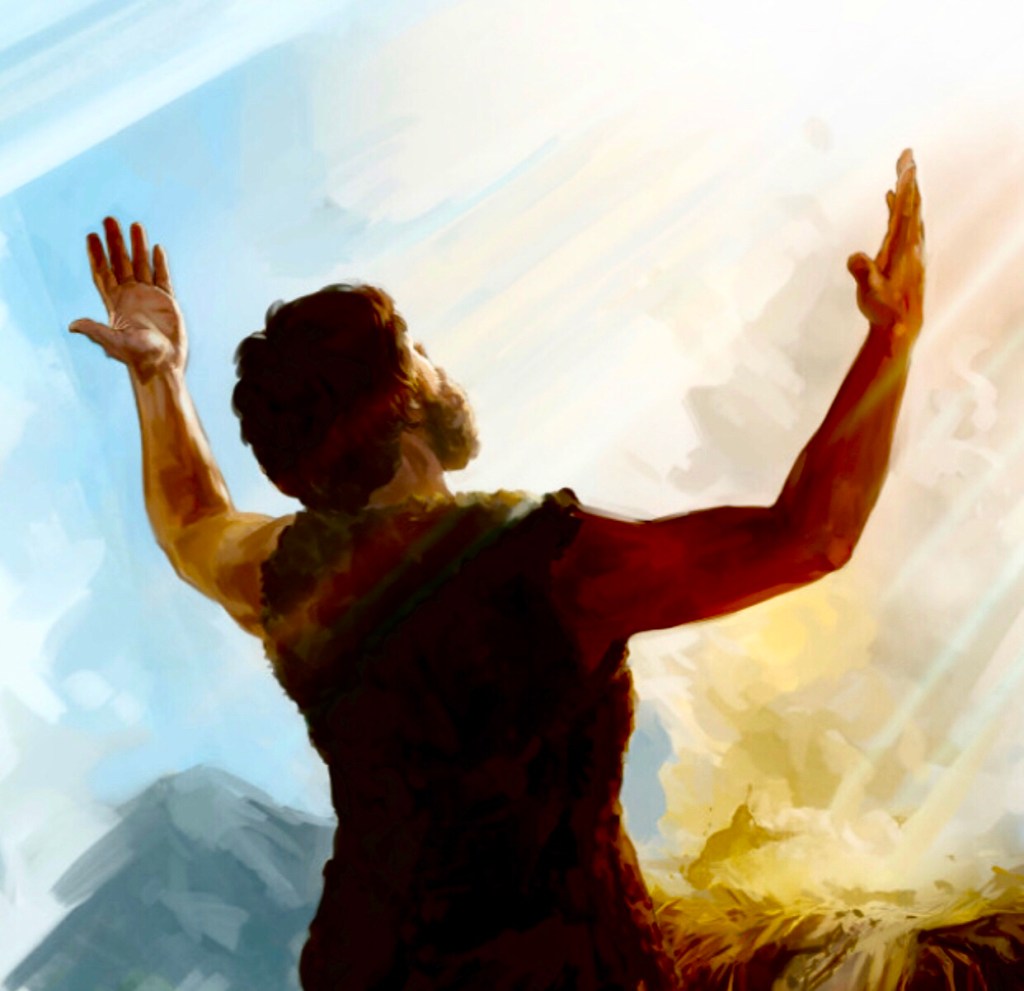
Noah, one of the most well-known figures in the Bible, was a righteous man who found favor in the eyes of the Lord. According to Genesis 6:9, “Noah was a righteous man, blameless among the people of his time, and he walked faithfully with God.”

When God saw how wicked humanity had become, He decided to send a flood to destroy everything on earth. However, He instructed Noah to build an ark so that he and his family could be saved along with a pair of every kind of animal.

Noah’s wife is not named in the Bible, but she is described as the mother of his three sons – Shem, Ham, and Japheth. Together, they worked tirelessly to build the massive ark according to God’s instructions.

After the floodwaters receded, the ark came to rest on the mountains of Ararat (Genesis 8:4). The exact location of these mountains is uncertain, but it is believed to be somewhere in the region of modern-day Turkey.

Noah is an important figure in the Bible because he obeyed God even when it seemed impossible. He trusted in God’s promises and acted on faith, which ultimately saved him and his family from the destruction of the flood.

Through Noah’s story, we can learn valuable lessons about the importance of obedience, faith, and trust in God’s plan. We can also find comfort in knowing that even in the darkest of times, God is always with us and will never abandon us.

Noah did as God commanded, and when he was 600 years old, in Biblical years , he completed the ark. He took his family into it, as well as pairs of all the different animals, two by two. Seven days later, the flood came upon the earth and the rain poured from the skies for forty days and forty nights. The waters rose higher and higher on the face of the earth, until even the tops of the highest mountains were covered and every breathing creature perished (7:22).

After 150 days, the Lord brought a great wind over the earth, causing the waters to subside, and the ark came to rest on top of Mt. Ararat. Noah released a dove:

Then he released a dove, to see if the waters had lessened on the earth. But the dove could find no place to perch, and it returned to him in the ark, for there was water over all the earth. Putting out his hand, he caught the dove and drew it back to him inside the ark. He waited yet seven days more and again released the dove from the ark. In the evening the dove came back to him, and there in its bill was a plucked-off olive leaf! So Noah knew that the waters had diminished on the earth. He waited yet another seven days and then released the dove; but this time it did not come back. (Genesis 8:7-12)

When the dove did not return, Noah opened the covering of the ark and saw that the waters had dried up from the ground. God instructed him to bring his family and all the creatures out of the ark.

What was the first thing Noah did upon exiting the ark? He built an altar to God and presented him with an offering, giving thanks to him for his provision. And God made a promise never to flood the earth again, setting a rainbow in the sky as a sign of this covenant with mankind.

What We Can Learn from Noah

The story of Noah and the Flood is one of judgement and salvation; of obedience and disobedience. In an era of overwhelming wickedness, Noah set himself apart by living righteously. Noah was likely mocked for building a giant boat when no flood was yet seen upon the earth – but he did not worry about what other people thought. He simply responded to God’s commands with a willing heart and hands. God rewarded him for his righteousness and obedience, saving both him and his family from destruction.

The story of the Flood also demonstrates both the gravity of God’s justice and the promise of His salvation. Every sin we commit grieves God, and His justice demands judgement for that sin. Just as God provided salvation for Noah and his family when His judgement was brought upon the world, so also does God provide salvation for each of His followers through Christ.

My thoughts.

In today’s fast-paced and often chaotic world, there is much we can learn from the story of Noah. This ancient tale holds valuable lessons that can guide us in our own lives, helping us navigate through challenges and make wise decisions. The story of Noah teaches us the importance of living with integrity, following our convictions, and trusting in a higher power.

Noah’s unwavering righteousness sets him apart from the rest of society. In a time where wickedness prevailed, he remained steadfast in his commitment to live a righteous life. This teaches us the significance of upholding our moral values, even when it may seem unpopular or go against the prevailing norms. Noah’s example reminds us that staying true to ourselves and our beliefs is crucial, regardless of the opinions of others.

Another vital lesson we can draw from Noah’s story is the importance of obedience. When Noah received the command from God to build an ark, he did not question or doubt. Instead, he immediately set to work, wholeheartedly obeying God’s instructions. This displays his unwavering faith and trust in a higher power. It reminds us of the significance of listening to our inner voice, following our intuition, and having faith in something greater than ourselves. By doing so, we can navigate the challenges and uncertainties of life with confidence and resilience.

Noah’s story also emphasizes the power of perseverance and resilience. As he constructed the massive ark, Noah faced ridicule and disbelief from those around him. Yet, he remained undeterred, focused on the task at hand. This serves as a reminder to stay committed to our goals, even when faced with skepticism or adversity. Noah’s unwavering determination paid off in the end when he and his loved ones were saved from the catastrophic flood. It teaches us the importance of staying persistent and dedicated, even in the face of daunting obstacles.

Furthermore, Noah’s story highlights the necessity of taking action. Noah did not merely pray for salvation; he actively took part in building the ark, playing his role in the grand scheme of things. This teaches us that faith without action is incomplete. We must take concrete steps towards our goals and aspirations, putting in the necessary effort and commitment. By doing so, we can bring about positive change in our lives and the world around us.

Lord, we come before you today seeking the same unwavering faith and determination that Noah displayed. Help us to stay committed to our goals and aspirations, even when faced with skepticism or adversity. Give us the strength to persevere through the challenges that life throws at us, knowing that with you by our side, we can overcome anything. Teach us to take action and not just rely on prayer alone, but to put in the necessary effort and commitment to bring about positive change in our lives and the world around us. May we live with integrity, staying true to our convictions, and may our actions reflect our unwavering faith in you. In your precious name, we pray. Amen.


Posted in Let’s Learn the Bible

The Parable of Two Brothers and a Forgiving Father

The Parable of the Prodigal Son (also known as the parable of the Two Brothers, Lost Son, Loving Father, or of the Forgiving Father) is one of the parables of Jesus Christ in the Bible, appearing in Luke 15:11–32.

Today, I want to talk about the story of the Prodigal Son and how it relates to our lives. The Prodigal Son is a powerful story about forgiveness and redemption, but often overlooked is the story of the second son who was just as troubled.

The second son’s story teaches us about judgment, anger, jealousy, and hostility, all traits that we may find in ourselves if we look deep enough. We all have our own pig pens, whether it be drug and alcohol addiction, gambling, food addictions, or any other unhealthy habits that keep us from living a full life.

But the message of the Prodigal Son is a message of hope. No matter how low we may feel, we are never too low to turn our lives around and seek forgiveness and redemption. Just like the father in the story who forgave his son’s wrongdoings, God is always ready to forgive us and welcome us back into His loving embrace.

So let’s take this opportunity to reflect on where we are in our own lives, and ask for forgiveness for any wrongdoings we have committed. Let’s also extend forgiveness and love to those who have hurt us, just as the father in the story did.

Remember, we are all children of God, and He loves us no matter what. All we have to do is ask for forgiveness and try to live a better way.

Let’s spread positivity and hope on social media today by sharing this message and encouraging others to turn their lives around.

The parable of the prodigal son is perhaps one of the most well-known parables mentioned in Scripture. Not only does it paint a picture of God’s love for us, but it also demonstrates how we should love our brothers and sisters in Christ. 

The Parable of the Prodigal Son

In the gospel of Luke, Jesus tells the well-known parable of the prodigal son. A son asks his father for his inheritance, then squanders it recklessly as he lives a life of indulgence. With nothing left of his fortune, he is forced to work as a hired hand for a pig farmer. He is so destitute that he longs to eat the food of the pigs. Realizing that his father’s servants have better working conditions, he resolves to return to his father, beg forgiveness, and ask to be his servant.

However, upon arriving at his father’s house, he is welcomed with loving arms. His father is overwhelmed with joy at his son’s return, and holds a feast in his honor:

So he got up and went back to his father. While he was still a long way off, his father caught sight of him, and was filled with compassion. He ran to his son, embraced him and kissed him. His son said to him, ‘Father, I have sinned against heaven and against you; I no longer deserve to be called your son.’ But his father ordered his servants, ‘Quickly bring the finest robe and put it on him; put a ring on his finger and sandals on his feet. Take the fattened calf and slaughter it. Then let us celebrate with a feast, because this son of mine was dead, and has come to life again; he was lost, and has been found.’ Then the celebration began. — Luke 15:20-24

However, the prodigal son’s older brother, who has remained serving in his father’s house, does not share his father’s joy. Instead, he is jealous that his father has not honored him. His father urges him not to resent his brother, but to instead be happy for him.

The Love of God the Father

The story of the prodigal son is a picture of God’s love for us as His children. God’s love for us does not depend on our faithfulness; it is unconditional. He loved us while we were still sinners. Though we are demanding and do not remain faithful, God is still our faithful and loving Father. When we come to repent of our sins, He is willing to forgive us and welcomes us with open arms.

“…I have loved you with an everlasting love; therefore I have continued my faithfulness to you.” — Jeremiah 31:3 (NRSVCE)

Loving the Family of God

The  example of the elder son demonstrates how we should not treat other believers. We are all equal in His sight — sinners saved by God’s grace. Jesus tells this parable shortly after a group of Pharisees and scribes complained about how Jesus was fraternizing with tax collectors and sinners. Jesus responds to their criticisms with the parable of the lost sheep and the parable of the lost coin, demonstrating His willingness to pursue sinners.

If Jesus, the King over all creation, values the least of these, how much more so should we? We should not hold ourselves in higher regard than those whose sins we deem “worse” than ours, but love and accept them as fellow members of the church. We are to share in their joys and sorrows and live in harmony with them.

As a body is one though it has many parts, and all the parts of the body, though many, are one body, so also Christ. For in one Spirit we were all baptized into one body, whether Jews or Greeks, slaves or free persons, and we were all given to drink of one Spirit…

 The eye cannot say to the hand, “I do not need you,” nor again the head to the feet, “I do not need you.” Indeed, the parts of the body that seem to be weaker are all the more necessary…  If [one] part suffers, all the parts suffer with it; if one part is honored, all the parts share its joy. — 1 Corinthians 12:12-13, 21-22, 26

Posted in Storytelling

Max the One Eyed Dog (Storytelling)

There was a dog named Max. He used to be full of confidence and loved playing with his doggy friends, but that all changed when he got caught in a dog fight, and he lost sight in one eye. Max was left traumatized and lost all his confidence and joy. He lost sight in one eye and seemed to be afraid of his shadow. This made his owners no longer want him as he was a lot of work.

Max was now living in a dog pound, feeling hopeless and alone. One day, a teacher named Ms. Johnson came to the dog pound looking for a companion. When Ms. Johnson saw Max, she was touched by his sad eyes and knew she had found her new furry friend.

At first, Max was cautious and scared, but with time and patience, Ms. Johnson helped him regain his confidence. They would go for walks every day, and Ms. Johnson would help Max navigate his surroundings. Max began to trust again and soon became full of joy and love.

One day, Ms. Johnson was reading her Bible and came across a quote that reminded her of Max. She read, “The Lord is my strength and my shield; my heart trusts in him, and he helps me. My heart leaps for joy, and with my song I praise him.” (Psalm 28:7)

Ms. Johnson realized that just like Max, we all go through difficult moments in life, but with God’s help, we can overcome them and find joy again. Max may have been blind, but he had a heart full of love and trust in his newfound friend and ultimately, his faith in being loved and cared for paid off.

Max and Ms. Johnson became inseparable, and their bond grew stronger each day. They would go on adventures, play games, and enjoy each other’s company. Max may have started out as a lost and scared dog, but with Ms. Johnson’s love and guidance, he became a faithful and happy companion.

It just goes to show that sometimes, when life throws us a curveball, all we need is someone to guide us, love us and help us regain the confidence we once had. And with God’s help, anything is possible.

Posted in Family

Story of Emma

There was a little girl named Emma. Every year, when Father’s Day rolled around, Emma felt sad because she didn’t have a dad to celebrate with. Her father had passed away when she was just a baby, and she didn’t remember him.

Emma’s mom did her best to make up for it by doing special things with her on Father’s Day, but it never quite felt the same. Emma longed for a father figure in her life.

One day, Emma’s grandfather came to visit. Her grandfather was a kind and loving man who always made her feel special. He took her on walks, told her stories, and taught her how to fish. Emma loved spending time with him.

As Father’s Day approached, Emma’s grandfather noticed that she seemed sad. He asked her what was wrong, and she confided in him about her feelings.

Her grandfather listened carefully and then said, “Emma, I may not be your dad, but I am your grandfather, and I love you just as much. I will always be here for you, and I will always celebrate Father’s Day with you.”

Emma’s heart swelled with gratitude and love. She realized that even though she didn’t have a dad, she had a grandfather who loved her just the same.

On Father’s Day, Emma and her grandfather spent the day together, doing all of their favorite things. They went fishing, watched movies, and even baked a cake together. Emma couldn’t believe how lucky she was to have such a special grandfather in her life.

As she went to bed that night, Emma said a prayer of thanks for her grandfather, and for God, who she knew was always watching over her. She realized that even though life can be hard sometimes, there are always people who love us and care for us. And for Emma, that was the most important thing of all.

Posted in Let’s Learn the Bible

Seth the 3rd Son to Adam and Eve

Seth, the third son of Adam and Eve, played a significant role in biblical history. After the tragic death of Abel at the hands of his brother Cain, Seth was born to Adam and Eve as their third son. According to the book of Genesis, he became the father of Enosh at the age of 105 years and lived for a total of 912 years.

Seth’s descendants included many notable figures in biblical history, including Enoch, who famously “walked with God and was taken up by Him” (Genesis 5:24), and Noah, who built an ark to save his family and the animals from the Great Flood. From Noah’s lineage would eventually come Abraham, the patriarch of the Israelite nation.

While there is little information about Seth’s contributions to mankind in the Bible, he is often seen as a symbol of hope and continuity. After the tragic events of Cain and Abel, Seth’s birth was a sign that life would go on and that God had not given up on humanity. His descendants would later play a crucial role in God’s plan for salvation.

In addition to his symbolic significance, Seth also represents the importance of faithfulness and obedience to God. The book of Genesis describes him as a man who “walked with God” and lived a life that pleased Him. This emphasis on faith and obedience can serve as an important lesson for believers today.

Ultimately, while Seth may not have made any specific contributions to mankind that are recorded in the Bible, his role as a faithful follower of God and the progenitor of a line of important biblical figures ensures that his legacy lives on. As Christians, we can look to his example and strive to follow in his footsteps, remaining faithful to God and trusting in His plan for our lives.

Posted in joyful-echoes, Summer, Uncategorized

Jesus is Like

Jesus is like a classic muscle car.

Jesus is often depicted as a savior, protector and guide, much like a classic car that can be relied upon to get you where you need to go. Just like a vintage car that has been maintained and cared for over time, Jesus has stood the test of time, providing hope and comfort to people throughout history.

One of the most important attributes of a classic race car is its reliability. Similarly, Jesus is someone we can always count on in times of trouble or need. He is a constant source of support, offering unwavering emotional and spiritual guidance to those who seek it.

Another similarity between Jesus and a classic race car is their ability to inspire awe and admiration. A well-maintained vintage car can leave people speechless, and the teachings of Jesus have had a profound impact on millions of people around the world. Both have a timeless quality that continues to capture the imaginations of people today.

Finally, both Jesus and a classic race car represent a connection to the past. They are symbols of a bygone era, reminding us of the values, traditions and beliefs that were once so important to us. By celebrating these connections, we can gain a deeper understanding of ourselves and our place in the world.

Jesus can be compared to a classic car in many ways. Both offer dependability, inspiration and a connection to the past. By recognizing these similarities, we can gain a deeper appreciation for the timeless qualities that make each of them unique.

Posted in Let’s Learn the Bible

Cain, Abel and Seth

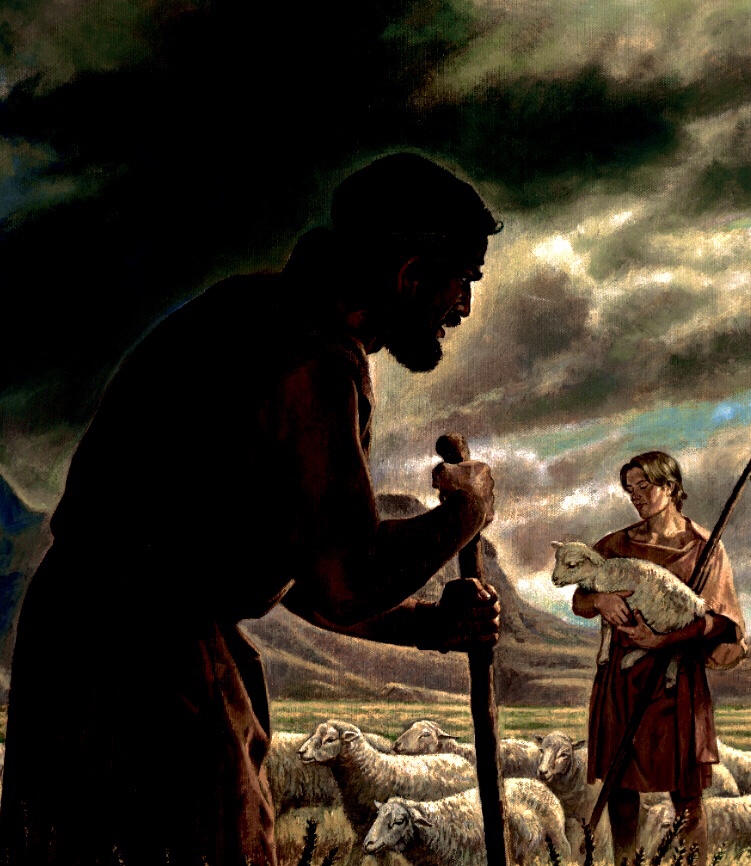
The story of Cain and Abel is one of the oldest and most tragic tales in the Bible. It tells how the first two sons of Adam and Eve, Cain and Abel, both offered sacrifices to God, but God was pleased only with Abel’s offering of the firstlings of his flock . Cain, who was a farmer, became angry and jealous of his brother, and killed him in the field . God confronted Cain and asked him where Abel was. Cain lied and said he did not know, adding, \”Am I my brother’s keeper?

God knew what Cain had done and cursed him to wander the earth as a fugitive and a vagabond . God also put a mark on Cain to protect him from anyone who might try to kill him. Cain left the presence of God and settled in the land of Nod, east of Eden . There he had a son named Enoch and built a city.

It’s often said that our actions speak louder than words. For the first two sons of Adam and Eve, their actions spoke of their level of faith in God. One son demonstrated his faith and was received from God. The other son, Cain, demonstrated his faith in works leading to his sinful demise.
Bible Story Summary

Sometime after Adam and Eve sinned against God and were forced out of the Garden of Eden, they began to have children. The first son was Cain and he was a farmer. The next son was Abel who was a shepherd. When it was time to offer sacrifices to God, Cain brought fruit from the ground and Abel brought the fat portions from some of the firstborn. God favored Abel’s sacrifice, but He didn’t extend that same grace to Cain. This rejection made Cain angry and God admonished Cain to do the right thing and his sacrifice would be accepted. Cain was also warned that if he refused to do the right thing—sin was ready to consume him.

Cain disregarded God’s admonition and warning. Instead he took out his anger on his righteous brother, Abel. In a premeditated manner, Cain invited Abel out to the fields where he murdered him! Later God approached Cain about the whereabouts of Abel just as He did with Adam and Eve with their sin. Cain (being a child of sin and the devil) lied and countered the all-knowing God with the infamous question, “Am I my brother’s keeper?”
Cain’s response lacked remorse for his dead brother, but rather that his punishment was too severe and that he would be killed in revenge.

Cain’s response lacked remorse for his dead brother, but rather that his punishment was too severe and that he would be killed in revenge.

God responded quickly with the pronouncement of his punishment: Cain would be driven from his people, no longer able to farm the land and he would be a wanderer. Cain’s response lacked remorse for his dead brother, but rather that his punishment was too severe and that he would be killed in revenge. The Lord God, being full of mercy and grace, put a mark on Cain to keep people from killing him. As a result Cain left the presence of God, started a family, and built a city. His descendants were prosperous, worldly, and without God.

The legacy of Cain led to the destruction of the entire world with the flood. (You can read the Biblical account of Cain and Abel in Genesis 4)
What can we learn from this Bible story for our lives today?
Question #1) Are we better than Cain?

“Anyone who hates a brother or sister is a murderer, and you know that no murderer has eternal life residing in him” (1 John 3:15).

It’s easy for us to judge Cain without taking a look at our own sinful hearts. Cain was jealous of Abel because of God’s favor on him. Do we harbor jealousy and envy towards our brothers and sisters in Christ who are honored for their righteous service and gifts to the Lord? The sin of jealousy can wind itself around our hearts and minds with such deception that we may not even recognize it right away.

When the Holy Spirit sends us that gentle nudge about envy or jealousy in our hearts, we have the same opportunity that was afforded to Cain…repent! By admitting our weakness in the flesh we can be forgiven and restored to right relationship with God. Otherwise, we allow the bitter root to grow into sin and become murderers in our hearts.
Question #2) Are we offering the right sacrifices?

“You also, like living stones, are being built into a spiritual house to be a holy priesthood, offering spiritual sacrifices acceptable to God through Jesus Christ” (1 Peter 2:5).

Cain gave back to God what he deemed adequate. Abel brought a better offering in faith and was honored by God. Do we offer sacrifices out of duty, compulsion, or seeking the admiration of other people? While our spiritual sacrifice may seem great on the surface, God knows our hearts. He knows our true motives in giving towards the kingdom of God in our time, energy, finances, and efforts. There is nothing hidden from Him.

By spending time in prayer and Bible study, our hearts are kept sensitive to the leading of the Holy Spirit. We are compelled by our love for God to give the best we have to offer in light of the sacrifice of Jesus Christ.
Question #3) Are we mastering sin or being mastered by it?

“For sin shall no longer be your master, because you are not under the law, but under grace” (Romans 6:14).

God warned Cain that sin desired to have him, but that he should master it. Are we entangled in sin as much as those without Christ? It should never be so with believers! We’ve been bought with the precious blood of Jesus so that we no longer live as slaves to sin. Just as Cain, we’re warned through the Holy Spirit to not use grace as an opportunity to sin.

As Christians we have the power of the Holy Spirit to overcome sinful choices. Sin wants to take root in our hearts. But we resist it by keeping our hearts fertile with the desire to please God more than pleasing ourselves.
Cain or Abel? Your choice…

Cain’s actions were evil and Abel’s were righteous. Both men demonstrated in action the passions of their hearts. What is your passion concerning the Lord? If you’re spiritually passive and stale—it may be time for a heart check. The Lord wants the best from you and the best for you. Don’t ignore the knocks on your heart from the Holy Spirit, repent and be made whole in the way of righteous Abel rather than the error of Cain.

Posted in Uncategorized

Are We Really Thankful & Grateful ?

We often complain about our problems and difficulties, forgetting how much we have to be thankful for. We may think we are grateful, but our words and actions show otherwise. How can we cultivate a spirit of thankfulness in our lives? The Bible gives us many examples and commands to be thankful in all circumstances, even when we face trials and hardships. God is good and faithful, and He deserves our praise and gratitude for everything He has done for us..

One way to be thankful is to go to the Bible fast and start thanking God for His promises and blessings. The Bible is full of verses that remind us of God’s love, grace, mercy, and power. We can read them aloud, meditate on them, memorize them, and pray them back to God. Here are some examples:

  • “Give thanks to the LORD, for he is good; his love endures forever.” (1 Chronicles 16:34)
  • “For it is by grace you have been saved, through faith—and this is not from yourselves, it is the gift of God.” (Ephesians 2:8)
  • “Every good and perfect gift is from above, coming down from the Father of the heavenly lights, who does not change like shifting shadows.” (James 1:17)
  • “For God so loved the world that he gave his one and only Son, that whoever believes in him shall not perish but have eternal life.” (John 3:16)
  • “Do not be anxious about anything, but in every situation, by prayer and petition, with thanksgiving, present your requests to God.” (Philippians 4:6)

Another way to be thankful is to look around us and notice all the good things that God has given us. We can thank Him for our family, friends, health, food, shelter, clothing, nature, talents, opportunities, and more. We can also thank Him for the challenges and struggles that help us grow and depend on Him more. We can express our gratitude to God in prayer, song, journaling, or sharing with others.

Being thankful is not only a duty but also a delight. It fills our hearts with joy and peace, and it honors God who is the source of all good things. Let us be thankful in everything, in all circumstances, for this is God’s will for us in Christ Jesus. (1 Thessalonians 5:18)

Look at the 2 pictures which one would you rather be around

Angry and Complaining or Happy and Thankful

Life is full of ups and downs, and it’s easy to get caught up in the negative aspects of our experiences. However, it’s important to remember that we don’t need a perfect life to live a thankful life. In fact, cultivating a sense of gratitude can help us find joy and appreciation even in difficult circumstances.

One way to practice gratitude is to focus on the blessings in our lives, no matter how small they may seem. Maybe we have a supportive family or friends who lift us up when we’re feeling down. Perhaps we have a job that allows us to provide for ourselves and our loved ones. Even the simple things, like a warm cup of coffee in the morning or a beautiful sunset, can bring us a sense of gratitude.

Another way to cultivate gratitude is to shift our perspective and look for the lessons in our hardships. While it may be difficult to find positive aspects in challenging situations, focusing on what we can learn from them can help us grow and become more resilient.

Ultimately, living a thankful life is about intentionally choosing to focus on the good in our lives, even when things are tough. By practicing gratitude, we can find meaning and purpose in every situation and live a more joyful and fulfilling life.

Posted in Uncategorized

Story The Beauty of Summertime

In a land far away, there was a small village nestled in a valley. It was a place where the people lived simple lives, close to nature. They grew their own crops and raised their own livestock.

One of the most beautiful things about the village was the summer season. As soon as the cold winter months passed, the entire village would come alive with a burst of energy. The warm sun would shine down on the fields, and the flowers would bloom in every color of the rainbow.

Everyone loved the long, lazy days of summer, when they could work in the fields until sundown and then spend the evenings sitting outside, watching the stars. The children would run around playing with each other, chasing after fireflies and swimming in the nearby river.

As the summer months went by, the villagers were reminded of the beauty in God’s creation. The lush greenery that surrounded them, the shimmering water that flowed through their village, and the warmth of the sun on their skin made them feel grateful for all that they had.

One day, a traveler passing through the village asked a villager why they were so content and happy. The villager looked up at the sky, took a deep breath of the fresh summer air, and replied, “We are blessed to be in a place where we can appreciate the beauty of God’s creation. The warmth of the sun, the sound of the birds singing, and the aroma of the flowers all remind us of how wonderful life can be.”

And so, the traveler stayed for a while, soaking in the beauty of the summer season and feeling grateful for all the simple joys of life. From that day forward, he too appreciated the beauty of nature and the warmth of summer, and never forgot the lessons he learned from the kind villagers.

Posted in teaching

Ways to Worship

The notion that one must attend church to enter into heaven is a common misconception among many individuals. While attending church can be a vital part of one’s faith journey, it is not a requirement for entry into heaven. The idea that God would exclude someone from eternal life simply because they were unable to physically attend church, due to reasons such as age or mobility challenges, seems unfounded. As a Christian, I firmly believe that the most important aspect of our faith is our personal relationship with Jesus Christ. It is through our belief in Him, along with our efforts to lead a righteous life, that we can attain eternal salvation.

Furthermore, with the growing advancements in technology, attending church is now more accessible than ever before. Many churches now offer live-streamed services, allowing individuals to participate in worship from the comfort of their own homes. Additionally, there are countless resources available on television and online that allow individuals to engage in biblical teachings and connect with other Christians around the world.

Just remember while attending church can be an impactful aspect of one’s faith journey, it is not a prerequisite for entering into heaven. As long as one holds belief in Jesus Christ and strives to lead a righteous life, they can have confidence in their salvation and look forward to their eternal home with God. So, whether you are attending church physically or engaging in worship through technological means, the most essential aspect of your faith journey is the connection that you hold with the Lord.