Here is a list of all the books in the Bible, in order: My Goal is to take each book and summarize it, based on my own interpretation.
Even Bible teachers and scholars may have different interpretations of certain passages or themes. It is important for individuals to engage in their own personal study and reflection on the text while also seeking guidance from reputable sources such as religious leaders or scholars.
It is also important to approach the word with an open mind and heart, recognizing its historical and cultural context while also applying its timeless and universal truths to our own lives.
So get your Bible ready we will start reading Genesis in The Old Testament on June 01,2023
I will skip around But here is the order so far. Going to Old Testament Genesis-Exodus-Psalms- Proverbs – New Testament – James and Acts . Then back to Old Testament –
The easiest Bible to understand is the New Living Translation or New American Standard but any version of the written Bible is good. If you cannot buy a Bible you can down load the Bible on your phone or tablet.
As our society becomes more fast-paced and focused on instant gratification, it’s easy to fall into the trap of entitlement and dissatisfaction. However, it’s important to remember that true fulfillment and happiness come from within, and not from external sources.
One way to cultivate a sense of gratitude and fulfillment is through faith and spirituality. Whether it’s reading the Bible, practicing prayer, or simply taking time to reflect on the blessings in our lives, these practices can help us to connect with something greater than ourselves and find meaning and purpose in our daily lives.
At the same time, it’s important to recognize that we are not entitled to anything in this world. While we may have certain rights and privileges based on our circumstances, it’s ultimately up to us to work hard, be responsible, and contribute to society in a positive way.
The path to happiness is often sought after by people all over the world. While it may seem elusive at times, many believe that gratitude is the key to unlocking true contentment and joy.
Gratitude is defined as a feeling of thankfulness or appreciation. When we practice gratitude, we focus on the positive aspects of our lives and are more likely to find happiness in the present moment. Rather than dwelling on what we don’t have, we are thankful for what we do have and can shift our perspective from one of lack to one of abundance.
Research has shown that practicing gratitude can have numerous benefits for our mental and physical health. It can lead to increased feelings of positivity, improved relationships, better sleep, and reduced anxiety and depression.
One way to practice gratitude is to keep a gratitude journal, where you write down things you are thankful for each day. Another way is to express your gratitude to others by sending a thank-you note or simply telling someone how much you appreciate them.
While the route to happiness may vary for each individual, incorporating gratitude into our daily lives can undoubtedly bring us closer to achieving true contentment and joy. By focusing on the good in our lives and expressing thanks for it, we can cultivate a sense of happiness that lasts.
By cultivating a sense of gratitude, faith, and responsibility, we can all work towards creating a more just, compassionate, and fulfilling society. It’s up to each of us to do our part, and tohave faith in ourselves, each other, and the world around us.
Here are three Bible verses on gratitude:
“Give thanks in all circumstances; for this is the will of God in Christ Jesus for you.” – 1 Thessalonians 5:18
“Let the peace of Christ rule in your hearts, to which indeed you were called in one body. And be thankful.” – Colossians 3:15
“Oh give thanks to the Lord, for he is good, for his steadfast love endures forever!” – Psalm 107:1
And here are two Bible verses on happiness and joy:
“Rejoice always, pray without ceasing, give thanks in all circumstances; for this is the will of God in Christ Jesus for you.” – 1 Thessalonians 5:16-18
“May the God of hope fill you with all joy and peace in believing, so that by the power of the Holy Spirit you may abound in hope.” – Romans 15:13
Summer Break: The Importance of Reading and Math Practice for Children
Summer break is a highly anticipated time for children, a time where they can enjoy the warmth of the sun, participate in outdoor activities, and engage in fun-filled adventures. However, as much as summer break is an exciting time for children, it is important to acknowledge that the two-month-long break from school can have a significant impact on their academic development. This is why it is crucial for parents to take an active role in their child’s education by encouraging them to read and practice math regularly.
Reading is an essential skill that opens the door to countless opportunities for growth and development. It allows children to expand their vocabulary, develop critical thinking skills, and enhance their understanding of the world around them. However, research has shown that during the summer break, children’s reading skills tend to regress due to the lack of consistent practice. To combat this, it is important for parents to encourage their children to read regularly, even during the summer break.
Jenna Bush’s recommended reading list for kids of all ages is an excellent resource that parents can use to motivate their children to read. By setting aside time for children to read, either on their own or with their parents, they will continue to develop their reading skills, expand their knowledge, and build a lifelong love for reading.
In addition to reading, math practice is equally important, especially during the summer break. Math skills are critical not only for academic success but also for everyday life. Regular practice can help children maintain their skills and avoid falling behind when they return to school in the fall.
Fortunately, there are numerous resources available online, such as educational apps and games, that can make math practice more engaging and fun for children. Parents can also incorporate math into everyday activities, such as cooking or shopping, to help their children apply the concepts they have learned in real-life situations.
According to the Bible, 1 John 4:10 says, “This is love: not that we loved God, but that he loved us and sent his Son as an atoning sacrifice for our sins.” This verse shows how much Jesus loves us, and it reminds us of the ultimate sacrifice he made for us. No matter who we are or what we have done, Jesus is always there to love us unconditionally.
Another verse to keep in mind is John 3:16, which states, “For God so loved the world that he gave his one and only Son, that whoever believes in him shall not perish but have eternal life.” This verse emphasizes the depth of God’s love for us and the eternal promise that comes with believing in Jesus.
In order to deepen our relationship with the Lord, there are a few exercises we can do. The first is to read the Bible regularly. Set aside time each day to read a passage or two and reflect on its meaning. Another exercise is to pray daily, talking to God and asking for guidance and strength in our lives. Finally, attending a church and surrounding ourselves with a supportive community of believers can help us grow in our faith and deepen our relationship with God. If you are mobility challenged tv broadcasts of church are great but still reach out to local churches.
Remember , Jesus loves us unconditionally no matter who we are or what we have done. Done let mankind tell you there are conditions.
We are blessed to be children of God, and it’s important to remember to thank Him every day for our blessings. By reading the Bible, praying, and attending church, we can deepen our relationship with the Lord and experience His love and grace in our lives.
Growing your own food and connecting to nature is a powerful and rewarding experience that can bring us closer to God. Not only can this practice help to sustain our physical bodies, but it also has spiritual implications. As the Bible says in Proverbs 12:11, “He who tills his land will have plenty of bread, But he who follows frivolity will have poverty enough!” This scripture speaks to the importance of working hard and cultivating the land. And in Galatians 6:7-8, it is written: “Do not be deceived, God is not mocked; for whatever a man sows, that he will also reap. For he who sows to his flesh will of the flesh reap corruption, but he who sows to the Spirit will of the Spirit reap everlasting life.” This passage speaks to the idea that we will reap what we sow, both physically and spiritually.
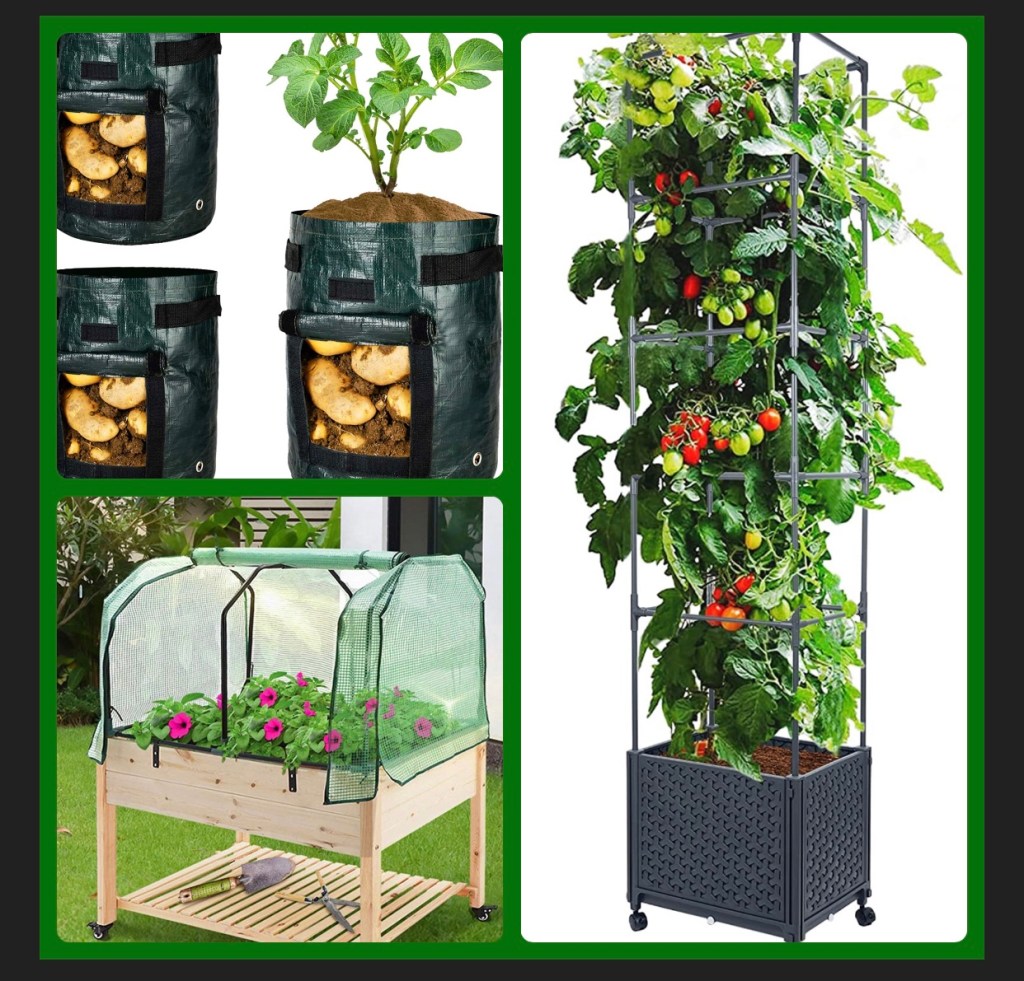
The large area raised garden
The act of growing our own food is an act of self-sufficiency, a connection with nature, and a way to remind ourselves of the gifts of God. It is a reminder that we can trust in God for all of our needs. When we plant our gardens and tend to them throughout the season, we are reminded of our faith and dependence on God. Planting and harvesting our own fruits and vegetables is a reminder of the miracles God has created and how we can glorify Him in our lives. It is also a reminder of how we are all connected to the land and each other.
Growing our own food can offer us peace, community, and connection with God. By getting our hands in the dirt and learning to cultivate the land we can build a closer relationship with God, deepen our understanding of nature, and experience the joy of eating fresh fruits and vegetables that we grew ourselves. Even patios gardens with tomatoes and peppers in a pot allows us to get one with Mother Earth
Ways to grow plants no matter how small the area is.
The Benefits and Joys of Small-Space Vegetable Gardening
The world we live in today is fast-paced, with most people busy with work and other responsibilities. As such, it’s essential to slow down and take time to enjoy some leisure activities that can improve our quality of life. One such activity is gardening, which can be both therapeutic and rewarding. However, not everyone has the luxury of a big garden or yard. For those living in small apartments or homes with limited outdoor space, vegetable gardening may seem like a far-fetched idea. But worry not, because with a little creativity and some helpful tips, you can create your own mini-garden oasis.
One excellent way to start small-space vegetable gardening is by using patio pots. Patio pots come in various sizes and materials, making them ideal for growing different types of vegetables. For instance, you can grow lettuce, spinach, and other leafy greens in small pots, while larger ones can accommodate tomato plants and bell peppers. Additionally, patio pots offer flexibility, allowing you to move them around to maximize sunlight exposure or protect them from harsh weather conditions.
Another great option for small-space gardening is vertical gardening. This technique involves growing plants upwards rather than outwards, using trellises, hanging baskets, or wall-mounted planters. Vertical gardening helps save on space and can add aesthetic appeal to your balcony or patio. You can grow cucumbers, beans, peas, and other vining vegetables using this method.
When it comes to planting, you have two options: seeds or seedlings. Seedlings are young plants that are already a few weeks old and are ready to be planted, while seeds require more time and effort to germinate. If you’re a beginner or if you have limited time, seedlings are a perfect choice as they save time and shorten the growing season. However, starting with seedlings will limit the types of plants you can grow. If you prefer a more diverse selection of vegetables, starting with seeds is the way to go.
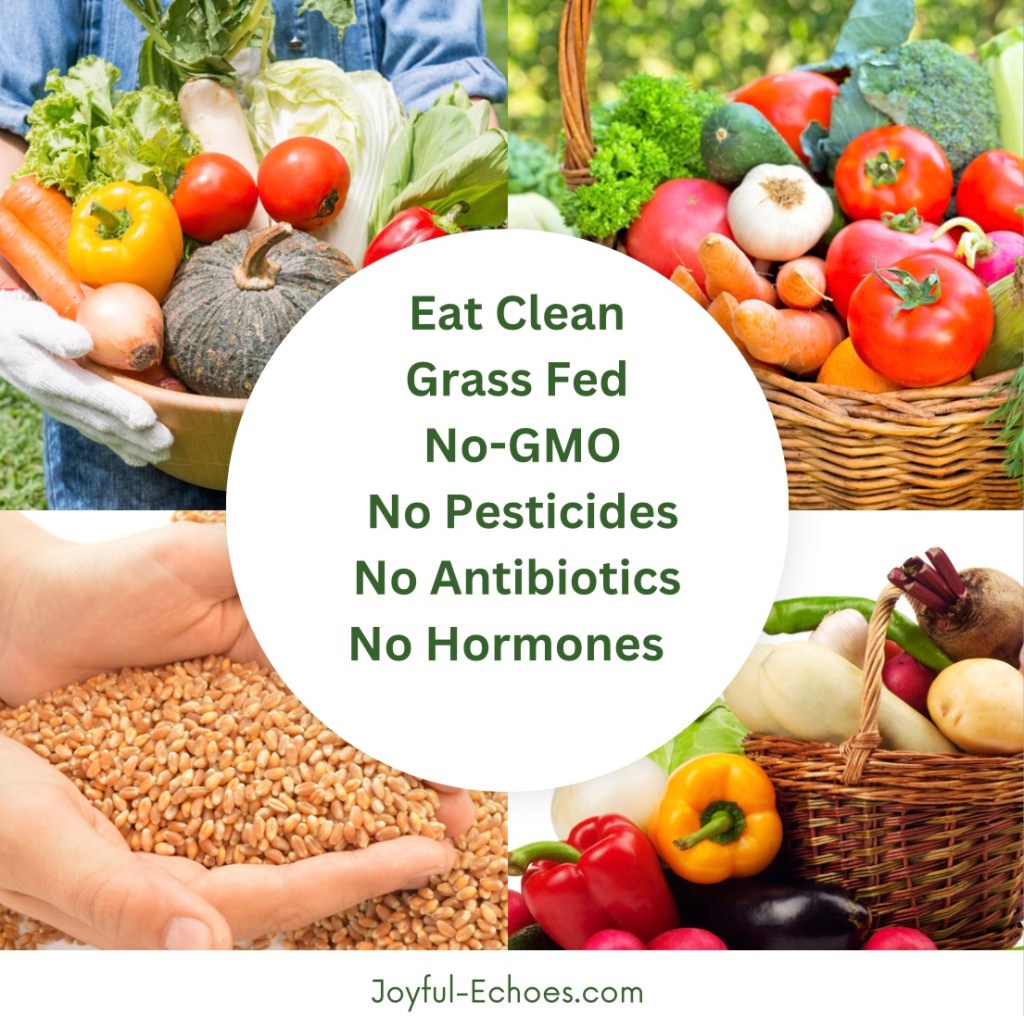
The Bible emphasizes the importance of clean and pure food, as well as the benefits of growing our own fruits and vegetables without harmful pesticides or genetic modification.
In Leviticus 11:1-47 and Deuteronomy 14:3-21, God sets out dietary laws for his people, prohibiting the consumption of certain animals and emphasizing the importance of eating only clean and pure foods. In Proverbs 15:17, it states that “Better is a dinner of herbs where love is than a fattened ox and hatred with it.”
In addition, growing our own food can not only provide us with healthier options but also connect us to the natural world and the process of creation. In Genesis 2:15, it states that “The Lord God took the man and put him in the Garden of Eden to work it and keep it.”
Furthermore, consuming organic meat and avoiding genetically modified foods aligns with the biblical principle of stewardship and caring for God’s creation. In 1 Corinthians 6:19-20, it states that “Or do you not know that your body is a temple of the Holy Spirit within you, whom you have from God? You are not your own, for you were bought with a price. So glorify God in your body.”
Therefore, by us following biblical principles of clean and pure foods and stewardship of the land , we can lead healthier and more fulfilling lives through growing our own food and consuming organic options staying away from genetically modified foods and unclean foods.
We have all experienced moments in our lives where we feel like we are in the dark. Whether it’s due to ptsd, grief, divorce, mental illness, physical illness, chronic pain, rape, abuse, harassment, problems on top of problems , addiction, job loss, or any other challenge that life throws our way. Sometimes it seems like the universe is out to get us. It isn’t. It will pass and we will move on, it may take some time. But we will push through.
But there is a difference between dark times and living in darkness.
Being in the dark is a temporary state, a momentary feeling that we all experience at some point in our lives. It’s a place of uncertainty, where we are unsure of what the future holds, and we can feel lost and alone.
On the other hand, being stuck in darkness is a much more profound and challenging state. It’s when we feel like we are trapped, hopelessness despair unable to escape the situation we are in because we don’t know how. we are consumed by our pain and sorrow.
Some common signs that someone may be living in darkness and in need of professional help include feelings of hopelessness and despair, loss of interest in activities they once enjoyed, changes in sleeping or eating patterns, difficulty concentrating or making decisions, withdrawing from friends or family, and thoughts of self-harm or suicide. It is important to take these signs seriously and encourage the person to seek help from a mental health professional.
We cannot say oh it’s not that bad. Because we are not in their shoes and how we handle things may be different for others and what works for us may not work for others.
Never be afraid to seek mental health counseling.
The Bible teaches us that we don’t have to be stuck in darkness. In Psalms 23:4, it says, “Even though I walk through the darkest valley, I will fear no evil, for you are with me; your rod and your staff, they comfort me.” This verse reminds us that no matter how dark our situation may seem, we are not alone. God is with us every step of the way, guiding us through the darkness and comforting us in times of need.
Another verse that provides comfort during dark times is Isaiah 41:10, which says, “So do not fear, for I am with you; do not be dismayed, for I am your God. I will strengthen you and help you; I will uphold you with my righteous right hand.” This verse reminds us that even in the darkest of moments, God is there to strengthen us and provide us with the help we need to get through our struggles.
So my friends, if you find yourself in the dark, know that it’s only temporary. Don’t allow yourself to get stuck in darkness. Instead, turn to God and allow Him to guide you through the darkness and into the light. Remember, God is always with you, and He will never leave you alone. Also it’s ok to reach out to a mental health professional for help and guidance.
Hey there, friends! I’m excited to announce that I’ll be starting a new blog series called “Let’s Learn the Bible Together” where we can explore the scriptures and deepen our faith together.
Every few days, I’ll be posting new content where I’ll share my thoughts and interpretations on various Bible passages. But I don’t want it to just be about me – I want to hear from YOU too! I encourage you to leave your own insights and interpretations in the comments section so we can learn and grow together.
If you’re interested in joining our community of Bible learners, please let me know in the comments below. And please sign up for email notifications of all posts. Let’s build a supportive community where we can explore and understand the various teachings of the Bible. I can’t wait to connect with you all and start this amazing journey together!
Once upon a time, on the peak of a rugged mountain, there lived two steadfast goats named George and Gracie. They were known throughout the mountain range for their agility and determination – always scaling the toughest crags and peaks.
But one day, as they were resting in a serene meadow, they began to consider their future. The years had taken a toll on their bodies, and they longed for a life of ease and relaxation.
As they pondered their plight, they started talking about God – a subject that was rarely addressed among the animals of the mountains. They wondered if He existed and, if so, what His plan was for them.
Gracie had an unwavering faith that God was real, citing their unique abilities as evidence. But George was skeptical – until a desperate cry pierced the air.
They followed the sound to the edge of a precipice where they found a baby bear, separated from his family, dangling precariously over the abyss. The little cub’s cries tugged at their hearts, and George knew he had to act fast.
With no regard for his own safety, he scaled down the steep incline, secured the cub, and carried him up to safety. It was a moment that changed everything.
From that day on, George and Gracie saw the world with new eyes. They realized that God’s plan for them wasn’t just about climbing and conquering – it was also about helping those in need.
Their friendship with the baby bear and his family grew stronger with each passing day, and they became inseparable companions. George and Gracie felt a newfound sense of purpose, and they continued to scale the mountain with a new perspective and appreciation for God’s creation.
They realized how blessed they were and their daring rescue taught them that true fulfillment comes not from a life of ease but from facing life’s challenges head-on, serving others, and appreciating the beauty of the world around them. They learned that God’s plan for them was much greater than they ever could have imagined.
In a small town in Italy, there lived a young woman named Maria. She was known throughout the town for her incredible cooking skills and her warm, welcoming personality.
However, life in Italy was tough, and Maria yearned for more. She dreamed of traveling to America, where she could start a new life for herself and her family. So, with nothing but a few possessions and her determination, Maria set out on a journey to the United States.
Upon arriving in America, Maria faced many challenges. She had to learn a new language and find a way to support herself. But her love for cooking never wavered. In fact, it only seemed to grow stronger as she experimented with new recipes and techniques.
Eventually, Maria saved up enough money to open her own restaurant. She called it “Maria’s Italian Kitchen,” and it quickly became a favorite among locals and tourists alike. People would come from miles around just to taste Maria’s delicious food.
Despite the success of her business, Maria never forgot her roots. She continued to use her family’s traditional Italian recipes and imbued each dish with the same love and care that she had always shown in her cooking.
And so, Maria’s restaurant became not just a place to eat, but a symbol of her hard work, determination, and the power of following your dreams. Her story continues to inspire people around the world to this day, as a testament to the brave and selfless spirit of immigrants everywhere.
Maria’s determination and hard work paid off in more ways than one. Her restaurant became a staple in the community, attracting people from far and wide to taste her delicious food. Her children grew up surrounded by the sights, sounds, and smells of the kitchen, learning the same recipes and techniques that had been passed down through generations.
As time went on, Maria’s business continued to flourish. She expanded her menu and even opened up a second location in a nearby town. But through it all, she never lost sight of the values that had gotten her there in the first place – hard work, dedication, and a love for sharing her culture with others.
Years later, as Maria looked back on her journey, she realized that it was more than just a success story – it was a testament to the power of the American Dream. With grit, determination, and a willingness to learn, anyone could achieve their goals and make a better life for themselves and their loved ones.
And so, Maria’s legacy lived on – not just in the memories of those who knew her, but in the hearts of everyone who tasted her deliciousfood and felt the warmth of her spirit.
Maria never forgot her roots and always remained humble despite her success. She would often go back to Italy to visit her family and bring them gifts from her restaurant. Her family back home was so proud of her and admired her for being a successful businesswoman in a foreign land.
One day, while visiting her hometown in Italy, Maria met a young girl named Isabella who reminded her of herself when she was younger. Isabella had big dreams of becoming a chef but lacked the resources and opportunities to do so. Maria saw herself in the young girl and decided to help her.
She offered to pay for Isabella’s culinary school and even invited her to come work at her restaurant in America after she graduated. With tears in her eyes, Isabella accepted the offer and promised to work hard and make Maria proud.
Years later, Isabella became a successful chef and opened up her own restaurant. She too never forgot the lessons Maria had taught her – hard work, dedication, and a love for sharing her culture with others. And just like Maria, Isabella passed on her knowledge and values to the next generation, ensuring that their legacy would live on for years to come.






 Joyful-Echoes